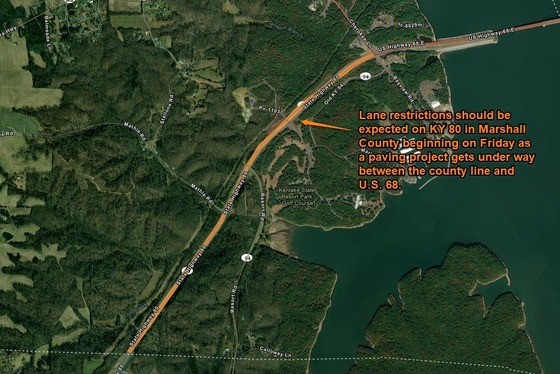
MARSHALL COUNTY – A contractor for the Kentucky Transportation Cabinet plans to begin a project to resurface around two miles of roadway in Marshall County in the Kenlake State Resort Park Golf Course area on Friday.
The project will resurface KY 80 from the Calloway-Marshall County line (0 mm) east to U.S. 68 (1.937 mm), approximately 1.937 miles of roadway.
The contractor will begin milling the roadway on Friday. Motorists should be alert for lane restrictions and flaggers that will last through the project.
Paving will begin on Monday and is scheduled to last from 7 to 10 days.
Motorists should be alert for one lane traffic with alternating flow controlled by flaggers. Some delays are possible during the movement and placement of equipment to facilitate the work.
Appropriate caution is required where equipment, flaggers, and maintenance personnel are along the roadway in close proximity to traffic flow.
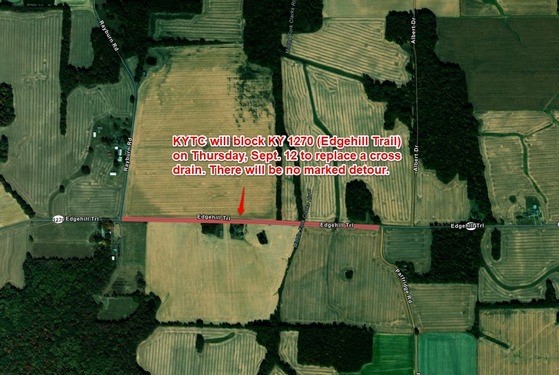
MURRAY – The Kentucky Transportation Cabinet plans to block a section of KY 1270 (Edgehill Trail) in south western Calloway County on Thursday, Sept. 12 to replace a cross drain that is failing.
The blockage will be located between Rayburn Road (2.6 mm) and Partridge Road (3.3 mm) and is scheduled to take place between 8 a.m. and 2 p.m.
There will be no marked detour.
Appropriate caution is required where equipment and maintenance personnel are along the roadway in close proximity to traffic flow.
Mrs. Laura Ross, age 62, of Dexter, Kentucky, passed away Monday, September 30, 2024, at her home.
A funeral service will be held at 3:00 p.m., Wednesday, October 2, 2024, at the J.H. Churchill Funeral Home & Cremation Services with Bro. Ricky Cunningham officiating. Burial will follow in the St. Henrys Catholic Church Cemetery in Aurora, Kentucky. Visitation will be held from 1:00 p.m. – 3:00 p.m., Wednesday, October 2, 2024, at the J.H. Churchill Funeral Home & Cremation Services.
Expressions of sympathy can be made to the Anna Mae Owen Residential Hospice House, 803 Poplar Street, Murray, Kentucky 42071 or to the Murray-Calloway County Animal Shelter, 81 Shelter Lane, Murray, Kentucky 42071.
J.H. Churchill Funeral Home & Cremation Services is in charge of arrangements.
Mrs. Shirley Laverne Stalls, 87, of Fort Worth, TX, formerly of Murray, went to be with her Lord and Savior on Monday, September 30, 2024 at her home.
The funeral service honoring Mrs. Shirley Stalls is set for 12 pm on Saturday, October 5, 2024 at the Heritage Chapel of Imes Funeral Home, 1804 Highway 121 Bypass North, Murray. Donnie Peal will officiate and burial will follow at Murray City Cemetery.
Her family welcomes visitors from 10 am until 12 pm at the Heritage Chapel.
Imes Funeral Home & Crematory is in charge of arrangements.
Reuben Gad Pierce, infant son of Melvin and Makaela (Hargrove) Pierce of Farmington, was born sleeping Sunday, September 29, 2024, at Murray-Calloway Co. Hospital, Murray, KY.
A graveside service will be conducted Wednesday, October 2, 2024, at 11:00 a.m. in the Burnett’s Chapel Cemetery, in Sedalia, KY with pastor Merrick Nunn officiating. Burial will follow the service with David Cooper and Melvin Pierce serving as pallbearers.
Blalock-Coleman Funeral Home & Cremation Services is privileged to be entrusted with the care of Reuben.
Mrs. Sarah Louise Bryan, age 81, of Murray, Kentucky, passed away Friday, September 27, 2024, at Charter Assisted Senior Living in Hopkinsville, Kentucky.
A memorial service will be held at 3:30 p.m. on Tuesday October 1, 2024, at The J.H. Churchill Funeral Home & Cremation Services. John Dale will officiate. Visitation will be held from 1:00 p.m. – 3:00 p.m., Tuesday October 1, 2024, at The J.H. Churchill Funeral Home & Cremation Services.
Expressions of sympathy can be made to MSU Foundation Phil and Sarah Bryan Leadership Scholarship. Murray State University Office of Development 200 Heritage Hall Murray, KY 42072 murraystate.edu/giving.
J.H. Churchill Funeral Home & Cremation Services is in charge of arrangements.
Mr. James “Jim” Allen Sims, age 83, of Miami, Florida, formerly of Murray, Kentucky, passed away, Sunday, September 22, 2024, at the HCA Florida Mercy Hospital in Miami, Florida.
A graveside service will be held at 11:00 a.m., Friday, October 4, 2024, at the Murray City Cemetery with Rev. Jim Stahler officiating. Entombment will follow in the Murray City Cemetery. No public visitation will be held before the graveside service.
J.H. Churchill Funeral Home and Cremation Services is in charge of arrangements.
Eula Mae (Kendall) Atteberry, 77, of Kirksey passed away Sunday, September 22, 2024, at her home.
In honoring Eula’s wishes, no public services will be held.
Blalock-Coleman Funeral Home & Cremation Services is honored to be entrusted with the care of Mrs. Atteberry. Please share your messages of condolence by signing her virtual guestbook at www.blalockcolemanfuneralhome.com.
Mrs. Donna Lee Woods, 83, of Murray, passed away on Saturday, September 21, 2024 at Spring Creek Healthcare in Murray.
A memorial service will be held at 2 pm on Saturday, October 5, 2024 at Kingdom Hall of Jehovah’s Witnesses, 1052 KY-121, Murray, KY 42071. A meal will be served to family and friends following the memorial service and it will be held at Woodmen Life, North 4th Street in Murray.
Imes Funeral Home & Crematory is in charge of arrangements.
Mr. Michael William Tipton, age 59, of Murray, Kentucky, passed away on Saturday, September 21, 2024, at Spring Creek Nursing and Rehab Center in Murray.
Arrangements are currently incomplete at the J.H. Churchill Funeral Home and Cremation Services.
Mr. Guthrie T. McNeely, age 75, of Murray, Kentucky, passed away on Wednesday, September 18, 2024, at the Anna Mae Owen Residential Hospice House in Murray, Kentucky.
A funeral service will be held at 11:00 a.m., Monday, September 23, 2024, at the J.H. Churchill Funeral Home & Cremation Services with Rev. Tim Palmer and Bro. Brett Miles officiating. Burial will follow in the Murray City Cemetery.
Visitation will be held from 4:00 p.m. – 8:00 p.m., Sunday, September 22, 2024, at the J.H. Churchill Funeral Home & Cremation Services.
Ms. June Turner, age 82, of Murray, Kentucky, passed away, Monday, September 16, 2024, at the Anna Mae Owen Residential Hospice House in Murray, Kentucky.
There will be no public visitation or service held.
Expressions of sympathy can be made to the Anna Mae Owen Residential Hospice House, 803 Poplar Street, Murray, Kentucky 42071.
J.H. Churchill Funeral Home and Cremation Services is in charge of arrangements.
Mr. Gary Price, age 79, of Murray, Kentucky passed away on Sunday, September 15, 2024, at Jackson Purchase Medical Center in Mayfield, Kentucky.
A graveside service will be held at 1:00 p.m., Wednesday, September 18, 2024, at the Murray City Cemetery. Bro. Fred Seavers will officiate, and burial will follow. No public visitation will be held.
J.H. Churchill Funeral Home & Cremation Services is in charge of arrangements.
Mrs. Phyllis M. Huggins, 93, of Murray, passed away on Thursday, September 12, 2024 at Anna Mae Owen Residential Hospice House.
Private burial will take place at Murray City Cemetery. Her family will hold a celebration of life at Imes Funeral Home at a later date and will be announced prior.
Mr. Gustav J. Frey, 87, of Murray, passed away on Tuesday, September 11, 2024 at Murray Calloway County Hospital.
Expressions of sympathy may take the form of donations to Myasthenia Gravis Foundation of America, 290 Turnpike Road, Suite 5-315, Westborough, MA 01581.
Services will be held at a later date.
Imes Funeral Home is entrusted with caring for his family.
Mrs. Shelba Barnett, age 87, of Hardin, Kentucky, passed away on Tuesday, September 10, 2024, at her home.
There will be no public visitation. A graveside service will be held on Monday, September 16 at 11:00 am at the Coldwater Church of Christ Cemetery with John Dale officiating.
Expressions of sympathy may go to the Coldwater Church of Christ Cemetery Fund, c/o Larry Bundy, 303 Oakdale Drive, Murray, Kentucky 42071.
J.H. Churchill Funeral Home and Cremation Services is in charge of arrangements.
Ms. Frances (Robb) Murphy, age 55, of Murray, Kentucky, passed away, Monday, September 9, 2024, at the Anna Mae Owen Residential Hospice House in Murray, Kentucky.
A funeral mass will be held at 10:00 a.m., Saturday, September 21, 2024, at the St. Leo Catholic Church with Father Santhosh Thomas officiating. Visitation will be held from 5:00 p.m. – 8:00 p.m., Friday, September 20, 2024, at the J.H. Churchill Funeral Home & Cremation Services. In celebration of her life, Frances asked that attendees wear pink to both services. Please feel free to wear the same thing both days.
To send a gift via mail, please make your checks payable to CurePSP and sent to: CurePSP 325 Hudson Street,4th Floor, New York, NY 10013 or to the Anna Mae Owen Residential Hospice House, 803 Poplar Street, Murray, Kentucky 42071.
Tommy Downs Alexander, 90, of Murray, Kentucky, passed away Saturday, September 7, 2024, at Murray-Calloway County Hospital.
Tommy’s family will welcome visitors from 5:00 p.m. to 7:00 p.m., Wednesday, September 11, 2024, at J.H. Churchill Funeral Home and Cremation Services in Murray. A private family graveside and burial will be held at Murray City Cemetery officiated by Rev. Kerry Lambert.
In lieu of flowers, expressions of sympathy may be made either to the Meals on Wheels program at the Murray-Calloway County Senior Center, 607 Poplar Street, Murray, Kentucky 42071 or the Murray-Calloway County Animal Shelter, 81 Shelter Lane, Murray, Kentucky 42071 where he adopted his last, much-adored cat, Bella.
Mr. Joe L. Mathis, 91, of Murray, KY, passed away Saturday, September 7, 2024, at his home.
Funeral services will be conducted Wednesday, September 11, 2024, at 1:00 p.m. in the chapel of the Blalock-Coleman Funeral Home in Murray, KY with Bro. Ron Mathis officiating. Burial will follow the service in the Murray Memorial Gardens, Murray, KY.
Friends may visit with the family Tuesday, September 10, 2024, between the hours of 5:00 p.m. and 8:00 p.m. at the Blalock-Coleman Funeral Home, 713 S. 4th St., Murray, KY 42071.
The family requests that memorial contributions be made in Joe’s name to St. Jude Children’s Research Hospital, 501 St. Jude Place, Memphis, TN 38105.
Mr. Timothy “Tim” E. Shawhan, age 60, of Hazel, Kentucky, passed away, Saturday, September 7, 2024, at the Anna Mae Owen Residential Hospice House in Murray, Kentucky.
A graveside service will be held at 2:30 p.m., Sunday, September 15, 2024, at the South Pleasant Grove United Methodist Cemetery. Visitation will be held from 12:00 p.m. – 2:00 p.m., Sunday, September 15, 2024, at the J.H. Churchill Funeral Home & Cremation Services.
Expressions of sympathy can be made to the Anna Mae Owen Residential Hospice House, 803 Poplar Street, Murray, Kentucky 42071.
J.H. Churchill Funeral Home & Cremation Services is in charge of arrangements.
Mrs. Jean Burkeen, age 92, of Murray, Kentucky, passed away, Saturday, September 7, 2024, at the Spring Creek Healthcare in Murray, Kentucky.
A funeral service will be held at 1:00 p.m., Friday, September 13, 2024, at the J.H. Churchill Funeral Home & Cremation Services with Rev. Richard Burkeen and Rev. Curtis Goode officiating. Burial will follow in the Murray Memorial Gardens.
Visitation will be held from 11:00 a.m. – 1:00 p.m., Friday, September 13, 2024.
J.H. Churchill Funeral Home & Cremation Services is in charge of arrangements.
Mrs. Lisa Ray, age 66, of Murray, Kentucky, passed away on Saturday, September 7, 2024, at the Murray-Calloway County Hospital.
A funeral service will be held at 1:00 p.m., Monday, September 16, 2024, at the First Baptist Church in Murray with Bro. Mike Crook officiating. Entombment will follow in the Murray City Cemetery. Visitation will be held from 11:00 a.m. – 1:00 p.m. on Monday, September 16, 2024, at the First Baptist Church in Murray.
Expressions of sympathy can be made to the First Baptist Church Music Program, 203 South 4th Street, Murray, Kentucky 42071.
J.H. Churchill Funeral Home & Cremation Services is in charge of arrangements.
Mrs. Shelby Gean (Hargrove) Lorson, age 87, of Murray, Kentucky, passed away, Friday, September 6, 2024, at the Calvert City Convalescent Center in Calvert City, Kentucky.
A funeral service will be held at 2:00 p.m., Thursday, September 12, 2024, at the J.H. Churchill Funeral Home & Cremation Services with Bro. Brett Miles officiating. Burial will follow in the Stewart County Memorial Gardens in Dover, Tennessee. A visitation will be held from 12:00 p.m. – 2:00 p.m., Thursday, September 12, 2024, at the J.H. Churchill Funeral Home & Cremation Services.
Expressions of sympathy can be made to the Humane Society of Calloway County, 607 Poplar Street # A, Murray, Kentucky 42071.
Mrs. Connie “Coco” Norsworthy, age 83, of Kirksey, Kentucky, passed away, Wednesday, September 4, 2024, at the Fulton Nursing & Rehabilitation in Fulton, Kentucky.
A celebration of life will be held at 11:00 a.m., Saturday, September 14, 2024, at the J.H. Churchill Funeral Home & Cremation Services with Rev. April Arnold officiating. There will be no public visitation held prior to the celebration of life.
In lieu of flowers, contributions may be made to her daughter’s Internship Scholarship Fund at Murray State University, c/o Lee Norsworthy-Robbins Internship Fellowship, Murray State University, Office of Development, 200 Heritage Hall, Murray, Ky, 42071.
Mary Jane Milton, age 82, of Murray, KY, received her heavenly reward on Tuesday, September 3, 2024.
Funeral services will be held on Saturday, September 7, 2024, at 1:00 p.m., with visitation from 11:00 a.m. – 1:00 p.m., at J.H. Churchill Funeral Home & Cremation Services in Murray, KY, with Bro. Darrell Young officiating. Burial will follow at the Murray City Cemetery.
In lieu of flowers, please make donations to the Children’s Ministry at Calvary Temple Church, P.O. Box 655, Murray, Kentucky 42071.
Billy Bob Darnell, Sr. peacefully transitioned into the presence of God on Tuesday, September 3rd, 2024, two weeks before his 90th birthday.
A graveside service with military honors will be held at 11:00AM on Saturday, September 14th at Murray Memorial Gardens followed by a reception and luncheon for friends and family at Hardin Baptist Church – The Chapel (218 College Street, Hardin, KY). All family members of the Darnell & York families are more than welcome & encouraged to come and share happy memories together.
In lieu of flowers, the family requests memorials be made to Hope For The Warriors, which provides comprehensive support programs to veterans and military families. Donations can be made at https://www.hopeforthewarriors.org/about/make-a-donation/.
Mrs. Bettye J. Miller, age 96, of Murray, Kentucky, passed away on Tuesday, September 3, 2024, at her home with her loved ones by her side.
Private family services and burial will be held.
Expressions of sympathy can be made to the Humane Society of Calloway County, 607 Poplar Street # A, Murray, Kentucky 42071 or St. Jude Children’s Research Hospital, 501 Street Jude Place, Memphis, Tennessee 38105-9959.
Mr. Carl Dalton, 81, of Murray, Kentucky, passed away Monday, September 2, 2024, at the Anna Mae Owen Residential Hospice House in Murray.
Funeral services will be conducted Thursday, September 5, 2024, at 12:00 p.m. in the chapel of Blalock-Coleman Funeral Home, 713 S. 4th Street, Murray, KY, with Rev. Jordan Roach officiating. Interment will follow in the Murray Memorial Gardens, with Brad Young, Brian Lee, Clint Lee, Erick Young, Sandy Lassiter and Tony Raspberry serving as pallbearers. Friends may visit with the family from 10:00 a.m. until the funeral time of 12:00 noon at the funeral home.
The family requests that memorial contributions made in memory of Mr. Dalton be directed to the National Pancreatic Cancer Foundation, P.O. Box 189, Box Elder, SD 57719; St. Jude Children’s Research Hospital, 501 St. Jude Place, Memphis, TN 38105; or the Anna Mae Owen Hospice House, c/o The Foundation at MCCH, 803 Poplar St., Murray, KY 42071.
Greg Eugene Eldridge, 59, of Murray, KY, passed away Sunday, September 1, 2024, at his home.
Friends may visit with the family from 5:00 p.m. – 8:00 p.m. on Friday, September 6, 2024, at the Blalock-Coleman Funeral Home & Cremation Services, 713 South 4th St., Murray, KY 42071.
The family requests that memorial contributions in Greg’s memory be made, in lieu of flowers, to the Murray Calloway County Animal Shelter, 81 Shelter Lane, Murray, KY 42071.
MURRAY – The Kentucky State Police Critical Incident Response Team (CIRT) continues the investigation into the officer-involved shooting that occurred on Friday, Aug. 23. Preliminary interviews have been completed, and investigators have released their initial findings.
The preliminary investigation indicates that at around 10:30 p.m. on Thursday, Aug. 22, the Murray Police Department (MPD) had responded to a residence on Johnson Boulevard after receiving a report from a crisis hotline that an individual was threatening self-harm. Upon their arrival, officers interacted with a male subject, identified as 39-year-old Matthew Johnson, who was inside the residence. During their interaction, Johnson pointed a rifle in the direction of the officers who retreated to cover. Johnson then barricaded himself inside the residence, prompting MPD Officers to request the Marshall County Special Response Team (SRT) to assist.
During the incident, a warrant was issued for Johnson for first-degree wanton endangerment and third-degree terroristic threatening. Negotiations were attempted by MPD and Marshall County SRT officers. Additionally, a mental crisis hotline was utilized to de-escalate the situation. Negotiating efforts were unsuccessful, as Johnson refused to cooperate or work toward a peaceful resolution.
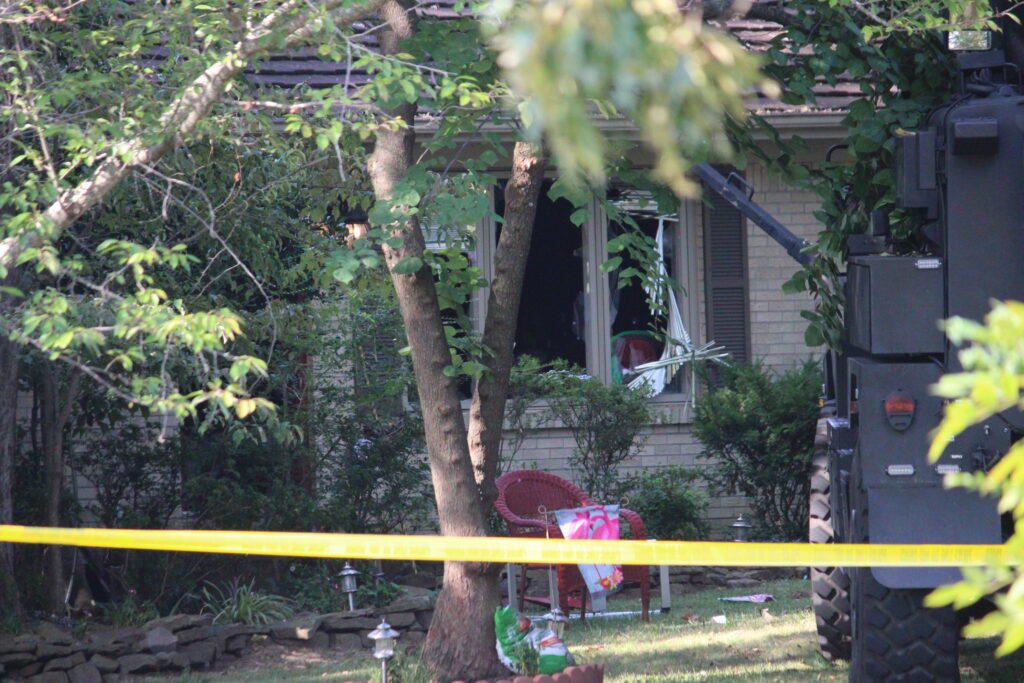
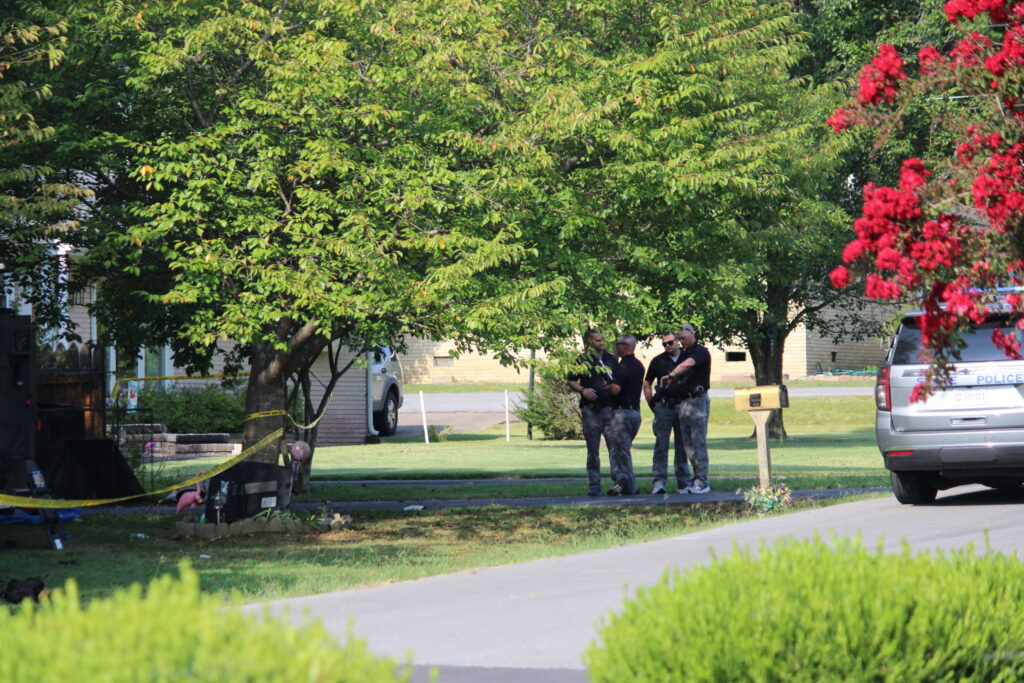
Marshall County Special Response Team vehicles remain in the front yard hours after the incident. (JESSICA PAINE/The Murray Sentinel)
Marshall County SRT officers utilized a gas deployment into the residence, at which time, approximately 2:30 a.m. on Aug. 23, Johnson fired a rifle at the officers, striking Deputy Jacob Hamm in the leg and arm, resulting in non-life-threatening injuries. Marshall County SRT officers, Chief Deputy Tim Reynolds, Sergeant Aaron Lane and Deputy Chris Beavers, then returned fire.
The front window of the home was busted out during the altercation. (JESSICA PAINE/The Murray Sentinel)
Johnson was struck by officer gunfire and injured but remained inside the residence, ignoring officers’ requests to surrender for some time. Eventually, Johnson surrendered, at which time he was flown to a hospital in Nashville for medical treatment.
Hamm was transported to Murray-Calloway County Hospital, where he was treated and released.
Hamm, Reynolds, Lane and Beavers are employed with the Marshall County Sheriff’s Office.
These preliminary findings are subject to change as CIRT investigators continue this ongoing investigation.
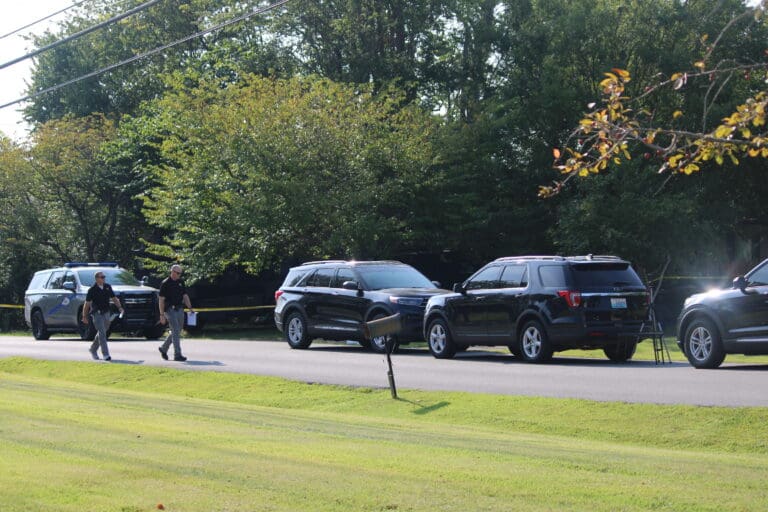
Officers stand in the driveway of the home where the incident occurred. (JESSICA PAINE/The Murray Sentinel)
KSP has statewide jurisdiction and investigates officer-involved shootings throughout the commonwealth as requested by local, state, and federal law enforcement agencies. KSP is committed to being transparent while ensuring the integrity of the investigation. To protect the integrity of an ongoing investigation, it is KSP’s standard operating procedure not to release specific details until vital witnesses have been interviewed and pertinent facts gathered. Timelines to complete investigations vary based on the complexity of the case.
UPDATE (Aug. 27): The Murray Police Department put out a press release today, identifying the driver as 33-year-old Holli Plunkett of Buchanan, Tennessee. The release confirmed that Plunkett was not injured in the crash.
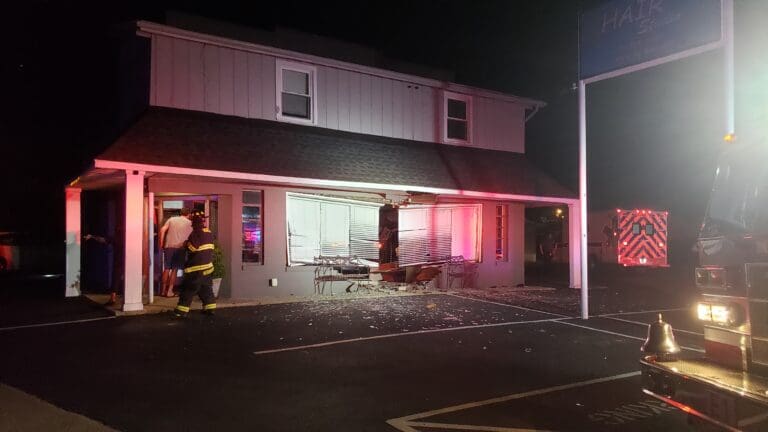
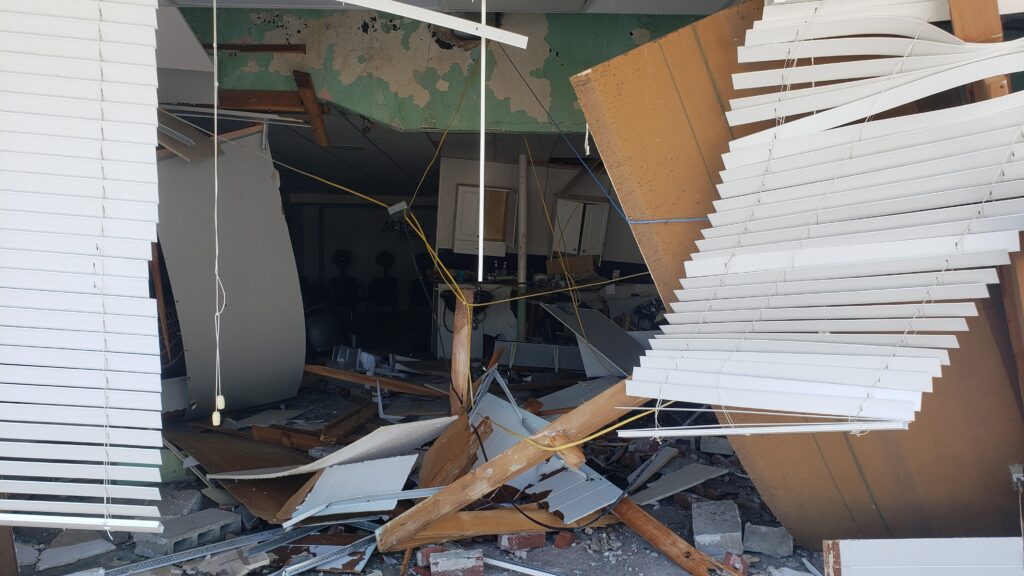
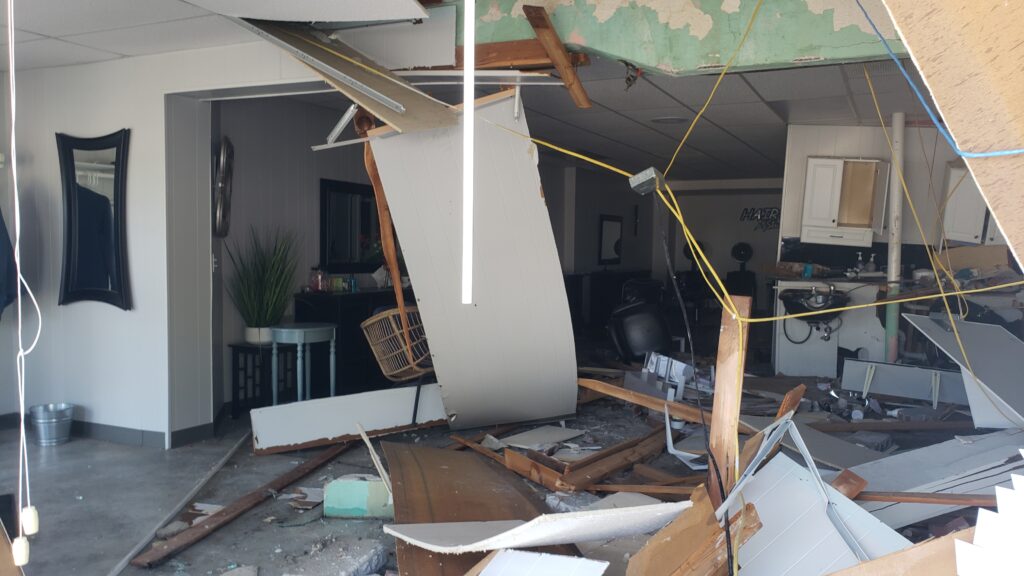
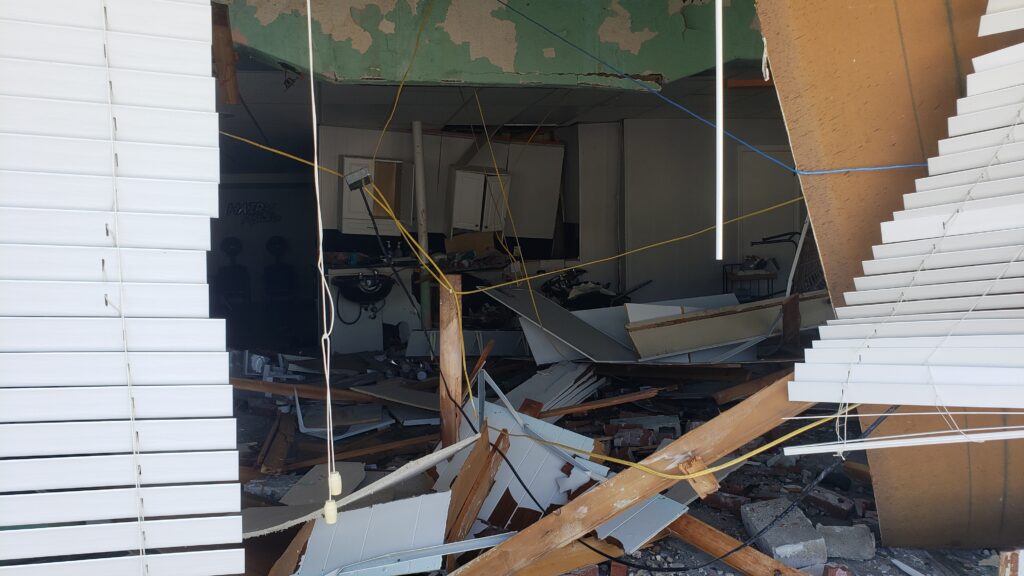
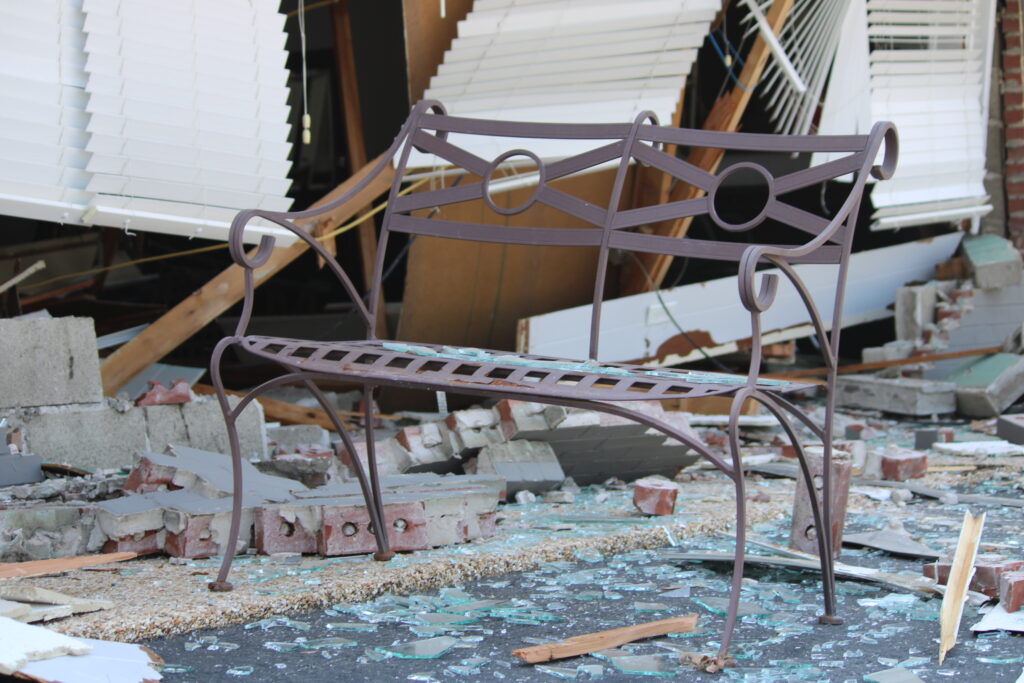
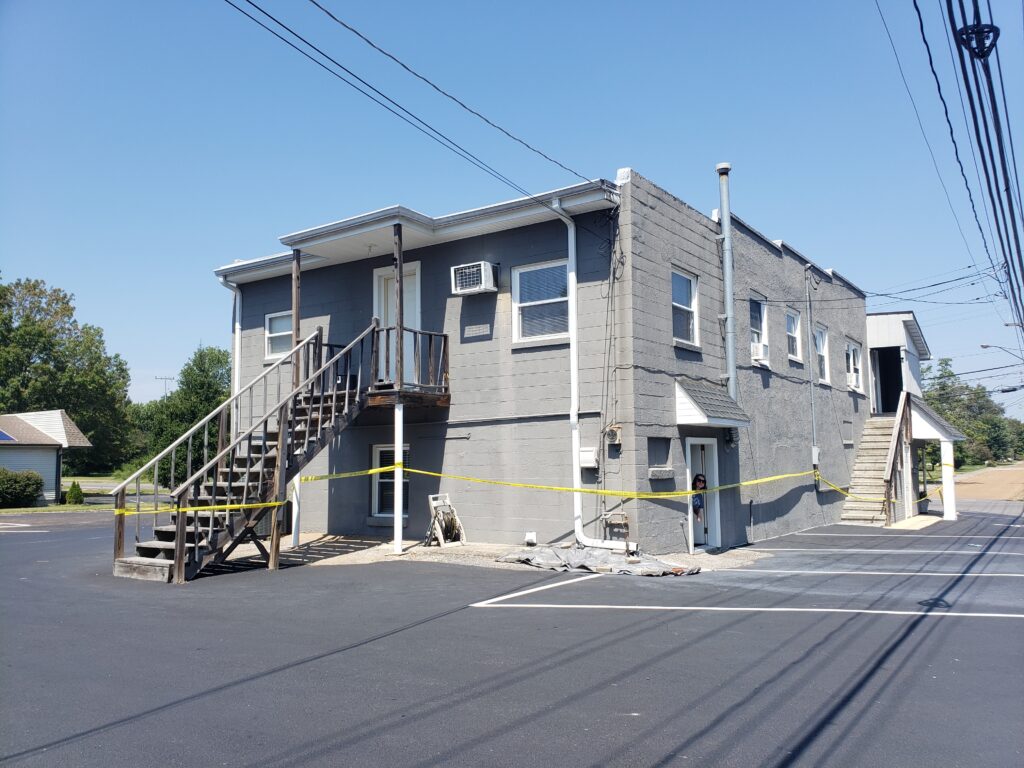
MURRAY – If not for the heavy representation of first responders at the intersection of Ninth and Sycamore streets Friday night, a passerby might not have noticed the vehicle inside, what used to be, Hair Studio. While shattered glass littered the parking lot, the white blinds hung in the building’s large front windows were seemingly unscathed.
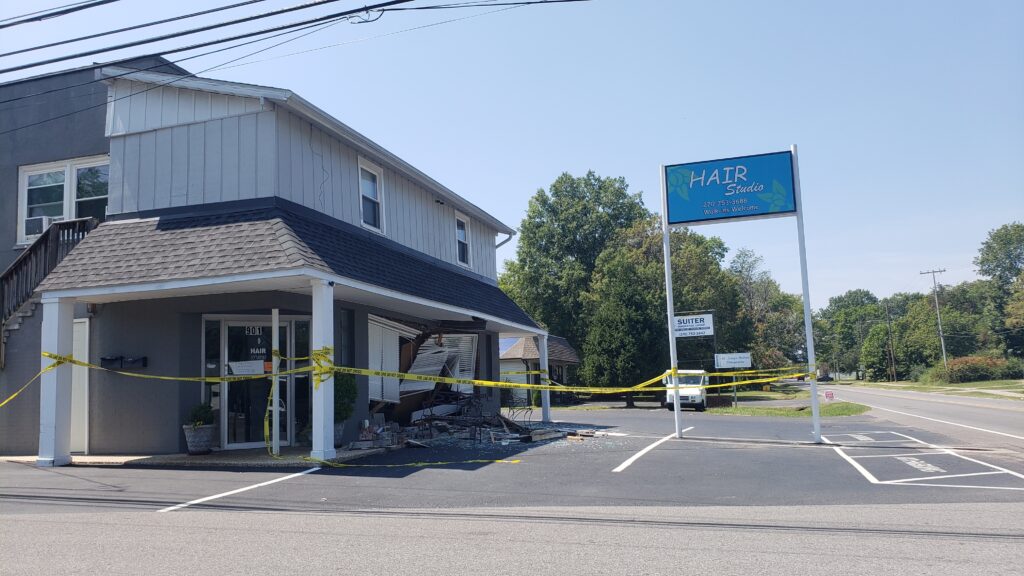
Caution tape blocks the front door of Hair Studio Saturday. (JESSICA PAINE/The Murray Sentinel)
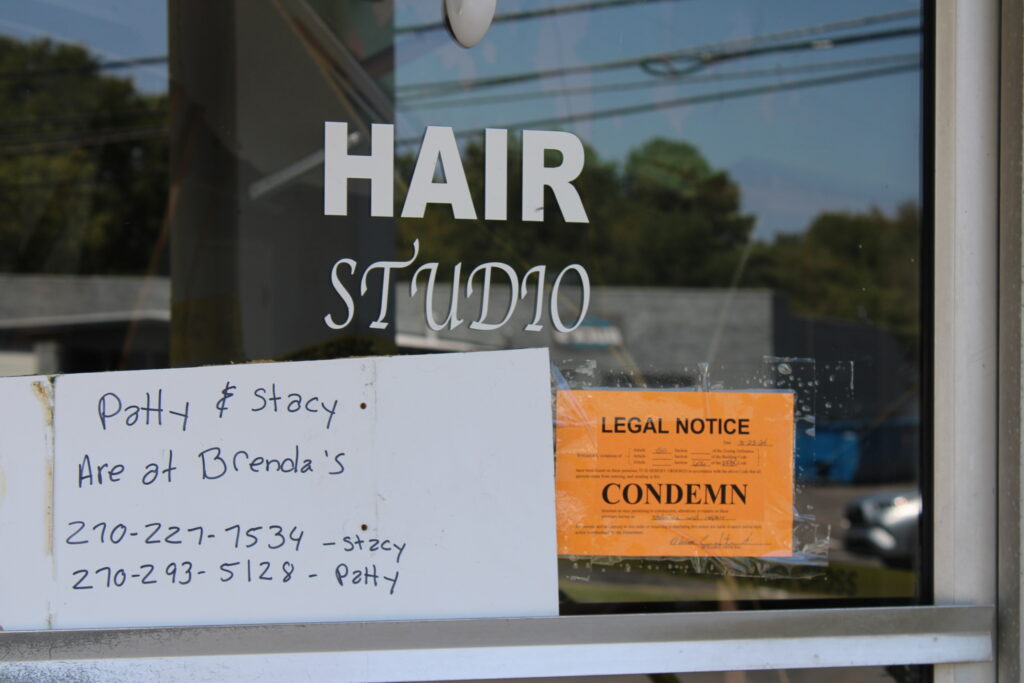
At noon on Saturday, the building was surrounded by caution tape, an orange sticker affixed to the door, marking the building condemned. Property owner Takina Bomar was on site.
Property owner Takina Bomar said someone put the sticker on the door early Saturday morning. (JESSICA PAINE/The Murray Sentinel)
Bomar said although someone put the sticker on the door early that morning, no one had told her that the building had been condemned, so she was still holding out hope that it was just a precautionary measure to keep people from going inside the building.
“They told us to take pictures for insurance purposes, and we’re about to board up the front to keep people from coming in,” she said, adding, “If you went in there, you’d be brave. It’s a mess. During the daylight hours, it looks a lot worse than it did last night.”
Daylight reveals the true extent of the damage. (JESSICA PAINE/The Murray Sentinel)
The ground floor was home to Bomar’s salon, where she works with eight other stylists.
“It was completely inside the building,” she said of the SUV. “It took out the front wall where our desk is, and the wall behind that and the shampoo bowls. At least everybody is OK, and it didn’t happen during the day when we were all here.”
A look through the busted windows shows the extent of the damage. (JESSICA PAINE/The Murray Sentinel)
“Patty – she’s one of the ladies who works here – she thought she was going to come to work this morning,” Bomar said, laughing. “She was like, ‘Oh it can’t be that bad. Surely, I can come in and work. I said, ‘You need to come look at this. There’s no power, no water.’”
As of press time, the Murray Police Department had not released information about the accident beyond a Facebook post asking drivers to avoid the area at 8:34 p.m. According to Bomar, the woman driving the vehicle had just gotten off work and was traveling south on Ninth Street. She explained that the driver, who was not injured in the crash, has a medical condition that causes her to black out.
“She said that she felt it coming on but didn’t get pulled over in time,” Bomar said. “A friend of mine saw every bit of it. He was texting me. He said, ‘She just didn’t stop; she was probably doing 25 or 30 miles an hour.’ It’s a miracle that she’s OK.”
One of the metal benches that used to sit in front of window now sits in the parking lot. (JESSICA PAINE/The Murray Sentinel)
While the salon was closed, at least one of the two tenants living in the apartments upstairs was home. Bomar said they are staying at the Murray Inn and Art Gallery through the weekend, but she is concerned about what they will do now.
The stairs leading to the apartments upstairs are also blocked by caution tape. (JESSICA PAINE/The Murray Sentinel)
The apartments were furnished, so neither have furnishings readily available to put in a new apartment or home. She said she felt particularly bad for one of the tenants because they only recently moved to Murray and do not have a well-established support system here.
Bomar is also concerned about her coworkers. She said the stylists would like to stay together, but because of state oversight, it is not as simple as “just moving somewhere.”
“We have to have everything state-board inspected and state-board approved,” Bomar explained. “There has to be a plan in place before we can even begin (to think about opening) up somewhere else. There’s a salon that just went out a year or so ago, and it would be perfect; but it’s not set up.”
She said there is a space in front of Walmart where a salon went out of business a year or so ago that would be perfect, but it would take a while to get it set up for business. In the meantime, Bomar spent Saturday morning talking to other local salon owners to find places where everyone can go temporarily.
FRANKFORT – The Kentucky Supreme Court released its opinion Thursday in an appeal brought by former circuit judge James (Jamie) Jameson against the Kentucky Judicial Conduct Commission (JCC) after it found him guilty of misconduct and removed him from the bench in 2022. The high court affirmed part of the JCC’s findings and denied others, ultimately finding that Jameson’s actions did warrant removal from the bench; however, the ruling makes clear that the JCC does not have the authority to permanently remove a judge from office.
JCC attorney Jeffrey Mando said in an interview Thursday that he was pleased the court unanimously agreed that the facts and circumstances proven during the proceedings warranted Jameson’s removal from office.
“The evidence was overwhelming that he’d engaged in a pattern of practice of unethical, improper and inappropriate conduct that tainted the judiciary in Marshall and Calloway counties,” Mando said. “The Supreme Court’s ruling reaffirms that it is critically important that judges remain independent, impartial and that their integrity be above reproach, and their ruling reaffirms that message to the public.”
Jameson first took the bench as judge for the 42nd Judicial Circuit, which encompasses both Marshall and Calloway counties, in 2015. He was in the midst of his first bid for reelection when the JCC filed a notice of formal proceedings in June 2022, charging the judge with four counts of judicial misconduct. The JCC amended the charging document multiple times, ultimately adding three additional counts by the time the final hearing started on Oct. 17.
After a 10-hour temporary suspension hearing in August 2022, the JCC voted 3:2 to suspend the judge, with pay, for the duration of the proceedings. Jameson turned to the Supreme Court for relief regarding his suspension. On Oct. 31, the court issued a writ of prohibition, voiding the JCC’s temporary suspension order ab initio (from the beginning) because Supreme Court Rules state that four affirmative votes are required to suspend a judge.
On Nov. 4, four days before the 2022 general election, the JCC released its findings of fact, conclusions of law and final order, which called Jameson “unfit” for office. He was not only removed from the bench but also disqualified from holding office in the upcoming term in the event he won reelection.
The timing of the JCC’s proceedings against Jameson brought to light a hole in Kentucky case law. While it is well-established that the JCC has the authority to remove a judge for the current term, the Supreme Court had not weighed in on whether the JCC can permanently remove a judge from office.
Deputy Chief Justice Debra Hembree Lambert wrote the majority opinion, and Justices Robert B. Conley and Michelle M. Keller concurred. Justice Kelly Thompson concurred but penned a separate opinion. Also, by separate opinions, Chief Justice Laurance B. VanMeter and Justice Angela McCormick Bisig concurred in part and dissented in part. Justice Shea Nickell recused.
“This Court has never addressed whether a judge’s removal may extend beyond that period either for an indefinite period or permanently,” the majority opinion states, adding that “permanent removal from office encroaches upon the impeachment powers vested solely in our legislature. … We conclude that the permanent removal of a state official elected by the people must be the result of actions taken by a body of representatives also elected by the people: our legislature.”
On this finding, Bisig, alone, dissented. “I believe that the Commission may, in exercising sound judgment, remove a judge from sitting within our judiciary entirely if that punishment is supported by clear and convincing evidence,” she wrote in a separate opinion.
“I knew that was an unsettled question of law before this decision came down,” Mando said. “We now have clarity about the limits on the commission’s power under the Kentucky Constitution. Justice Bisig obviously felt that the commission did have that authority. No Kentucky case has specifically addressed that issue, and we now have clarity.”
Regardless, there was consensus among the justices that Jameson’s behaviors and actions warranted removal from office.
Justices unanimously agreed the JCC met its burden of proof, which is “clear and convincing evidence” in JCC proceedings, on Counts II and VII. The high court disagreed with some of the commission’s findings related to Counts I and III, affirming 14 of the 16 violations charged by the JCC.
The majority agreed the JCC failed to meet its burden of proof on Counts IV, V and VI and dismissed those counts, but VanMeter, joined by Bisig, dissented regarding Counts IV and V, arguing that the commission did offer the clear and convincing evidence necessary to support its findings. (Click here to read a count-by-count breakdown.)
Although Thompson wholly concurred with the majority, he penned a separate, 11-page opinion to articulate his support for Jameson’s efforts to address substance use disorder (SUD) in his jurisdiction and voice issues he had with how the JCC handled his case.
Among his chief concerns, the JCC did not address Jameson’s accusation that the flurry of complaints filed against him were part of a political conspiracy to benefit his opponent in the 2022 general election, despite evidence on the record, including testimony from attorney Lisa DeRenard and retired Calloway Circuit Clerk Linda Avery, that supported his claims.
“I consider this conduct extremely serious,” Thompson wrote. “An attempt to utilize a completely non-partisan commission to further political motives is improper and should be addressed.”
He faulted the JCC for not investigating Jameson’s opponent, current Calloway Circuit Judge Andrea Moore, noting that the JCC has the authority to investigate judicial candidates.
“Judicial candidates are not allowed to ‘knowingly, or with reckless disregard for the truth, make any false statement of material fact’ and are required to ‘take reasonable measures to ensure that other persons’ do not do so ‘on [her] behalf,’” Thompson wrote, citing Rule 4.1. “The issue of ‘dirty tricks’ should have been addressed by the JCC.”
Mando, when asked if he thought the JCC should have investigated Moore, said, “No, absolutely not. I am 100% confident that the actions the commission took – from the initiation of this investigation to our prosecution of the charges – were based solely and exclusively and the evidence. Politics had absolutely nothing to do with the commission’s decisions in this case.”
Thompson noted a screenshot of a Facebook post by Moore, which Jameson submitted as evidence, wherein she wrote Jameson had 45 pending complaints before the JCC. But the justice advised that “only the JCC knows” how many complaints were filed against Jameson.
“If this figure is correct,” Thompson wrote, “I can only conclude there is overwhelming evidence of a conspiracy to file complaints against Judge Jameson and that someone was collecting reports regarding the filing of these confidential complaints; if this figure is false, I can only presume that his political opponent was attempting to manipulate the election through spreading false information. … The civility normally present in most judicial races was noticeably lacking in her conduct.”
“I made the decision to run against Jamie Jameson due to what I had seen with my own two eyes in court and also some of the things I experienced practicing in front of him,” Moore said in an interview Thursday. “I felt as though a change needed to occur. I think something to point out is that I have never filed judicial complaint against anybody, in all of the years that I’ve practiced. I’ve never filed a judicial complaint against Jamie Jameson or any other judge.
“My way of trying to implement change in our community was to run and talk about the things that needed to change in the court system. And I feel that I did a good job in communicating what I felt like needed to change. But the fact that he says there was a conspiracy and this and that, you know, it’s unfortunate that Justice Thompson even really gave that any type of credibility whatsoever because, again, the decision to run was my family and mine alone. Nobody had any type of influence over that.”
“At least one Justice stated a strong opinion he believed the complaints were initiated to influence the 2022 election,” Jameson wrote, referring to Thompson, in a texted statement. “That Justice also called my record ‘largely exemplary,’ and stated, ‘the only reason there was impropriety in (my) actions, was because’ I served as Judge and head of the Community Corrections Board at the same time.”
The statement included another edited quote from Thompson’s opinion. Thompson wrote, “It is true Judge Jameson made many missteps in his attempts to serve his community but there is no proof that those mistakes came from anything other than his selfless zeal for the plight of impoverished and drug-dependent Kentuckians.” Notably, Jameson’s version substituted an ellipsis for the word “many.”
By separate text, Jameson added that Thompson “also made the recommendation that the JCC should look into Andrea Moore’s conduct during the campaign.”
Moore said she is glad the case is now “behind us” and that she hopes Jameson can start moving on with his life. “I have certainly moved on with mine and the job that I’m trying to do for the community.”
As for how the 42nd Judicial District is addressing SUD now, Moore said, “Our drug court team is some of the best people I’ve ever worked with, and we have built more participants than we’ve about ever had at this point. … Every single Thursday, I have drug court, so I can see, on a weekly basis, the difference that we’re making in people’s lives. And we’re doing it the proper way – through the drug court system.”
Under the rules of appellate procedure, Jameson can still file a petition for rehearing, which would mean asking the court to reconsider all or a portion of its ruling. The filing deadline is Sept. 1.
Editor’s note: This article was reformatted on Aug. 24.
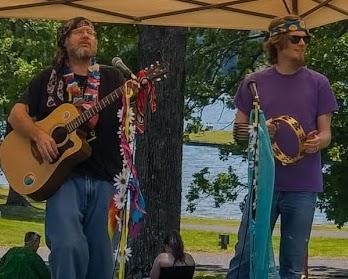
NEW CONCORD – As summer winds down, it is once again time for regional talent to gather for a good cause at the Howl at the Moon 5. Over the course of two days, Aug. 23 and 24, some 20 acts from Murray, Paducah and beyond will make a joyful noise across the fields, forests and creeks in eastern Calloway County to raise money for Murray WATCH Center.
When the gates open at noon Friday, revelers can rally for the best spots to park and camp on-site before browsing the booths of local artisan crafts including t-shirts, jewelry and a highlight this year – custom candle rendering. Concessions are provided by the food truck Eddie’s Lil’ Bit of Everything.
This year the grounds will also feature an art installation sculpted by Cindy White and Matt Oliver, board members for Howling for Hope, Inc., the production company behind the event. In addition to the long list of musical acts, there will be a dance demonstration by Zerdali Dance Company, Axis Bellydance and Kinetics/Hip Collective on Saturday at 2 p.m.
Raffle prizes include custom-made t-shirts, gift certificates for local businesses such as the Murray Art Guild and a swanky Samick guitar donated by Greymare Music Works.
Howl 5 celebrates the return of host Jamal “The Cashier” Gardener as well as concert mainstays DJK and Always and The Sticky Sweet Sugar Beets.
The festival is the endeavor of Murray native Lloyd Walker, known affectionately to his friends as “Squish.” Walker is a profound lover of music and became a fixture at open mic nights around town at venues like Terrapin Station, building connections with other local musicians.
“I just love music,” he said in an interview Thursday, “and I just wanted to have fun playing with other folks. What started as just a few of us has grown to (a two-day event).” It soon became obvious to Walker that he had a network large enough to give back to the community by selling tickets to his previously informal jam sessions.
Although the festival officially started in 2019, there was a trial run the previous year in late summer, and it certainly came with trials. Walker recalls the first performer, unflappably singing a moving rendition of a Bob Seger classic, while he and his crew struggled to affix a quite-flappable tarp as the wind battered it across the young man’s face. With a laugh Walker proudly admits, “We’ve come a long way in a short time.”
The stage utilized this year and last was a major upgrade from the hay wagons of that first outing. Partnering with Freedom Sound Production during a benefit for the Pennyroyal Veterans Center (PVC) of Hopkinsville called “Music Strikes Back,” Walker was able to construct a portable stage that now, itself, serves to generate revenue through rental fees. The funds help to provide furnishings and household appliances for the contingent of previously unhoused veterans assisted by the PVC.
Howl 4 garnered a substantial $500 donation – post-expenses – to Murray WATCH, Inc. Proceeds amassed this weekend will also go to WATCH in memory of long-time WATCH board member Ava Watkins, who passed away earlier this year.
Tickets are $30 for a weekend pass or $25 for Saturday, which includes parking and camping. Children under age 12 as well as WATCH staff and clients get in free.
On Thursday, the Kentucky Supreme Court just released a 108-page ruling in the case brought against the Judicial Conduct Commission by former circuit judge James (Jamie) Jameson over the commission removing him from office in November 2022.
Deputy Chief Justice Debra Hembree Lambert wrote the majority opinion, and Justices Robert B. Conley and Michelle M. Keller concurred. Justice Kelly Thompson concurred but penned a separate opinion. Also, by separate opinions, Chief Justice Laurance B. VanMeter and Justice Angela McCormick Bisig concurred in part and dissented in part. Justice Shea Nickell recused.
In the opinion, the high court affirmed the commission’s findings on Counts II and VII; Counts I and III were affirmed in part and denied in part; and Counts IV, V and VI were dismissed. VanMeter and Bisig dissented regarding Counts IV and V, arguing that the commission did provide clear and convincing evidence to support its findings.
COUNT I – AFFIRMED IN PART, DENIED IN PART
The court upheld the JCC’s finding that the CCB was created for an improper purpose was supported by clear and convincing evidence. The court also upheld the finding that Jameson developed procedures, local rules and forms for ankle monitor program without the approval of the chief justice.
About the charges contained in Count I related to an RFP (request for proposals) issued by the Calloway County Fiscal Court on a contract to provide ankle monitoring services for both Marshall and Calloway counties, justices did not agree with all of the JCC’s findings.
The JCC deemed Jameson’s voluntary appearances before the fiscal courts of Marshall and Calloway counties to advise them that the practices around ankle monitors in place at the time violated the law to be improper, and the high court agreed.
The court further agreed with the JCC that clear and convincing evidence showed Jameson’s role in developing the RFP was unethical and affected the fairness of a public bidding process, but it disagreed that the conduct constituted “bid rigging,” based on the statutory definition of the term.
“‘Bid-rigging’ was a label that was used by me to characterize, what I thought, his actions amounted to,” JCC attorney Jeffrey Mando said in an interview Thursday. “And I think it’s important that, while the Supreme Court found that it was not bid-rigging, given the definition of bid-rigging in the statute that they cited, the important thing, which was proven by clear and convincing evidence, is that he clearly had a conflict of interest and he was using the prestige of his office for his own personal benefit. Those findings, which the court held were supported by clear and convincing evidence, are what is important.”
Count I also included charges that Jameson directly solicited funding for Re-Life, a CCB project aimed at building a residential SUD treatment facility to serve Marshall and Calloway counties. According to the opinion, judges are allowed to “assist” charitable organizations and nonprofits with planning related to fundraising.
“Consequently,” the opinion states, “to the extent the JCC found Judge Jameson committed misconduct by participating in the planning of the May 2021 Re-Life fundraising event, we disagree and will not consider that alleged misconduct when determining an appropriate sanction.”
Jameson was also found guilty of misconduct by the JCC for directly soliciting funds via the Re-Life website as well as in radio ads, emails and flyers promoting a Re-Life fundraising event.
“If the JCC had offered evidence demonstrating that Judge Jameson was responsible for the creation of the website or had directed that it be created,” the majority wrote, “its finding of direct solicitation could be upheld. But, absent that proof, this Court cannot say that its finding was supported by clear and convincing evidence.”
About the radio ads, justices were in agreement that it was not unethical for Jameson to allow his title to be used in connection with a fundraising event “so long as the ad did not involve Judge Jameson’s personal solicitation of contributions.”
However, the court sided with the JCC that clear and convincing evidence supported the charges related to solicitating funds through emails and flyers.
The final issue addressed in Count I was a grant application Jameson submitted for the CCB. The court agreed that it was not legally permissible for the CCB to apply for Kentucky State Corrections Commission grants, which are only available to community corrections board properly organized under KRS196.701. The court, however, disagreed that the act of putting the title “circuit judge” on the applications constituted a “blatant abuse of power.”
In total, the JCC found Jameson’s actions, as outlined in Count I, violated 10 judicial canons, specifically, Rule 1.1, Rule 1.2, Rule 1.3, Rule 2.1, Rule 2.4(B), Rule 3.1(A), Rule 3.1(C), Rule 3.1(D), Rule 3.2 and Rule 3.7(A)(4). Although justices did not agree that clear and convincing evidence supported all of the charges, they did agree that Jameson violated all of those canons.
COUNT II – AFFIRMED
Count II was solely focused on the CCB’s ankle monitor program. The JCC found Jameson violated nine judicial canons by using his Kentucky Court of Justice (KCOJ) employees to perform duties for the CCB, such as drafting documents and overseeing the ankle monitor program, and for having CCB employees, who were not employed by KCOJ, notify him directly about alleged ankle monitor violations, which resulted in him issuing arrest warrants for those defendants on multiple occasions. The high court upheld all of the JCC’s finding that Jameson violated nine judicial canons, namely, Rule 1.1, Rule 1.2, Rule 1.3, Rule 2.1, Rule 2.2, Rule 2.9(C), Rule 2.12(A) and Rule 3.7(6)(a).
“We want to be clear for the benefit of other judges in the Commonwealth that, under normal circumstances, KRS 431.520(9) permits a judge to order the arrest of a defendant upon being advised that a defendant has not complied with the conditions of his or her release, and that statute does not specify from whom that information must come,” the opinion clarifies. “… However, under the set of highly unusual circumstances presented by this case, it was not appropriate or ethical for Judge Jameson to issue arrest warrants based solely on information that came from an employee of his own corporation.”
COUNT III – AFFIRMED IN PART, DENIED IN PART
Accusations of mismanaging his courtroom, deviating from acceptable standards of judicial conduct and engaging in acts of retaliation – all charges laid out in Count III – dominated the testimony and evidence presented at Jameson’s 10-hour temporary suspension hearing in August 2022. The JCC found Jameson violated seven judicial canons.
But the court found that the JCC only proved by clear and convincing evidence that Jameson engaged in two acts of retaliation, violating five canons (Rule 1.1, Rule 1.2, Rule 2.2, Rule 2.4(B) and Rule 2.8(B)), not seven.
COUNT IV – DISMISSED
Under Count IV, the JCC found Jameson guilty of using “his influence and the prestige of his judicial office” to pressure Lisa DeRenard, an attorney in Marshall County, to donate to his reelection campaign. Noting that DeRenard testified that Jameson only asked for her “support,” and she was the one who brought up making a donation.
“The question, then, is whether it was ethical for Judge Jameson to not reject her suggestion that she make a financial contribution to his campaign and thereafter direct her to send the funds to his campaign committee,” Lambert wrote for the majority. “We hold that it was.”
VanMeter and Bisig disagreed. In a separate opinion joined by Bisig, VanMeter wrote, “Judge Jameson’s failure to explicitly ask DeRenard to make a financial contribution to his campaign does not insulate from the charge. I do not believe our ethical canons are so rigid as to be so easily nullified by oblique requests.”
COUNT V – DISMISSED
The JCC found Jameson guilty on Count IV for repeatedly attempting to obstruct justice and impede the JCC’s authority for contacting his staff and instructing them to not comply with a JCC subpoena. The majority found the JCC did not meet its burden of proof.
“To be sure, it was wholly improper for Judge Jameson to contact his judicial staff at that time because the JCC’s temporary removal order had not yet been voided,” she continued. “The misconduct alleged under Count V was that Judge Jameson ‘repeatedly attempted to impede and obstruct’ the JCC’s investigation by intimidating and attempting to interfere with his judicial staff’s compliance with JCC’s subpoena.”
The majority determined Jameson was not interfering because he did not explicitly tell his staff to not comply.
Again, VanMeter and Bisig were not assuaged. “The fact that Judge Jameson never spoke the words, ‘do not comply with the subpoena’ does not save him,” VanMeter wrote. “Again, I do not believe our ethical canons can only be broken by an unambiguous declaration of intent to break them.”
COUNT VI – DISMISSED
All sitting justices were in agreement to dismiss Count VI, which was related to actions Jameson took after the temporary suspension hearing. After the high court voided the JCC’s temporary removal order, the charges under Count VI were rendered moot.
COUNT VII – AFFIRMED
Originally, the charges under Count VII exclusively concerned Jameson’s attempt to quash a potential news story about a Marshall County Judicial Building surveillance video that showed the judge walking in the courthouse in his underwear.
Although said video was heavily discussed throughout the proceedings in filings, testimony and in media coverage, what it actually showed, beyond the description above, was not known until Thursday.
“The video, captured on February 11, 2022, at approximately 6:35 am, depicted Judge Jameson walking downstairs from his chambers to an employee entrance in a t-shirt, boxers, and socks,” the states. “After a short interaction with his wife and two children at the employee entrance, he walked back up the stairs toward his office.”
In the opinion, justices viewed other incidents related to the video that were originally charged in different counts as evidence related to Count VII, namely around Jameson’s efforts to have Marshall County Judicial Center Lead Court Security Seargent Jeff Daniel removed from his position.
Collectively, the court found those incidents to be clear and convincing evidence that Jameson committed misconduct, violating three judicial canons, namely, Rule 1.1, Rule 1.2 and Rule 1.3.
Editor’s note: This story contains details that some may find disturbing. Discretion is advised.
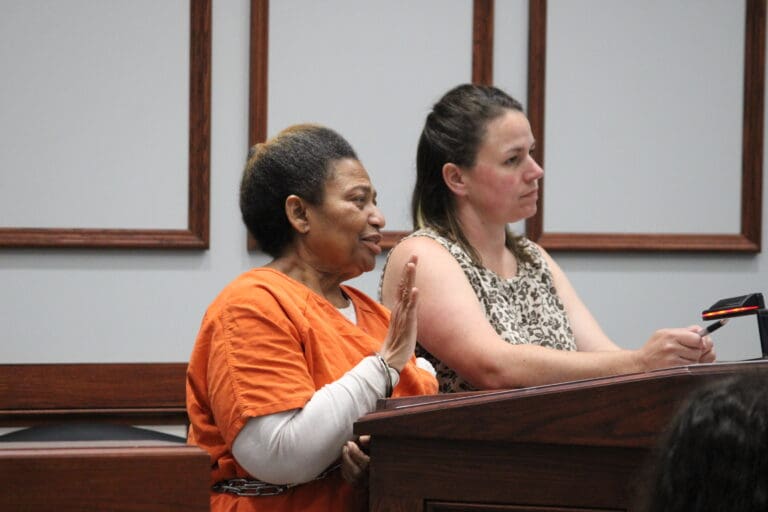
MURRAY – A woman arrested in April after law enforcement officers found a decomposing body in her Riviera Courts home pleaded guilty in Calloway Circuit Court this morning to one count of abusing a corpse.
Gwendolyn Penny, 68, was indicted on April 19 on one count of abuse of a corpse, a class D felony, for intentionally treating a corpse “in a way that would outrage ordinary family sensibilities,” and one count of knowingly abusing and/or neglecting an adult in her care, a class C felony.
In court this morning, Penny pleaded guilty to one count of abuse of a corpse pursuant to a plea agreement whereby the prosecution agreed to dismiss the abuse/neglect charge.
According to the uniform citation, a Calloway County Sheriff’s Office deputy found a deceased male in advanced states of decomposition after going to a residence in Riviera Courts to serve papers and contacted the Murray Police Department (MPD) to investigate.
MPD Detective Justin Swope wrote that, when he spoke to Penny, she told him that she “had not noticed anything wrong with the victim and he had just been sleeping.” According to his report, after Penny signed a Miranda waiver, she told him that, a little more than two weeks prior, the victim told her he had “spoken to God and would be going through the process of ‘Going all the way down,’ which she explained was down to death.”
Swope recounted Penny telling him that the next day, she found the victim unresponsive in his chair, unable to move or speak. Three to four days later, she noticed that he was not breathing.
“She said under any other circumstances,” Swope wrote, “she would have been concerned about his health and would have given him care, but this was the process and she had to trust in the Lord. She said over the last couple weeks she noticed worms and flies on his body. He was swelling and his skin was peeling. He was dripping blood and liquid onto the floor. She stated she would peel the skin off, clean off the worms, and attempted to change his clothes this morning.”
Officers found a journal in the home that documented, in detail, the decomposition process and the changes to the victim’s body. The coroner advised he believed the victim had been deceased for some time and posited a time frame consistent with Penny’s account.
“Evidence and statements show Gwendolyn observed a drastic change in the health and well being of the victim and made no effort to get him care,” Swope wrote. “She acknowledged he stopped breathing nearly one and a half weeks ago. She admitted that any other person seeing him in this condition would be concerned for his well being and would get him help. Gwendolyn made a conscious decision to ignore the health crisis the victim was suffering as part of a religious test which potentially caused the death of the victim due to lack of medical care.”
Swope determined that, based on the investigation, Penny “knowingly neglected the well being of the victim who she proclaimed to the care take of and failed to get him aid during a medical emergency. She then allowed the deceased to decompose in her home and admitted to peeling skin from his body, cleaning worms off him, and otherwise abusing his corpse.”
Penny is facing five years of imprisonment. Her sentencing is scheduled for Monday, Oct. 21, at 8:30 a.m.
We can’t do what we do without our community! Journalism isn’t free. The story you just read could only be written because a reporter scoured dockets, read court records and spent hours in the courtroom – including 3.5 today alone. Our reporters volunteer their time to tell these stories and keep the community informed. Your financial support will allow us to start paying them. Please consider donating today. You can make one-time or recurring gifts on our Donorbox page: donorbox.org/support-the-sentinel
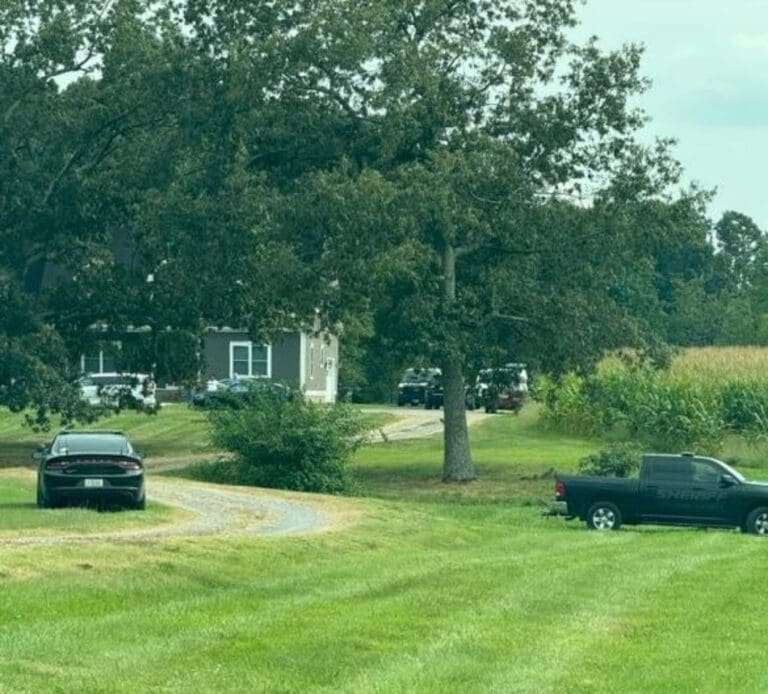
MURRAY – Less than a week after StepStone Family and Youth Services relocated its boys group home from a facility in town, on Back Street, to a home on Rockwood Road in the Elm Grove community, Calloway County Sheriff’s Office (CCSO) deputies were called to respond to an attempted assault of an employee by one of the home’s residents. The juvenile fled on foot, resulting in a manhunt that lasted more than four hours and required assistance from Calloway County Fire-Rescue (CCFR) and Marshall County Sheriff’s Office (MCSO).
At approximately 3 p.m. yesterday, CCSO deputies responded to a call from the home about an out-of-control 16-year-old male who attempted to stab one of the employees with a knife, according to a CCSO press release. When deputies arrived, the juvenile assaulted one of them before fleeing into a cornfield adjacent to the property.
In an interview this morning, Calloway County Sheriff Nicky Knight said that, when the first call came in, two on-duty deputies, two detectives, two supervisors and two off-duty deputies responded to the call. When the juvenile fled, around five CCFR volunteers responded with the agency’s drone. Knight said that he also called another individual, who assisted with his drone.
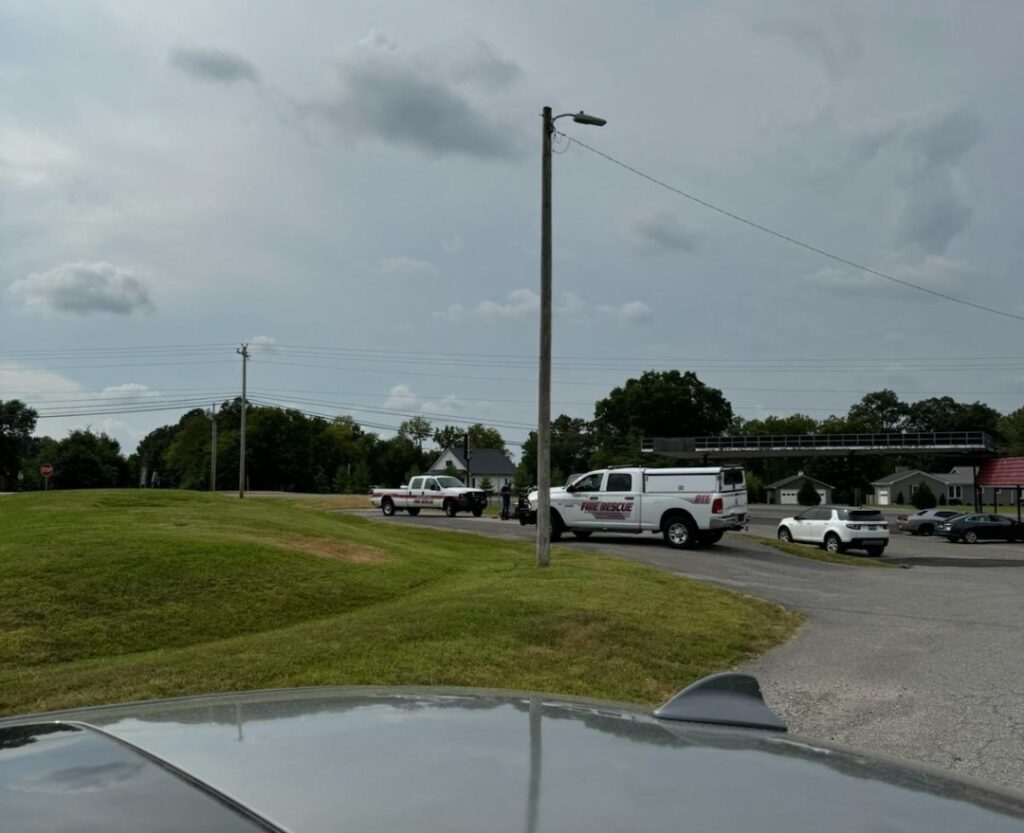
Calloway County Fire-Rescue units are seen in a parking lot near the boys home on Rockwood Road. Photo provided
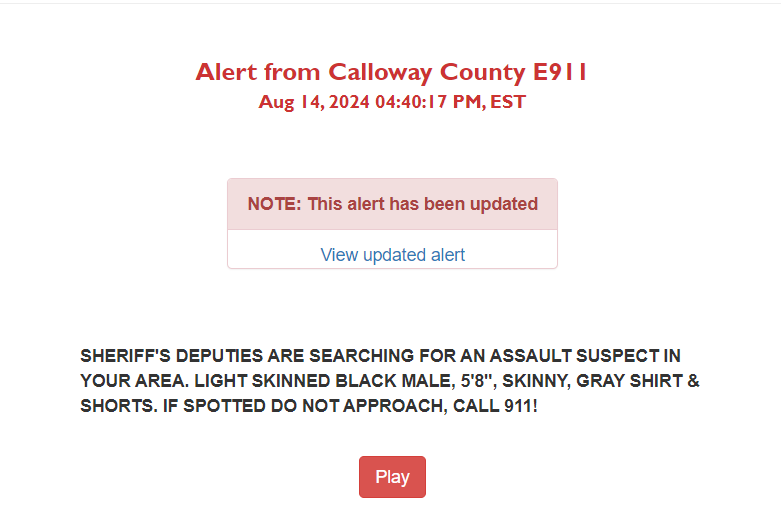
While two drones searched the cornfield, CCSO established a perimeter, according to the press release, and Calloway County E911 sent out an alert via Hyper Reach so that residents in the area were aware of the situation and could keep themselves safe while the suspect was at large. In an attempt to get the juvenile to come out of the field, CCSO expanded its perimeter approximately two hours later.
“We did what we could do and kind of backed out,” Knight explained. “We knew that he would resurface, but a lot of times, they’re not going to resurface until they think we’re gone. So, we pulled back a little bit.”
Around 7:30 p.m., the juvenile returned, and staff contacted CCSO. When deputies arrived, the juvenile fled again. Knight said that five CCSO units responded to the second call – three of whom came from home. CCFR was not called in to assist the second time; instead, Knight contacted the MCSO and asked them to assist with a K-9 unit.
“They actually sent two canines and the handlers, and that’s the time that we ended up catching him,” Knight said, adding, “That’s a lot of resources in one day.”
The K-9 units “flushed” the juvenile from the field, the release states. After a brief struggle, during which another deputy was assaulted, the juvenile was detained. None of the deputies required treatment for their minor injuries.
The juvenile was medically-cleared for minor injuries before being transported to the McCracken County Juvenile Detention Center where he is being held on charges of first-degree attempted assault, two counts of third-degree assault of a police officer, second-degree fleeing on foot, resisting arrest and third-degree criminal mischief.
About the incident, BrightSpring Health Services, StepStone’s parent company, provided the following statement earlier today:
“We are aware of a recent incident involving a resident at our StepStone home in Calloway County, KY, and are working in full cooperation with local authorities. We want to assure the community that we take all proper steps to ensure the safety and wellbeing of our foster children, our staff, and our neighbors. If any community members ever have questions about StepStone services, they are welcome to contact Joe Tanner at joe.tanner@stepstoneyouth.com.”
StepStone is a for-profit company that, among other services, provides qualified residential treatment programs for children, ages 10-17, in the foster care system across nine states. It operates four group homes in the Purchase Area, including two in Murray – one for boys and one for girls.
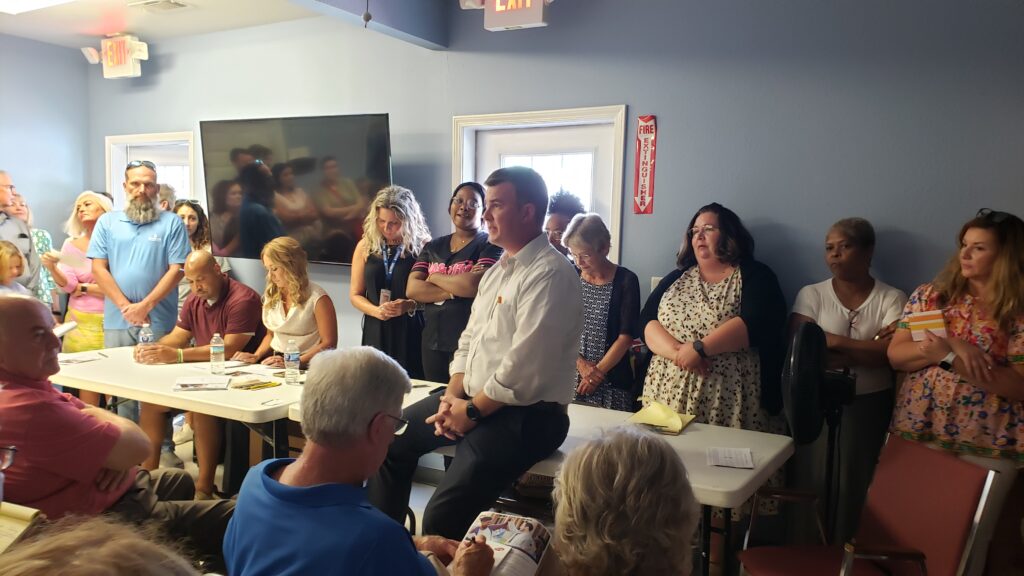
Chris Hempfling, vice president of service excellence and stakeholder relations for BrightSpring Health Services, StepStone’s parent company, addresses the crowd at a public meeting the company held in July 2023. JESSICA PAINE/The Murray Sentinel
The company has been looking for suitable properties to relocate the boys home for well over a year, but their attempts were largely thwarted by blowback from neighbors. When StepStone held a public meeting in July last year about potentially relocating to a home in the Southwest Villa subdivision, approximately 70 neighborhood residents attended to voice their staunch opposition to the move. Within days, StepStone announced it was no longer considering relocating to that property.
Chris Hempfling, vice president of service excellence and stakeholder relations for BrightSpring, told The Sentinel at the time that “because of the comments and the pushback, we just didn’t feel that it was the right placement for our children.”
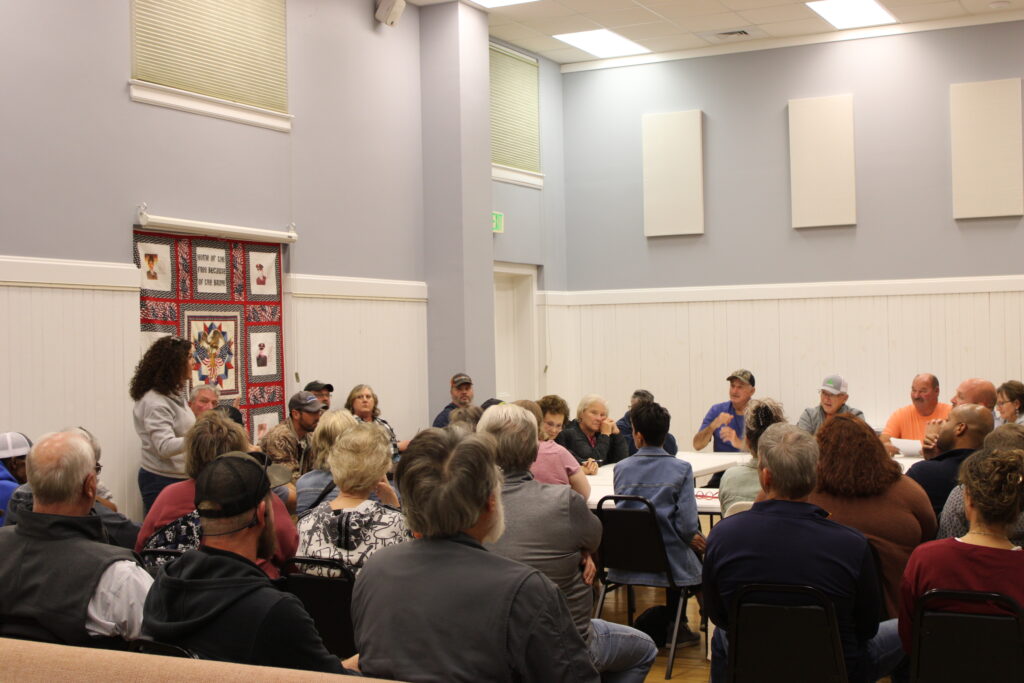
In October, StepStone held another public meeting about the Rockwood Road property. Around 40 residents from the Elm Grove and Faxon communities attended that meeting, and while emotions were high, it did not seem as contentious as the one in July.
Around 40 residents of the Elm Grove and Faxon communities attended a meeting in July to discuss StepStone relocating its boys home to Rockwood Road. JESSICA PAINE/The Murray Sentinel
Knight was among those in attendance at the October meeting. While most were concerned about safety, decreasing property values and theft, the sheriff offered a different perspective on the potential downfalls of relocating the home to the county – the strain on county resources.
“I think it’s best in the city where the city’s got plenty of units to deal with it,” Knight said at the meeting. “Coming into the county, I’ve got two units out. We get a runaway juvenile; yeah, we’re gonna look for them just like (we would any child). We’re gonna do our best, but I’ve got two units; other people in the county need my help, too. So, leave it in the city. We’ll be glad to help the city if we need to help the city because the city can’t come all the way out there to where you’re going to help us.”
Today, Knight said that what happened yesterday is exactly what he was talking about back in October.
“I’m already short-handed – I’m short four officers,” he added. “If I can find a decent officer, I would hire them. And we’re in the process – we’ve made some job offers and have some in school – but to go above and beyond that, I don’t have the funding.”
Knight acknowledged that many people who live in the area were locked down in their homes and scared, but he also noted that yesterday was not the only time CCSO has used E911 to alert residents.
Screenshot of the Hyper Reach alert
“We’ve had other people that we’ve been after and put out, ‘Hey, lock your doors, lock your cars,’” he said. “So, it’s not just isolated to this, but we know what we’ve got here. … If I lived in the neighborhood or if I had an elderly mother or father that lived in the neighborhood, then I would be worried for them. If I had young kids, I would be worried for them. I think the part that gets me is the workers just can’t handle them. We’re going to have stuff that’s going to happen, and I think it would be better in a community other than Calloway County.”
Knight said that representatives of StepStone met with him after the public meeting in October, and he told them, “’I don’t have any choice. We’ll give it a try because you’re going to do it. But the first time we have something,’ I said, ‘I will do everything I can to shut you down… on both places,’” referring to the girls facility StepStone operates on Robertson Road South.
“I’ve complained to everybody I know to complain to; and I’m still looking for somebody else to complain to, and I’m not done looking,” he said, adding that he wants the public to know his office is “doing the best we can to keep it contained, and I’m doing the best I can to get it shut down.”
Shanna Hodges lives next door to the property. She and her husband, Ronald, built the home and lived there with their children until they sold it in 2021 and began building their “forever home.”
When the incident occurred yesterday, Ronald was not home, so she and their 15-year-old daughter hunkered down in their home alone. Hodges, who passionately advocated for the needs of children in the foster care system at the October meeting, said that she had always felt secure in the knowledge that she could protect her children, “but last night, it felt different,” she said. “I’ve never worried about being in my kitchen, cooking dinner for my family and worrying that I needed to make sure the doors were locked.”
Shanna Hodges addresses the crowd at StepStone’s October meeting. JESSICA PAINE/The Murray Sentinel
After the property was purchased in November, Leigh White, vice president of communications and PR for BrightSpring, told the Sentinel in an email that the company was confident in its decision to proceed with the purchase of the Rockwood Road property, noting the 3,245-square-foot home, which sits on a nearly five-acre lot, will provide the boys living in the home “plenty of space to participate in fun, engaging outdoor activities – like throwing the ball or learning how to garden – while still having space for independent living.”
When asked if StepStone had reached out to the adjacent property owners about the purchase, White said, “The surrounding community plays a large role in welcoming our youth and helping them feel safe, secure, and loved. The local community has been supportive of StepStone’s mission, and we’re excited to find new ways to partner with our new neighbors to ensure we continue to make a lasting, meaningful impact in the lives of the children we serve. We’re working closely with local community leaders to ensure we have strong partnerships to best serve our children and meet their needs.”
But according to Hodges, no one from StepStone has reached out to her, despite her leaving her contact information with the company’s representatives at the October meeting.
“I listened to all my junk voicemails and have checked my email to make sure that I didn’t miss anything. Nothing,” she said. “The yard had gotten really high, and we knew something was fixing to happen because they had bushhogged the yard. Then Saturday, we saw a moving truck and a bus full of kids.”
In October, StepStone Regional Director over Kentucky, Indiana, Ohio and Tennessee Jeff Hardin told those at the meeting, “Where it works really well is that I’ve got your number; you’ve got mine; we know you; we know everybody around there; and we communicate regularly. And all of the neighbors know that if they see someone, they know they’ve got someone to call so they can say, ‘Hey, one of your boys is walking down the street.’”
“This was a little more than just a missing kid,” Knight said this morning. “This was a crime that had been committed, so this was more than a missing kid.”
Hodges said that she and her daughter made a decision to give the boys the benefit of the doubt and not prejudge them. “It was so heartbreaking last night when I got that text (about the incident),” she recalled, “and I said, ‘I really wanted to be wrong.’ And she said, ‘I did, too.’”
“I really truly believe that every kid – anybody – can change, and these kids, I don’t want to give up on them,” she added. “But I don’t want them 200 yards from my house, running through the corn.”
CCSO encourages anyone who witnesses any unusual or possible criminal activity to call the Sheriff’s Office at 270-753-3151 or email ccso.office@callkyso.com. Residents can sign up for Hyper Reach here.
Individuals charged with crimes are presumed innocent until proven guilty in a court of law.