

Thursday, November 27, 2025
32.7 F
Murray
Home Blog Page 47

Regents approve apartment complex purchase

0

MURRAY – With the intent of closing an on-campus residential area known as College Courts, the Murray State University Board of Regents voted today to pursue the purchase of Station Seventy-Four, an apartment complex located on North 16th Street, for $16.5 million. 

“The condition of College Courts deteriorates even though we’re putting a lot of money into those facilities,” MSU President Bob Jackson said. “Replacing College Courts will save us six figures of deferred maintenance and improvements money each year – this ongoing maintenance that we put into those facilities (which are) 60+ years old.”

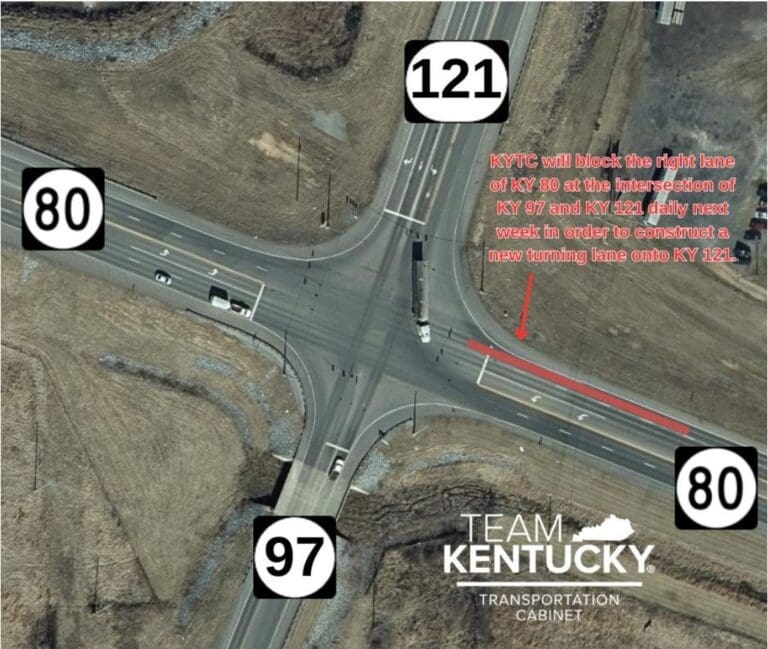
Station Seventy-Four is a comparable size – 268 beds versus College Courts’ 264 – and is in a similar location, albeit on the other side of KY 121; but Station Seventy-Four was built in 2015, as opposed to College Courts, which was built in the 1960s.

In addition to being in a desirable location, the acquisition would save the university the hassle of building a new facility.

“What this would do,” Jackson said, “is it would avoid major construction timing issues that we’ve run into in the past, major construction costs that we deal with today and related other unknown risks – there’s a lot of unknown risks, we’ve learned post-pandemic, related to construction.”

Jackson noted that the university’s aging housing infrastructure has become a recruiting and retention issue, adding that enrollment projections for next year indicate there will be a great need for additional student housing.

“I think it’s important that we address not only the short-term but long-term needs of the university, and I think this acquisition would be in line with that,” Board Chair Leon Owens said. “It’s financially feasible, and it’s the best option that we have available at the time.”

The board authorized Jackson to enter negotiations for the purchase of the apartment complex for a purchase price not to exceed $16.5 million, exclusive of closing costs and taxes. The board further authorized Jackson to take steps to secure approximately $17.9 million in bonds for the purchase of the apartment complex.

The board unanimously voted in favor of the property acquisition and bond issuance; however, because he owns property in the vicinity of Station Seventy-Four, Regent Thomas Waldrop abstained from voting.

Local nonprofits raise $226,000 through Weaver Challenge

0

MURRAY – After receiving an overwhelming response from the community in its inaugural year, it would appear that the Drs. Dick and Jan Weaver Challenge for Charities is poised to become a staple fundraising opportunity for those looking to support local nonprofit organizations. 

The Murray Calloway County Community Foundation, in conjunction with the Weaver Educational Trust, a trust started by the late Drs. Dick and Jan Weaver and administered by the Weaver family, created the fundraiser as a way to shine a spotlight on several local nonprofits while also bolstering their financial longevity. 

The challenge kicked off with 20 local nonprofits on Sept. 15. They had until Nov. 30 to raise a minimum of $1,000 to be eligible to receive a matching grant of up to $5,000 to be deposited in the organization’s endowment with MCCCF. Ultimately, 18 completed the challenge; their fundraising totals ranged from $5,081 to $16,625. Collectively, the nonprofits raised $136,002 in donations through the challenge and received $90,000 in matching grants from the Weaver family, for a total of $226,002.

Participating nonprofits had three ways to receive donations. First, each held a special fundraising event, for example, CASA by the Lakes hosted a murder mystery dinner and Angel’s Attic held a “Special Treasures Sale”. In addition to the event, people could donate to a specific organization through its Weaver Challenge PayPal account or by filling out a Weaver Challenge brochure and sending a check. While the organizations knew how much they raised during their special event, they did not know how much they raised through brochures and online donations until yesterday, when MCCCF announced the totals during the Christmas CUBS (Calloway United Benevolent Services) Luncheon.

All 18 organizations received the full $5,000 matching grant. With $16,625 in total funds raised, Life House Care Center had the highest total. CASA by the Lakes raised $12,284, and the Humane Society of Calloway County rounded out the top three with $10,470. 

The other nonprofits’ totals were $8,605 for Neartown, $8,336 for Soup for the Soul, $8,314 for Murray-Calloway County Need Line, $8,075 for the United Way of Murray-Calloway County, $7,377 for the Murray Woman’s Club, $6,751 for the Murray-Calloway County Senior Citizens Center, $6,555 for Playhouse in the Park, $6,377 for the Anna Mae Owen Residential Hospice House, $5,605 for the Murray Art Guild, $5,600 for Serenity Recovery, $5,514 for HOPE Calloway, $5,300 for the Murray Lions Club Foundation, $5,177 for Murray Christian Fellowship, $5,100 for Angel’s Attic and $5,081 for the Murray Rotary Club.

Only two of the organizations did not previously have endowments set up with MCCCF, but they do now. Serenity Recovery and Neartown each had $5,000 deposited in their new endowment. MCCCF Board Member Linda Avery explained that the minimum endowment balance is $10,000, but the organizations have three years to meet that target. 

Woman pleads guilty to misdemeanor in sex abuse case

MURRAY – Sarah Pawlik, a Murray woman who was charged with first-degree sexual abuse in April, may not serve any time after accepting an offer from Assistant Commonwealth’s Attorney James Burkeen to plead guilty to a lesser offense.  

The 31-year-old was arrested in April following an investigation by the Calloway County Sheriff’s Office (CCSO) regarding an accusation of sexual assault made by her 13-year-old son in February, who, according to the complaint warrant, initially came into Pawlik’s home as a foster child and was subsequently adopted.

Booking photo of Melissa Pawlik courtesy of the Calloway County Jail

By the victim’s account to CCSO Deputy Jacob Hamm, the incident had occurred a couple of weeks prior. Pawlik initiated the assault by taking the boy’s hand and putting it on her rear end. When he pulled away, according to the deputy’s affidavit, she said, “What is wrong? Do you not like me?” Pawlik unzipped her top and exposed herself to the boy before she “got on top of him and started humping him.” 

The teenager told Hamm he was scared, so he “just laid there quietly,” and after approximately one hour, Pawlik got up and went to her bedroom. Fear also kept the boy from telling anyone about the incident. After two weeks, he told his girlfriend, and her older sister contacted the CCSO.

Pawlik was indicted in June for first-degree sexual abuse, a Class D felony, but on Friday, she accepted an offer from the Commonwealth to plead guilty to third-degree criminal abuse, a Class A misdemeanor, and agreed to a recommended sentence of 12 months. Monday, Calloway Circuit Judge Andrea Moore accepted the plea agreement and conditionally discharged Pawlik’s sentence for two years, meaning she will serve no time provided she does not violate the conditions of the plea agreement and does not commit any additional offenses during that time period.  

Per the terms of the agreement, Pawlik cannot communicate or have contact with the victim and cannot serve as a foster parent for the duration of the conditional discharge period, but the Commonwealth did not object to her request to move to Grand Rapids, Michigan, with her husband, Logan.

Mother’s competency to stand trial questioned

MURRAY – The Murray couple indicted on murder and criminal abuse charges last month appeared for the first time before Calloway Circuit Court Judge Andrea Moore this morning for their respective arraignments. While one proceeded as per usual, the other was continued after concerns regarding that defendant’s competency to stand trial were raised.

Chyanne Niemeyer and Nathaniel Gibson were arrested on Oct. 23 and charged with first-degree murder and first-degree criminal abuse of a child under the age of 12 following the death of Niemeyer’s 17-month-old daughter, and on Nov. 27, the grand jury upheld those charges when it returned the indictments. 

Last Thursday, Niemeyer’s attorney Cheri Riedel, directing attorney for the Kentucky Department of Public Advocacy Murray Trial Office, filed a notice with the court questioning her client’s competency to stand trial. In the filing, Riedel cited her interactions with Niemeyer and “other information obtained” as the basis for her belief that, “as a result of intellectual disability, Miss Niemeyer lacks the capacity to appreciate the nature and consequences of the proceedings against her and to participate rationally in her own defense.”

From left: DPA attorney Cheri Riedel, Circuit Court Judge Andrea Moore, Commonwealth’s Attorney Dennis Foust JESSICA PAINE/The Murray Sentinel

The notice is consistent with a motion Riedel filed in advance of Niemeyer’s indictment last month wherein she requested that a 2011 psychiatric evaluation, which characterized Niemeyer as having “extremely low intellectual and adaptive functioning” abilities, be presented to the grand jury. 

At the time, there was no ruling on the motion as the case had advanced from district court, but without an indictment, it was not under the jurisdiction of the circuit court; however, Commonwealth’s Attorney Dennis Foust advised his office would abide by the defense’s request. 

It is not known whether the grand jury considered that evaluation as grand jury proceedings are closed. The prosecution presents its case, but the defense is not allowed to participate; however, the defense can request video footage of the proceedings during the discovery phase of the trial, which is the formal process of exchanging information that will be presented during the trial. 

Niemeyer’s arraignment, which, like Gibson’s, was originally scheduled for 9:30 a.m. but was moved to 8 a.m. following a docket change last week, could not proceed today because her competency to stand trial has been brought into question. Now, she will need to undergo a psychiatric evaluation and be deemed competent before she can be formally arraigned. A review hearing was scheduled for Monday, Jan. 22, at 9:30 a.m. to allow the defense enough time to explore options for experts to perform the necessary evaluations and request funding from the court to pay for those services.

Riedel requested the judge enter a discovery order to initiate the discovery phase, but Moore said she thought it best to wait before proceeding any further. Riedel explained that having more information could have bearing on how the defense proceeds in pursuing Niemeyer’s evaluation. “You can file a motion, and the court will rule on that,” Moore advised.  

Commonwealth’s Attorney Dennis Foust sits at the prosecutors’ table during Monday’s proceedings. JESSICA PAINE/The Murray Sentinel

After the hearing, Foust told the Sentinel that his office is requesting the evaluation be conducted through the Kentucky Correctional Psychiatric Center (KCPC). 

“If they’re going to raise competency issues, then we need to be able to, well, we’re gonna have to have an evaluation also,” he said and added, “If KCPC makes a determination that’s adverse to the Commonwealth, well, we’d be kind of stuck with that, but we need to have that done so that we can know how we’re going to be able to proceed.” 

But it is well-known that KCPC has faced an alarming backlog of competency evaluations for years. Last December, Lexington television station LEX18 reported that 302 defendants across the state were waiting for evaluations from KCPC before their cases could continue. At that time, wait times ranged from 0-1,031 days, with the average wait being 179 days. According to Foust, there has been little improvement.

“The KCPC backlog is substantial,” he said. “I don’t want to tell you it’s 12 months – it could well be – I don’t know for certain, but it’s substantial; I know that. So, that’s not going to be a fast-track process. We’re going to try to get it done as quickly as possible, but they are so backlogged. I know a couple of months ago we were told that it was an eight-month backlog. Where it is now, I don’t know.”

During Gibson’s arraignment, Zanda Myers, a Bowling Green attorney who is serving as Gibson’s public defender, was reappointed to represent Gibson in the proceedings against him in Calloway Circuit Court. Gibson waived formal reading of the indictment and entered a plea of not guilty. Moore ordered discovery and reciprocal discovery and set a status hearing for Monday, Jan. 22, at 9:30 a.m.

Nathaniel Gibson, left, stands with his public defender Zanda Myers, an attorney from Bowling Green, for his arraignment.

“This is going to be a long process,” Foust said. “(On) Jan. 22nd, we’ll be, honestly, checking to see how we’re doing with discovery and just trying to track things to make sure that everything’s moving. But it is going to be a slow process. I wish we could fast track it and do it as quickly as possible, but it’s going to take time.”

Riedel had no comment following today’s proceedings. 

Individuals charged with crimes are presumed innocent until proven guilty in a court of law. 

The hidden costs of keeping secrets

MURRAY – The Kentucky Open Records Act (KORA) declares the “free and open examination of public records is in the public interest … even though such examination may cause inconvenience or embarrassment to public officials or others.”  

Initially passed in 1976, the act gives members of the public the right to inspect nonexempt public records, which are defined in KRS 61.870 as “all books, papers, maps, photographs, cards, tapes, discs, diskettes, recordings, software, or other documentation regardless of physical form or characteristics, which are prepared, owned, used, in the possession of or retained by a public agency.”

Public agencies include, but are not limited to, state or local government officers, departments, divisions, bureaus, boards, commissions, legislative boards and judicial agencies in addition to county and city governing bodies, councils, school district boards, special district boards and municipal corporations.

In order to inspect a public record, it must first be formally requested by submitting an open records request to the public agency. The Office of the Attorney General (OAG) provides a standardized form on its website that all public agencies are required to accept. As of June 2021, open records requests are limited to Kentucky residents and media outlets. 

After receiving a request, the public agency has five business days to respond by complying with the request or denying it. If an agency denies a request, in whole or in part, it must cite the specific exemption provided under KORA allowing the record to be withheld and a brief explanation of how it applies to the record.

When an agency denies a request or fails to respond in a timely manner, the requester may appeal to the OAG, but that office can only issue an opinion on whether the agency’s actions violated KORA and has no authority to penalize an agency for noncompliance. 

To compel an agency to comply with an open records request, the requester can file a lawsuit against the agency in circuit court where a judge can order it to comply; and if a judge finds records were “willfully withheld,” they may impose statutory penalties not to exceed $25 per day for each day the “right to inspect or copy said public record” was denied. 

A Kentucky Court of Appeals opinion published in 2016 established precedent for assessing penalties on KORA violations on a per-record, per-day basis in a case brought by the Louisville Courier Journal and the Lexington Herald-Leader against the Cabinet for Health and Family Services (CHFS) wherein it upheld a $756,000 fine imposed by Franklin Circuit Judge Phillip Shepherd.  

Penalties associated with open records violations are currently quite relevant in Calloway County as attorneys for Paducah television station WPSD-TV filed a motion for summary judgment last week in a lawsuit against Murray State University in Calloway Circuit Court over two open records requests the station submitted to the university last year. 

In October 2022, WPSD News Director Perry Boxx submitted an open records request to Murray State, seeking records going back to March 2022 of (A) communications between former Judge Jamie Jameson, university administrators and a former station manager of the university’s NPR-affiliate radio station WKMS, Chad Lampe, and (B) communications between another group of university employees about WKMS.

Days before the request was submitted, WPSD reporters were present as Lampe testified about some of those conversations during the final hearing in misconduct proceedings brought against Jameson by the Kentucky Judicial Conduct Commission. Lampe’s testimony, while predominantly centered around Jameson, suggested that tensions were high between university administrators and the radio station at the time.

In response to part A of the request, Murray State produced 31 heavily-redacted records on Nov. 3 and claimed the First Amendment, attorney-client privilege and KORA’s preliminary records and personal privacy exemptions as justification for the redactions. The university refused to conduct a search for the records requested in part B, calling that request “unduly burdensome,” which is permissible under KORA when the requester does not specifically describe the records they are requesting.

Two weeks later, WPSD submitted a second request, which covered a wide range of subjects and sought records as far back as April 2020. The next day, Nov. 17, WPSD filed a formal appeal with the OAG over the October request. The OAG sided with the television station on many of its complaints and unequivocally rejected MSU’s use of the First Amendment to withhold records related to WKMS. 

Following the release of the OAG’s opinion, MSU produced more records that were responsive to the October request, but WPSD still did not agree with many of the redactions. In March of this year, the station filed its lawsuit against the university to compel the production of records requested by Boxx in October and November last year. 

Over the past year, Murray State has produced thousands of pages of records, including as recently as Oct. 3, according to the motion; however, WPSD still disputes the redactions on 21 records – 15 from the initial October request and six from the November request, four of which have been withheld completely to date. Should the judge side with the television station regarding all 21 and award the maximum penalty, Murray State would be looking at more than $205,000 in penalties plus attorneys’ fees. 

In the motion, Louisville-based First Amendment attorney Michael Abate, WPSD’s lead counsel in the case, quotes Shepherd’s decision in another lawsuit against CHFS brought by the Todd County Standard over KORA violations wherein he asserts the term “willful” “connotes that the agency withheld requested records without plausible justification and with conscious disregard of the requester’s rights.” In that case, CHFS was required to pay the news outlet a little over $40,000 in penalties and fees. 

“As our motion explains, we believe the University has willfully violated the law in trying to hide documents from the public, and that a substantial fee and penalty sanction is appropriate under the statute,” Abate said in a statement provided to the Sentinel regarding the filing. 

Abate also represented the Courier Journal in the aforementioned landmark case against CHFS, which centered around open records requests submitted by the newspapers, seeking social workers’ case files related to fatalities or near fatalities of children resulting from abuse and neglect.

The case was initially filed in 2009, but that did not stop reporters from submitting requests; therefore, over the course of four years of litigation in Franklin Circuit Court, the scope of the case grew to cover requests for records in hundreds of fatal or near fatal child abuse cases, 140 cases from 2009 and 2010 alone. 

The disputed records largely focused on two cases. One was from 2009 involving a toddler in Wayne County who drank drain cleaner while his parents were staying in a trailer being used as a meth lab. The other involved a nine-year-old girl from Todd County who was beaten to death in 2011 by an older sibling, which the Courier Journal reported as being “particularly damaging” to CHFS. 

In December 2013, Shepherd ruled in favor of the newspapers, advising that the disclosure of records in cases where a child dies or is seriously injured from abuse or neglect is permissible under federal law and required under KORA. 

“The cabinet has intentionally continued to employ a wholesale blanket approach to withholding public records, despite such approach being prohibited by the Open Records Act and contrary to this court’s repeated orders,” Shepherd wrote of CHFS’ willful refusal to produce records. He also accused the agency of making a “mockery” of KORA, treating it as “an obstacle to be circumvented rather than a law mandating compliance.”

In February 2016, the Court of Appeals upheld Shepherd’s ruling, including the $756,000 in fines. In the majority opinion, Judge Irv Maze admonished the state for fostering a “culture of secrecy” and flagrantly disregarding the basic tenets of KORA. He wrote that punishment for such violations should be “meaningful” and noted, “Rigid adherence to this stark principle is the lifeblood of a law which rightly favors disclosure, fosters transparency and secures the public trust.”

The state appealed the ruling but only to contest the penalty amount. In April 2016, the parties reached an agreement whereby the state would not pursue its appeal to the Kentucky Supreme Court and would pay a $250,000 fine – $125,000 to each newspaper – and attorneys’ fees in the amount of $339,000 to the Courier Journal and $110,000 to the Herald-Leader. The respective presidents of both newspapers vowed to use the award money to advance the cause of government transparency, particularly regarding child welfare.

As for the Calloway case, a hearing on WPSD’s motion for summary judgment was originally set for tomorrow afternoon; however, the parties filed an agreed scheduling order this morning, canceling that hearing and giving Murray State until Dec. 11 to file its response to the motion; WPSD then has until Jan. 3 to file its reply to the university’s response. A hearing on the motion for summary judgment is scheduled for Jan. 24 at 2:30 p.m.  

Because a portion of the records sought by WPSD are related to communications with Jameson during his 2022 bid for reelection, current Calloway Circuit Judge Andrea Moore, who prevailed over Jameson in the 2022 general election, recused herself from the case. Christian Circuit Judge John Atkins was appointed as special judge. It is not clear in today’s filing whether the Jan. 24 hearing will be held in Calloway or at the Christian County Judicial Building in Hopkinsville, but it is worth noting that the now-canceled hearing tomorrow was supposed to take place in Hopkinsville.  


Editor’s note: This story was written without input or review from our board of directors.

MSU president inadvertently implicated

Story originally written Oct. 31, 2022*, published Nov. 21, 2023

HOPKINSVILLE, KY – Testimony given during a misconduct hearing brought against a western Kentucky circuit judge by the Kentucky Judicial Conduct Commission (JCC) in October (2022) implied that the administration of Murray State University (MSU) used its budgetary authority to penalize its public radio station, WKMS, over the content of news stories.

JCC attorney Jeffrey C. Mando called former WKMS Station Manager Chad Lampe to the stand on day one of the four-day hearing to testify regarding the seventh count of misconduct against Judge Jamie Jameson. That count centered around conversations he had with Lampe regarding an open records request filed by one of the station’s reporters.

Last spring (2021), the WKMS newsroom received a tip that there was video surveillance footage of the judge walking around the courthouse in his undergarments very early in the morning. The station submitted an open records request to the Administrative Office of the Courts for that footage, which was denied. 

In April, the judge contacted Lampe about the records request. During the conversation, he advised that he had already spoken to MSU President Bob Jackson and told Lampe that Jackson “was not happy” about the situation. In his defense, Jameson maintained that he only called the president of the university to find out who to talk to at the radio station. 

By Lampe’s account, the judge explained what was on the video and wanted assurance there would not be a story about it. Lampe advised that, although it did not sound like a news story, because the news director maintains editorial control of the WKMS newsroom, not the station manager, he would let the news director know what the judge said about the video and get back with their decision. Lampe noted shielding the news director from knowing the judge had contacted Jackson because it would have “complicated matters for them.” 

Regarding the newsworthiness of the story, Lampe’s testimony was consistent with a statement released by WKMS following the announcement of Count VII in early October (2022).

“We want to clarify that the incident the station reporter requested footage of – when explained by Jameson – was not deemed newsworthy because of its personal nature,” the statement said. “Editorial decisions are made by the news director who works to shed light on issue-based stories that impact lives in our communities. The WKMS news team has not and would not compromise its editorial integrity for any person, in any position.”

After speaking with the news director, Lampe contacted the judge to let him know there would not be a story and said he would appreciate him letting Jackson know “this isn’t an issue.” 

Within days of the conversation, Lampe testified, he received an email from David Eaton, dean of the Bauernfeind College of Business, which houses the radio station within the university structure, requesting that he send an accounting of his conversations with the judge to Provost Timothy Todd. Lampe assumed Todd’s inquiry was prompted by the judge’s call to Jackson as he did not divulge having the conversation with anyone other than his limited conversation about it with the news director, wherein he intentionally did not mention Jackson’s involvement.

Jameson’s attorney Richard L. Walter questioned Lampe about the timing of his complaint to the JCC. Lampe advised that he never would have contacted the JCC while he still worked at WKMS; after that, he was settling in at his new job.

“It was a moment of conscience,” Lampe said. “I had been reading the recent reports (about the Jameson case) and I thought, ‘I believe what the judge (did) was intimidating or unethical; and I believe that, if the public employs a judge to do a certain job, then he should be acting in a way that is ethical.’ I think the public has a right to know.”

The commission investigated numerous complaints related to the judge pressuring people to do things as well as engaging in retaliatory tactics; therefore, discussion around any potential retribution Lampe could have endured as a result of not doing what the judge wanted was necessary to understanding the context of the charge, which was complicated by the fact that Lampe left his position at WKMS within two months of his conversations with the judge.

From the beginning Lampe made clear that, while the incident with the judge “precipitated” his departure, it was by no means the only factor that played a role in him leaving the university. During the JCC’s cross-examination, Court of Appeals Judge Glenn E. Acree sought to clarify how the incident with the judge did factor into Lampe’s resignation.

“Would it be fair to say it wasn’t so much somebody who was the subject of the story trying to stop it – you said that’s regular – but what was affecting to you was that the administration was letting (the judge) affect them?” he asked. Lampe called that a fair assessment.

It was clear by Lampe’s account that the interactions with the judge came on the heels of budget decisions for the upcoming fiscal year, which he said were likely already made prior to his conversations with the judge. His testimony implied that WKMS’ allocation was reduced because other sources of news stories had complained directly to Jackson about the newsroom’s editorial choices.

On April 13 (2022), Lampe, in his role as station manager, sent an email to the station’s members informing them that the university administration cut $50,000 in funding to the station in the upcoming fiscal year. Late that afternoon, Lampe sent another email to say the university “had already identified other sources of funds so that WKMS would be held harmless in the new fiscal year” and apologized for not making that point clear in his previous email.

During the hearing, Walter first confirmed Lampe left the university on his own accord then asked if he had been subject to any disciplinary actions resulting from the incident with the judge. Lampe advised that he had not but added that the administration’s inquiry felt like a punishment, noting the request for information was unusual and “based on comments from an elected official.”

“There was no direct punishment to me,” Lampe said upon further questioning, “but the public radio station had received changes in their budgetary allocation as you would see lawmakers contact university officials. … I can say that the station – not necessarily me, but the station – could receive some negative blow back from the administration.”

Pushing for clarification, Walter asked if anyone in the administration informed Lampe that the radio station’s budget cuts were made to punish the station.

“If you were in the meeting that I was in, you could read between the lines,” Lampe answered, presumably referring to a budgetary meeting he had with university administrators around the time of the conversation with the judge.

In a follow-up question, Walter noted that drafting a budget is a process, not something that is changed on a whim.

“In some cases, yes, but in other cases it can be pretty simple,” Lampe noted. “In this scenario, things happened quite rapidly related to the budget changes at the station that were surprising. Again, I’m not saying (the incident with the judge) is the particular instance that precipitated a lot of things; I don’t want you to misinterpret that.” 

Court of Appeals Judge Jeff S. Taylor asked how many times, over the course of Lampe’s tenure, did a president of the university contact him regarding a story the station was about to report.

“In 15 years of working at WKMS,” Lampe said, “I recall the president being involved, or having some level of, not necessarily direct input, but attempted influence on three different stories in the last few years.”

Upon follow-up from Taylor, Lampe added, “I believe sources may have contacted the president directly, without my knowledge.”

About Jackson, specifically, Taylor asked if he had been involved in inquiring about news stories. Lampe said he would not call it “routine” and noted, “The president has no editorial control over the newsroom. Now, control and perceived control are two different things.”

During his time for questioning, Jefferson Circuit Judge Mitch Perry asked Lampe to explain what he meant by actual versus perceived control.

“Newsrooms operate independently, and they should,” Lampe said. “… I believe that, in some cases, administrators feel as though they may have control over the content of the newsroom; but if it’s truly a newsroom, they should not have control of the content that comes out because journalists are working in the public interest.” 

*This story was originally written and submitted by this reporter in October 2022 after covering the final hearing in the JCC’s proceedings against Jameson for the Murray Ledger & Times. The Ledger & Times declined to print it. Permission for another media outlet to publish the story was offered but only in exchange for this reporter’s resignation. As of September 2023, this reporter has no affiliation with that organization. 

Portions of the foregoing were included in a Murray Ledger & Times story printed in March 2023 about a lawsuit filed in Calloway Circuit Court by Paducah television station WPSD-TV against MSU over open records requests, presumably motivated by the above-referenced testimony. The preceding is the original story, only edited to add date references for clarity. 

High-profile defendants appear in Calloway Circuit Court

MURRAY – There were 114 criminal cases on the Calloway Circuit Court docket this morning. Among the defendants who appeared before Circuit Judge Andrea Moore today were two Murray natives whose respective cases have drawn headlines – Jack Epperson, who allegedly attempted to launch an improvised explosive into a group of sorority members last year, and Nathan Jackson, who faces complicity to attempted murder charges related to a late-night shooting near a local high school in September.

Epperson was arrested and charged with two counts of first-degree attempted assault, second-degree wanton endangerment and possession of a destructive/booby trap device in September 2022 for allegedly throwing a Molotov cocktail at a group of Murray State University students gathered outside near Sorority Row in advance of an event at a fraternity house across the street. The improvised explosive fell short of the crowd and exploded on a curb. 

No one was injured except Epperson; he was treated for burns on his hands according to a press release from the Kentucky State Police, who investigated the case along with the Bureau of Alcohol, Tobacco, Firearms and Explosives (ATF).

Epperson was notably absent for his previous appearance before Moore in August. Epperson’s counsel, Hopkinsville attorney Jason Holland, advised the court that his client was not present that day because he had been indicted on a federal charge of possession of an unregistered firearm and was being held in McCracken County Jail. 

At the August hearing, Holland requested that the $50,000 cash bond posted by Brian Epperson last October be released. In support of his request, Holland advised the defendant had abided by all of the bond conditions to date. Assistant Commonwealth’s Attorney James Burkeen told the court that, while he did not dispute Epperson had abided by his bond conditions, he could not agree to releasing the bond. 

At the time, Moore advised that she wanted to know more about the charges filed against the defendant in U.S. District Court for the Western District of Kentucky before she could rule on Holland’s request.

During the status hearing this morning, Holland renewed his motion for bond release previously made in August, stating that, in the year since his release, Epperson has not only abided by the conditions of his bond but has cooperated with pretrial officers regarding his Calloway Circuit Court case as well as the federal case against him.

Again, Burkeen advised the court that he did not disagree that Epperson has been cooperative and abided by the bond conditions, but he could not agree to refunding the full bond amount. He did say, however, that he would be amenable to reducing the bond amount and providing a partial refund. Moore advised the parties that she would look at the circumstances of the case and enter an order regarding any refund. As of the close of business Monday, no order had been entered.

Epperson’s next appearance in Calloway Circuit Court is scheduled for Feb. 5 at 8:30 a.m. In the meantime, Epperson’s federal case is set for a telephonic status conference on Dec. 15 at 11:30 a.m.

Jackson appeared for his circuit court arraignment following his indictment by the Calloway County grand jury on Sept. 29 on three charges of complicity to attempted murder.

Jackson was arrested on Aug. 6 in connection with a non-fatal shooting that occurred in the early-morning hours near Murray High School. Following a physical altercation at the Doran Arboretum with three teenagers from Kuttawa who came to Murray with a friend, Jackson allegedly returned to his home on Sunset Drive and told his brother Deon Howard what had happened, according to the testimony of Murray Police Department Detective Justin Swope at Jackson’s preliminary hearing, as reported in the Murray Ledger & Times. 

Howard and Jackson, each armed with a gun, returned to the arboretum to find items Jackson believed he lost in the altercation, Swope testified. Jackson initiated a verbal altercation with the teenagers, who had crossed Sycamore Street and were walking along the driveway on the east side of the high school. Jackson and Howard began walking toward the high school, and eventually, a shootout ensued between one of the teenagers who had stolen his father’s handgun and Howard, which resulted in one of the teenagers being shot in the back of the leg. 

According to the indictment, Jackson was complicit to attempted murder when he “aided, counseled or attempted to aid Deon Howard, acting with the kind of culpability otherwise required for the commission of murder, to intentionally engage in conduct which would constitute the crime of murder if the attendant circumstances were as he believed them to be by shooting” at the teenagers.

In court today, Murray attorney Mitch Ryan entered his appearance in the case as counsel for Jackson. Ryan waived formal arraignment and requested the court enter a standard discovery order. A status hearing in the case was set for Monday, Jan. 22, at 8:30 a.m.

The grand jury also indicted Howard on Sept. 29. He was charged with three counts of attempted murder, possession of a firearm by a convicted felon and tampering with physical evidence. Howard is still at large. 

Booking photo of Deon Howard from the Calloway County Jail

Anyone with information regarding Howard’s whereabouts is encouraged to contact the Murray Police Department at 270-753-1621 or leave an anonymous tip by calling Murray-Calloway County Crime Stoppers at 270-753-9500.

Individuals charged with crimes are presumed innocent until proven guilty in a court of law. 

Grand jury returns indictments in child abuse case

MURRAY – As expected, the Calloway County grand jury indicted a Murray couple Friday on murder and first-degree criminal abuse charges in the horrifying death of a toddler last month.

On Oct. 23, Chyanne Niemeyer, 24, and Nathaniel Gibson, 20, brought Niemeyer’s 17-month-old daughter to the emergency room at Murray-Calloway County Hospital. She had suffered severe burns on the majority of her body and was unresponsive. Considering the injuries suspicious, hospital staff notified the Murray Police Department. Shortly after MPD Detective Justin Swope arrived, the girl succumbed to her injuries. Niemeyer and Gibson were arrested later that evening and charged with murder and first-degree criminal abuse.

The couple pleaded not guilty at their respective arraignments in Calloway District Court the following day, and Judge Randall Hutchens set a $500,000 cash bond for each defendant. On Nov. 1, both waived their rights to a preliminary hearing, advancing their cases to the grand jury. Yesterday, the Commonwealth’s Attorney’s Office presented its case, and the grand jury returned indictments reaffirming the initial charges.

According to the uniform citation, Niemeyer and Gibson told Swope that the burns resulted from “scalding” hot bathwater. Both claimed they attempted to get the toddler out of the water but could not because of the temperature, but Swope noted in his report that neither Niemeyer nor Gibson had any redness on their hands or arms.

When it became evident to Niemeyer that her daughter’s skin was being profoundly damaged, she removed the girl from the tub and treated her wounds by applying BENGAY, which is an ointment designed to provide relief for muscle and joint pain, backaches and minor arthritis pain that, according to package instructions, should not be applied to damaged skin. Swope’s report also noted “strong medicine odor” coming from the child.

The couple told Swope they discussed whether the injuries warranted medical treatment but decided to wait and see how the child fared. They put her down for a nap, and when Gibson checked on her one-and-a-half to two hours later, she was unresponsive. At that point, nearly six hours after the injuries occurred, Niemeyer and Gibson took the toddler to the emergency room.

In addition to the burns, Swope observed several bruises on the girl’s buttocks, lower back, forehead and face. When asked about the bruises, Niemeyer allegedly admitted to “snapping” and striking her daughter in the bruised areas when the child would scratch or bite.

Per the indictments, the grand jury based the criminal abuse charges on incidents going back to Oct. 9. The documents give few details but both state the respective defendants “intentionally abused (the child) and thereby caused cruel confinement or cruel punishment.”

When asked to elaborate on the events that occurred over the two weeks leading up to the girl’s death during a brief interview Friday, Commonwealth’s Attorney Dennis Foust said Oct. 9 is, “a place where we believe it will be shown that criminal abuse started.”

On Nov. 7, a hearing was held in Niemeyer’s case on two motions filed by her attorney Cheri Riedel, directing attorney for the Kentucky Department of Public Advocacy Murray Trial Office, regarding evidence in the case, both what would be presented to the grand jury as well as what had been collected by MPD in its investigation.

In a request to collect and preserve additional evidence, Riedel argued there was no indication in the state’s incident-based reporting system that MPD inspected or otherwise tested the water heater or the faucet in the apartment where the incident occurred and noted that the proper functioning of those devices at the time of the incident “bears on the culpability of the defendants.” By not collecting the water heater and faucet, the property owner is free to repair, alter or replace them, thereby destroying potentially exculpatory evidence.

The second motion was a request to present evidence to the grand jury, including documentation of unsafe conditions and code violations in Niemeyer’s apartment as well as a 2011 psychological evaluation detailing Niemeyer’s “extremely low intellectual and adaptive functioning.” It further requested that the jury be informed of its subpoena power as well as the legal definitions of “the full range of possible lesser offenses.”

At the time of filing said motions, the case had already advanced from district court to the grand jury, but without an indictment, the case was not yet under the purview of the circuit court. As such, Calloway Circuit Judge Andrea Moore advised the parties that she did not believe she had jurisdiction over the case and, therefore, could not rule on the motions.

While there was no resolution regarding the motion to preserve evidence, Foust advised the court that his office would honor the defense’s request to present evidence to the grand jury.

Riedel submitted the defense’s evidence Thursday; however, because defense attorneys cannot participate in grand jury proceedings, she will not know whether it was considered by the grand jury until the discovery phase, which is the formal process through which the parties exchange information regarding witnesses and evidence that could be presented at trial. At that point, defense attorneys will have access to video footage of the grand jury proceedings. In a text Friday afternoon, Reidel said she is “anxious to see the discovery and continue our investigation.”

Niemeyer and Gibson will be arraigned in Calloway Circuit Court at 9:30 a.m. on Monday, Dec. 4.

Individuals charged with crimes are presumed innocent until proven guilty in a court of law.

CCHD asks, ‘How would you define a healthy community?’

MURRAY – For the next eight weeks, residents of Calloway County have a unique opportunity to be a part of building a healthier community. What health issues are important to you? What are the biggest health-related challenges currently facing our community? The Calloway County Health Department wants to know what you think. The request is simple – complete a short survey – but the information gleaned will be used to shape policies and programming to improve the overall health of the greater Calloway County community over the next four years. 

CCHD released its 2024 Community Health Needs Assessment last week. People who either live or work in Calloway County have until Jan. 5 to complete the survey, which can be accessed digitally here, by visiting CCHD’s website (callowayhealth.org), or scanning the QR code provided below. Hard copies are available at the health department, 602 Memory Lane, or the survey can be completed over the phone by calling 270-753-3381.   

“We’re trying to get it out in the most ways possible so we can get as much information as we possibly can from our community because that’s the best way for us to get data,” said CCHD Public Health Director Jamie Hughes, who advised his goal is to have a 5% response rate.

The crux of public health is to identify and address problems that impact health on a population level, and as such, local health departments conduct community health needs assessments to systematically evaluate a community’s overall health status. Generally, surveys are used to collect information but also serve as a way to solicit input from community members about any public health concerns in the community that are not being adequately addressed. 

Developing surveys that capture meaningful data is not as straightforward as it may seem. CCHD staff began working on the 2024 assessment this summer. They evaluated the two most recent assessments, identifying the strengths and weaknesses of each, and looked at assessments from other local health departments to develop a draft. 

CCHD contacted more than 80 potential community partners to solicit their involvement in the process of honing the draft to ensure the assessment tracks metrics that will articulate the scope and scale of the community’s public health concerns. Those partners included local government entities, healthcare providers, mental health providers and school districts as well as businesses and nonprofits that offer services to address specific populations, such as the elderly, the unhoused, children/families and those with substance use disorders. Ultimately, representatives from seven local organizations – Murray-Calloway County Hospital, Calloway County School District, Murray Independent School District, Calloway County Emergency Management, Calloway County Extension Service, Murray Woman’s Club and The Murray Sentinel – participated in that process. 

Hughes called the development of the 2024 community health needs assessment a “team effort,” noting CCHD staff did their best to incorporate the ideas and insights garnered from meetings with partner organizations into the final assessment.  

After identifying the community’s needs and determining what resources are already in place to address them, public health professionals analyze the results and, often in conjunction with partner organizations, determine funding streams and develop programs to fill in the gaps in services. In Kentucky, local health departments conduct needs assessments every four years.

CCHD’s 2016 assessment included 14 questions and a response rate of 4%. Guidance from the Kentucky Department for Public Health suggests rates in the 5-30% range are good response rates. In 2020, there were only nine questions, but the response rate was 1.5%. In addition to having a very low number of responses, the 2020 assessment included several open-response questions, which offer subjective data that can be difficult to quantitatively analyze. 

“The last assessment was in the heart of COVID,” Hughes said. “I don’t know because I wasn’t here at the time, but it was almost like they said, ‘We need to get this done. We don’t have the time or the resources or the staff to get this done, so let’s push it out to get it done.’ The survey was shorter, but it provided a lot of places for comments, which I think wound up hindering us more than it helped us.” 

The current assessment consists of 32 multiple-choice-style questions, one open-response question – “How would you define a healthy community?” – and a space for comments, with the latter two limited to 300 characters. (This long-winded reporter completed the survey in less than 10 minutes, and most of that time was spent whittling the open responses down to 300 characters.)

One goal for the 2024 assessment was to collect more detailed demographic information. In 2020, respondents were only asked to provide age and household income, whereas the new survey asks about, among other things, gender, race, household size, relationship status and education level as well as public health concerns, like smoking status and having access to running water. 

Another addition to the new assessment is a question about the area of the county where respondents live – Almo, Dexter, Hazel, Kirksey, Lynn Grove, Murray, New Concord or Shiloh. Hughes explained that this information will allow CCHD to pull applicable census data for those areas to better understand the assessment results. 

“There’s not a ton we can use, but we can use some of the census data and apply it to what we’re seeing in our community,” he said. Hughes noted that the median income in one of Calloway’s census tracts is $34,000, whereas in another tract it is $61,000. He also pointed out there are significant disparities across the county in terms of those with and without health insurance.

“It also can help us,” he explained, noting that it is important to not waste the limited funding available by deploying interventions in areas where they may not be needed. “’What is it we might be able to do differently on one side of the county than we do on the other?’ That’s the idea, and that’s kind of how we look at the assessment in general – each county is different than the state, and our county has its own culture, depending on where you are.” 

Niemeyer’s counsel requests additional evidence be collected

MURRAY – With the presentation of her case to the grand jury 10 days away, Chyanne Niemeyer’s attorney appeared before Calloway Circuit Judge Andrea Moore today, requesting the judge to direct the Murray Police Department to collect and preserve what is believed to be relevant evidence in addition to requesting the defense be able to present evidence to the grand jury.

Niemeyer, 24, of Murray, was charged with murder and first-degree criminal abuse of a child under 12 years of age on Oct. 23, after she and her fiancé, Nathaniel Gibson, 20, who faces similar charges, brought her unresponsive 17-month-old daughter to the Murray-Calloway County Hospital Emergency Room, where staff contacted the MPD after deeming the child’s extreme burn injuries suspicious. Both Niemeyer and Gibson told authorities the child suffered the burns while taking a bath.

In her motion to collect and preserve evidence, Cheri Riedel, directing attorney for the Kentucky Department of Public Advocacy’s Murray Trial Office, specifically requests that the water heater and bathtub faucet from Niemeyer’s apartment be collected and preserved. She argues that there is no evidence in the Kentucky Incident Based Reporting System (KYIBRS) report from the investigation that the police department inspected or tested “in any way” either the water heater or the faucet.

“Whether or not the water heater and faucet were operating correctly and safely bears on the culpability of the defendants,” the motion states. “If the water heater and/or faucet were dangerous and defective at the time the burns occurred, that would be exculpatory for Ms. Niemeyer. … If the water heater and faucet are not collected, and are repaired, altered, or replaced, the evidence of their condition will be forever destroyed, causing irreversible prejudice to Ms. Niemeyer.”

Riedel further argues that the U.S. Supreme Court ruled that due process rights of a criminal defendant can be violated by “’failure to preserve potentially useful evidence’ when bad faith on the part of the police is demonstrated.”

By way of another filing, Riedel requested to present evidence to the grand jury on Nov. 16, the day before the Commonwealth is scheduled to present its case. Specifically, the defense requested the grand jury “be given the opportunity to review provided documents related to the unsafe conditions and code violations regarding the apartment the defendant was residing in,” and that it be shown a psychological evaluation of Niemeyer’s intellectual abilities conducted in November 2011 that details “her extremely low intellectual and adaptive functioning.”

Riedel also requested the grand jury “be informed that they can request to subpoena the inspectors or other witnesses mentioned in the information provided” and further “be advised about the full range of possible lesser offenses” along with their legal definitions.

Ultimately, despite the case being on the docket, there was no hearing today on either request. The issue at hand is one of jurisdiction. Niemeyer waived her right to a preliminary hearing before Calloway District Judge Randall Hutchens on Nov. 1, her case advanced to the grand jury; and without an indictment from the grand jury, the case does not yet fall under the jurisdiction of the Calloway Circuit Court. 

“At this point, I don’t believe that I have jurisdiction to hear the defense’s request in regard to (directing) the Murray Police Department to collect and preserve relevant evidence,” Moore explained. “So, at this time, without (an indictment), I cannot make a ruling or hear the evidence in regard to this motion.”

Although there was no ruling on the request to present evidence either, Commonwealth’s Attorney Dennis Foust advised the court that his office will comply with the defendant’s request to present evidence to the grand jury.

“What that means is that we will follow the criminal rule that requires us to advise a grand jury that a defendant desires to present evidence to the grand jury,” Foust later clarified via text. “Any other specifics will be within the province of the grand jury. But as a practical matter, much of (Riedel’s) requests are things we automatically do.”

“There is far more to the story,” Riedel said in a text after the hearing, “and I hope that the public remembers that folks charged with crimes are innocent until proven guilty beyond a reasonable doubt.”

Verified by MonsterInsights