
Thursday, November 27, 2025
44.7 F
Murray
Home Blog Page 41

Gov. Beshear: Overdose deaths decline for second-straight year, nearly 10% decrease in 2023

Kentucky’s 2023 Overdose Fatality Report released

FRANKFORT, Ky. – Today, Gov. Andy Beshear announced that overdose deaths in the commonwealth have decreased for the second year in a row, with 2023 seeing a 9.8% decrease compared with the previous year. 

According to the 2023 Kentucky Drug Overdose Fatality Report, 1,984 Kentuckians lost their lives last year to a drug overdose. Fentanyl accounted for 79.1%, and methamphetamine accounted for 55.2% of overdose deaths. The two continue to be the most prevalent drugs contributing to overdoses in the state. The report also indicates that 35- to 44-year-olds had the highest number of drug overdose deaths in 2023, at 571, which was a decrease of 13.4% from 2022.

Today’s report continues Kentucky’s trend in declining overdose deaths. In 2022, Kentucky’s drug overdose deaths declined by 5% compared with 2021, marking the first decline since 2018. Kentucky was one of only eight states to see a decrease in overdose deaths while the nation saw a slight increase.

“By working together, we have decreased the amount of drug overdose deaths in Kentucky, yet still far too many lives have been lost, and we still have a long way to go,” said Gov. Beshear. “From the far west to the far east of the commonwealth, we are creating a home where fewer children will know the pain of addiction and loss of a loved one to an overdose. We have remained committed to helping our families overcome addiction and celebrate our progress and renew that commitment today.” 

The Governor added that while the state saw a smaller increase in this report, there continues to be a concerning trend of increased overdose deaths among Black Kentuckians. The latest report shows that increase has slowed by increasing 5% compared with 22% in the last report.

“This increase is concerning, despite it being smaller than previous years,” Gov. Beshear said. “We are committed to working with community partners and leaders to reverse this trend, and we are going to use recently received grant funding to increase education and outreach efforts.”

“We have made great progress this past year in providing treatment resources to more Kentuckians in different parts of the commonwealth,” Office of Drug Control Policy Executive Director Van Ingram said. “In 2023, 160,000 doses of Narcan were distributed, 3,920 calls were made to the KY HELP Call Center and 35,918 individuals utilized the 84 syringe service program sites. While all of this is cause for celebration, we must take a moment to grieve those lost and, in their names, keep working harder and being diligent in our approach, so we save more Kentuckians and their families.”

Several leaders from addiction treatment agencies joined the Governor for today’s announcement to speak about Kentucky’s intentional work to address addiction and offer more treatment services. 

“The Recovery Ready Communities process afforded Northern Kentucky the opportunity to evaluate its recovery-oriented system of care, while also celebrating the many successful initiatives and life-saving strategies implemented through partnerships,” Northern Kentucky Office of Drug Control Policy Director Amanda Peters said. “As the first region in the commonwealth to receive this designation, it validates our coordinated response. We will continue to use this collaborative approach because every loss of life reminds us that there is more work to be done.” 

“Across the commonwealth, Kentuckians have put into practice numerous, evidence-based interventions that have proven to save lives and help people achieve recovery,” said Commissioner Katherine Marks of the Department for Behavioral Health, Developmental and Intellectual Disabilities. “These outcomes demonstrate where progress has been made and sharpens our ongoing commitment to healing all individual lives, families and communities.” 

“At People Advocating Recovery, we know that initiating recovery can be extremely challenging,” said People Advocating Recovery CEO Tara Hyde. “Today’s milestone highlights the impact of the recovery movement and the crucial collaboration between local and state agencies and underscores the power of unified efforts in fostering more Kentuckians to achieve long-term recovery. We remain committed to ensuring every Kentuckian has access to resources on their path to wellness, because one life lost is one too many for our community.”

The Director of Pharmacy Public Health Programs, Dr. Jody Jaggers, with the Kentucky Pharmacy Education and Research Foundation said Kentucky recently launched a new website to help Kentuckians find places to obtain the life-saving drug Narcan, which is used to reverse opioid overdose. Those seeking Narcan can visit FindNaloxoneNowKY.org to find a location near them that can provide the drug at no cost.

“Naloxone – an FDA-approved opioid overdose reversal medication – continues to be one of our most important tools for saving the lives of individuals experiencing an overdose,” Dr. Jaggers said. “While we celebrate the reduction in overdose deaths for the second consecutive year, we also acknowledge there are still far too many Kentuckians lost to this preventable tragedy.”

Today’s news follows the Governor’s recent announcement that Kentucky’s Counterdrug Program helped save Kentuckians’ lives by supporting the seizure of 265,170 fentanyl pills and 208.3 pounds of fentanyl during the 2023 federal fiscal year, which runs Oct. 1 to Sept. 30. The group also supported the seizure of 822 pounds of methamphetamine and more than 310 pounds of cocaine, enabled 164 arrests and facilitated surrender of more than $2.3 million in cash tied to illegal drug activity in 2023. Recently, the Governor signed the 2025 State Drug Interdiction and Counterdrug Activities Plan, continuing this important, life-saving work. 

In 2023, the state supported the distribution of more than 160,000 doses of Narcan were distributed. The state’s Treatment Access Program also allows those without health insurance to enter residential treatment, and the Recovery Ready certification helps communities support residents who are seeking help for drug or alcohol addiction. 

The state is also leading the nation in the number of residential drug and alcohol treatment beds per capita. And last year, Gov. Beshear announced a new searchable website to help people in recovery find housing, FindRecoveryHousingNowKY.org

The administration has also recorded the three lowest recidivism rates in over a decade. This year, Gov. Beshear announced a new website to support Kentuckians seeking second chances find a job, get an education or continue recovery. The site also connects business leaders with resources to help them hire second-chance talent. 

The Governor has continued to fight the state’s drug epidemic since his time as attorney general, when he led the nation in the number of individual opioid lawsuits filed by an attorney general. Now, Gov. Beshear is working to make sure the hundreds of millions of dollars in settlement funds go to support treatment and the communities impacted.  

Additional treatment resources are available by calling the KY Help Call Center at 833-8KY-HELP (833-859-4357) to speak one-on-one with a treatment specialist.  

Visit the Kentucky State Police website to find one of KSP’s 16 posts where those suffering from addiction can be paired with a local officer who will assist with locating an appropriate treatment program. The Angel Initiative is completely voluntary, and individuals will not be arrested or charged with any violations if they agree to participate in treatment. 

About The Report

The 2023 Kentucky Overdose Fatality Report is compiled by the Kentucky Injury Prevention and Research Center using data from the Office of Vital Statistics, the Office of the State Medical Examiner and Kentucky’s coroners. These numbers are subject to change.  

For the first time since 2018, the nation marked a 3% decrease in overdoses according to the U.S. Centers for Disease Control and Prevention (CDC) report published in May.

The CDC report includes both the deaths of Kentucky residents and nonresidents in their reporting. Kentucky’s overdose report includes only the deaths of Kentucky residents, which has been the standard since the Kentucky General Assembly first required this annual report. The Kentucky Office of Drug Control Policy includes resident deaths only to better target harm reduction and prevention activities for Kentuckians.

Observing Pride Month through poetry

By Constance Alexander/For The Sentinel

June has been National Pride Month since 1970. Part celebration and part protest, the roots of this tribute to the lesbian, gay, bisexual, transgender and queer community reach back to June 28, 1969, in New York City, when The Stonewall Inn, a gay bar in lower Manhattan, was raided by police. Part of a pattern of harassment and social discrimination by law enforcement, the attack sparked six days of protests and galvanized the gay rights movement. America’s first pride parade was held on the one-year anniversary of Stonewall and has continued and proliferated around the U.S. and the world since then.

June also marks the anniversary of the slaughter at Pulse, a gay nightclub in Orlando, Florida, where a single assailant, armed with an automatic weapon, killed 49 people and wounded 53 more. It was the deadliest shooting in the U.S. since the September 11 attacks, and the deadliest in modern American history until 2017, when a shooter in Las Vegas master-minded a massacre that killed 60 and wounded at least 413.

Constance Alexander wrote the poem, “Counting Coup” a few days after June 12, 2017, for a community memorial service at the First Presbyterian Church in Murray, Ky.


Counting Coup

By Constance Alexander

For native American warriors, counting coup was a way to demonstrate bravery in war. Although killing was a part of war, the greater act of courage was to get close enough to touch the enemy.

On this, the day after,
we look back in anger
fists clenched
choking on prayers
and platitudes
the best we can do
 
in the face
of an automatic
assault weapon.
This, the best
I can do,
is a poem
 
without rainbows
or rhyme
an old impulse
to heal the wound
with image
and metaphor
 
Eight stanzas
tell the story:
Early Sunday
fifty died
fifty-three injured
at Pulse a disco bar
 
in Orlando.
A man twenty-nine
armed with an
AR-15 and
a smaller handgun
played God
 
because he once
saw two men
kissing. And then
the worst (up ‘til then)
mass shooting
in U.S. history.
 
When law enforcement
arrived and finally
penetrated
the kill space
they slipped in
pools of gore,
 
bodies piled
like unfolded
laundry. Blood
everywhere.
If anyone’s alive
they called
 
to survivors,
If anyone’s alive
please raise
your hand.
That’s what they said
Please raise your hand.
 
So begins the day after.
We have graduated
to a new level of
mass murder.
If anyone’s alive
please raise your hand.
 
You, you, and yes
you. Please raise
your hands.
Raise them.
Your hands.
Raise them.
 
And be counted.

constance alexander

Recipient of a Governor’s Award in the Arts, Constance Alexander has won numerous grants, awards, and residencies for her poetry, plays, prose, and civic journalism projects. Contact her at constancealexander@twc.com.

Our stories may be republished online or in print under Creative Commons license CC BY-NC-ND 4.0. We ask that you edit only for style or length, provide proper attribution and link to our website.

Foster parents arrested after children found to be extremely malnourished

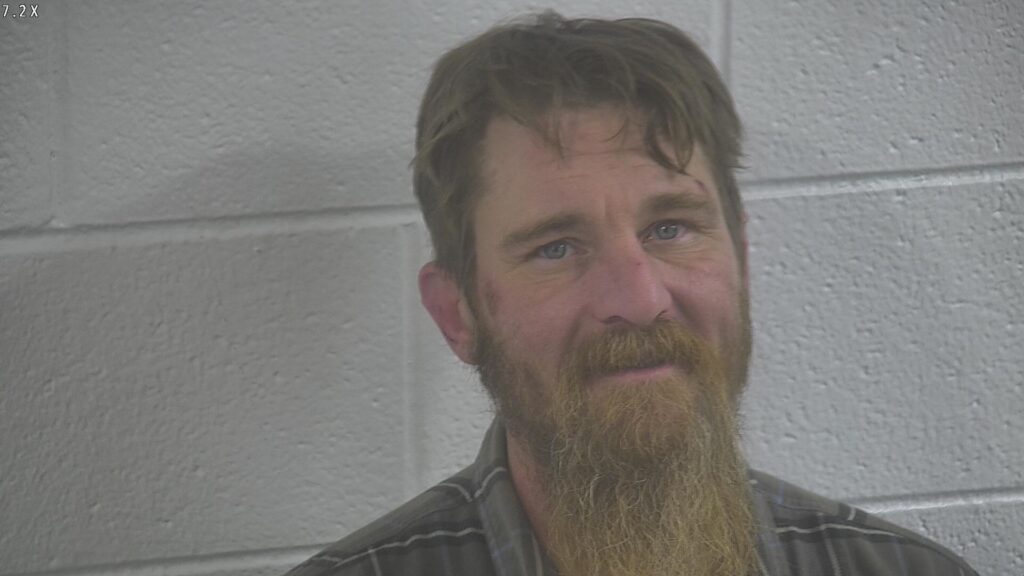
MURRAY – A Murray couple was arrested last week after two juveniles in their care were admitted to Vanderbilt University Medical Center in Nashville, Tennessee, for severe weight loss with supporting evidence of malnutrition and physical abuse.

Samantha Arnett, 36, and Robert Arnett, 44, were each charged with two counts of first-degree criminal abuse of a child under 12 years old, a class B felony, which is punishable by 10-20 years in the state penitentiary for each count.

Calloway District Judge Randall Hutchens set bail on Friday at $5,000 each. Robert posted bond the next day. His arraignment is scheduled for Tuesday, June 11, at 9 a.m. However, Samantha remained in jail and was arraigned in Calloway District Court Tuesday.

Noting that Robert was no longer in custody due to posting bond, Hutchens asked Assistant Commonwealth’s Attorney James Burkeen for his recommendation for reducing Samantha’s bond, but Burkeen requested that the bond amount not be changed.

Hutchens granted Samantha’s request for a public defender, after confirming she has not been employed for 10 years. Her preliminary hearing is scheduled for next Wednesday, June 5, at 9 a.m.

According to court documents, the children have been under the care of Samantha and Robert Arnett, who are their aunt and uncle, respectively, since May 2019, when their parents lost custodial rights.

On May 20 of this year, the Mayfield Police Department received an anonymous tip that the two juveniles were neglected and abused. A Mayfield police officer conducted a brief investigation and contacted the Calloway County Department of Community-Based Services (DCBS) office, noting he felt duty-bound to report the evidence of which he was aware.

In his report, the officer expressed concerns “for the children’s wellbeing as they were isolated to their residence,” noting that the children were homeschooled, and that they were not being medically evaluated or eating properly.

Shortly after receiving the report, a DCBS social worker interviewed the Arnetts, both of whom said they did not believe either child had any medical conditions and further advised that both children “eat a lot” but were not gaining weight; however, neither caregiver had an explanation for bruising and other marks on the children’s bodies.

When questioned alone, Samantha told the social worker that she has had difficulty at times getting the children to eat but added that she did not believe they were losing weight. Upon further questioning, she acknowledged the possibility that at least one of the children had lost weight.

Samantha said that both children had been evaluated by medical personnel who advised that they were healthy despite not gaining weight. She also stated that blood work had not revealed any potential underlying cause of their weight loss.  

Through the social worker’s investigation, it was discovered that the children had not been seen by their primary care providers since January 2023. At that time, the Arnetts were advised to seek additional medical treatment because of malnutrition concerns related to the children being underweight for their size as determined by the children scoring in the 13th percentile compared to others their age and gender; but the Arnetts “refused to seek further medical attention for the juveniles.” Since then, the children had lost an additional seven pounds, approximately.

The children were referred to Vanderbilt by DCBS and their primary care providers on May 22 and, “due to the severity of their conditions,” were immediately admitted. At the time, medical staff at Vanderbilt advised that the children would need to stay in the hospital for at least five days. They also noted marks and bruising over various parts of the children’s bodies that were consistent with physical abuse. Vanderbilt staff further stated that “law enforcement needed to be contacted and a forensic interview needed to be scheduled and conducted.”

On May 23, the social worker contacted the Calloway County Sheriff’s Office (CCSO) to launch a criminal investigation, and the couple was arrested that night.

An anonymous source with personal knowledge of the situation described the children’s gaunt appearance, likening their sunken cheeks and an apparent lack of subcutaneous fat to “photos you see of starving children in Africa.” The source also noted that the couple’s biological child appeared to be well-nourished and showed no signs of abuse or neglect.

As of today, the children are still at Vanderbilt, but they are starting to show signs of improvement, according to the source. Upon admission, they were placed on a restricted calorie diet, which is considered standard treatment for those who are extremely undernourished to avoid “refeeding syndrome,” a potentially life-threatening condition that causes fluid and electrolyte shifts and other metabolic complications, according to the National Institutes of Health; however, those calorie restrictions have now been lifted.

Individuals charged with crimes are presumed innocent until proven guilty in a court of law.

Funding Transparency Policy

The trust people place in our reporting is our greatest asset. As such, we follow a practice of being transparent about who funds us and pays for that reporting, as one important way we preserve that trust. Being transparent about our funding means that anyone in our community can know how our work is funded.

As a 501(c)(3) nonprofit that operates as a public trust, we do not pay certain taxes. We will post our annual IRS filings on our website.

We accept tax-deductible donations, sponsorships and grants from individuals, organizations and foundations to help with our general operations, coverage of specific topics and special projects. We may receive funds from standard government programs offered to nonprofits or similar businesses. We also offer limited advertising opportunities for local organizations and businesses.

Occasionally, we accept sponsorships on special projects or coverage. Such coverage will be clearly labeled, and sponsors will be prominently disclosed, at the top of the story. We never publish advertorials.

Accepting financial support does not mean we endorse any advertiser, sponsor, grantor or donor or their products, services or opinions.

We make public all revenue sources contributing $5,000 or more per year*. As a news nonprofit, we avoid accepting charitable donations from anonymous sources, government entities, political parties, elected officials or candidates seeking public office.

(Policy approved 4.10.24)

*As of 11.1.25, The Sentinel has not received any donations that meet or exceed $5,000.

Budget Information

Editorial Independence Policy

We are committed to transparency in every aspect of funding our organization and subscribe to the standards of editorial independence adopted by the Institute for Nonprofit News.

Our news judgments are made independently – not based on or influenced by donors or any other revenue source. We do not give supporters the right to assign, review or edit content. We will not accept funding from any source whom our Board of Directors deems to present a conflict of interest with our work or compromise our editorial independence.

Our organization retains full authority over editorial content to protect the best journalistic and business interests of our organization. News coverage decisions are wholly independent of sources of all revenue. Acceptance of financial support does not constitute implied or actual endorsement of donors, sponsors, or grantors or their products, services or opinions.

Our organization may consider donations to support coverage of particular topics, but our organization maintains editorial control of the coverage. We will cede no right of review or influence of editorial content, nor of unauthorized distribution of editorial content.

(Policy approved 4.10.24)

Editorial Collaboration Policy

The Murray Sentinel is committed to editorial independence and transparency in all of our reporting. As such, any collaborations with external partners on special projects must align with our mission and uphold our commitment to editorial excellence.

All collaborations must be disclosed to our readers, including the names of any partners and the nature of the collaboration. This disclosure will be made in a prominent location, such as the top of the story or on a dedicated page on our website and will be clearly labeled as a collaboration. Any financial support for a collaboration will also be prominently disclosed.

Our editorial staff maintains full control over the content produced by our outlet as part of the collaboration. This includes maintaining control over the reporting, writing, editing, and fact-checking of all content produced as part of the collaboration.

We will not enter into collaborations that compromise our ethical, content, and reporting standards or that would give the appearance of a conflict of interest. This includes collaborations with partners that have a financial interest in the outcome of the story or that have a history of attempting to influence our reporting.

We will establish clear guidelines and expectations with partners before entering into a collaboration and pursue only those projects that advance our editorial mission. This includes discussing and agreeing upon the goals and objectives of the collaboration, as well as the roles and responsibilities of each party.

We will have an open line of communication with partners throughout the collaboration to address any issues or concerns that may arise.

By adhering to these guidelines, we ensure that our collaborations enhance our reporting and serve the public interest.

(Policy approved 4.10.24)

Donor Transparency Policy

We are committed to transparency in every aspect of funding our organization.

We accept gifts, grants and sponsorships from individuals, organizations and foundations to help with our general operations, coverage of specific topics and special projects. Accepting financial support does not mean we endorse any donors, sponsors or grantors or their products, services or opinions.

We avoid accepting donations from anonymous sources, government entities, political parties, elected officials or candidates seeking public office. Exceptions are unusual and carefully considered.

We understand and deeply appreciate the many reasons donors may generally prefer to keep their gifts anonymous. We understand and respect donors’ wishes for privacy; however, when it comes to journalism and trust in independent, nonprofit news organizations, like the Sentinel, we encourage donors to consider the greater good that comes from people knowing who stands behind the news we report.

We publicly disclose all sources of revenue, including charitable donations, contributing $5,000 or more per year. We are committed to restricting anonymous donations to less than 15% of our revenue.

The goals of these guidelines are to ensure that our journalism remains editorially independent and that the public can trust the news we produce, knowing the Sentinel is not dependent on or shaped by high levels of anonymous funding.

(Policy approved 4.10.24)

Corrections Policy

Accuracy in reporting is a core value at the Sentinel. As such, we strive to provide the most accurate information available. Stories may be edited after publication for the purpose of clarifying ambiguous verbiage or correcting grammar and syntax errors without posting a correction notice; however, any substantive change made post-publication is noted in the text with an asterisk, and a complete correction is provided below the story. To report an error or request a correction, you may use the contact form or email jpaine@themurraysentinel.org.

Conflict of Interest Statement & Policy

COI Statement

In a rural region, nonprofit board members are likely to have multiple connections to the communities where they live, work, and serve. Their civic engagement may range from PTA to choir practice; community theatre to sports events; grocery shopping to city council; granting loans and mortgages or raising funds for local causes; borrowing books from the library and running concessions at the farmers’ market. As a result, a written policy governing conflicts of interest is crucial to the integrity of the organization board and the board.

For The Murray Sentinel, the policy requires employees and board members to submit a list of potential conflicts of interest, to be updated annually and assessed for actual conflicts or the appearance of conflicts.

In assessing conflicts, the board will rely on consensus decision-making, engaging all participants and empowering the group to move forward with full support of the governing body. If it is deemed a conflict is present, the employee or board member will be excluded from further discussion and voting associated with the conflict.

A key question in evaluating potential conflicts is the nature of any benefit that might accrue from an individual’s connections, e.g., financial, political, professional, etc.

(Approved 4.10.24)

COI Policy

Verified by MonsterInsights