FRANKFORT, Ky. (April 29, 2025) – Today, Gov. Andy Beshear announced that he has sent two additional requests to FEMA seeking aid for families and communities affected by April’s floods.
First, the Governor is requesting families in 16 more counties receive Individual Assistance to help them recover. On April 25, the Governor announced that President Donald Trump had approved part of his April 11 request for a Major Disaster Declaration, which included Individual Assistance for Kentuckians in 13 of the counties affected by the most recent flooding.
Second, the Governor is now requesting Public Assistance for 64 counties in which FEMA has validated damages. The Governor also renewed his request for approval for hazard mitigation for the entire state.
At the time of the initial request, the Governor noted that more counties would be added to the declaration through an amendment process as assessments are completed.
“As promised, today we are asking President Trump to approve federal aid for additional counties and families affected by April’s floods,” Gov. Beshear said. “These funds are crucial in helping our families and communities rebuild, and we are planning to add even more counties later this week. We are committed to making sure our families get the help they need.”
The view from the KY 94 East bridge over Clarks River the morning of April 6, 2025 shows the scale of the flooding. Left: North view. Right: South view. (JESSICA PAINE/The Murray Sentinel)
Yesterday, the Governor announced that FEMA Disaster Recovery Centers (DRC) are open in eight of the first 13 counties approved for Individual Assistance for April’s floods.
Families in the first 13 counties approved for Individual Assistance – Anderson, Butler, Carroll, Christian, Clark, Franklin, Hardin, Hopkins, Jessamine, McCracken, Mercer, Owen and Woodford – can visit any DRC for recovery assistance and to apply for federal aid. All 13 counties are expected to have a DRC by April 30.
How to Apply: Residents and business owners who sustained losses in the designated counties can begin applying for assistance at DisasterAssistance.gov, by calling the Federal Emergency Management Agency (FEMA) at 800-621-FEMA (3362) or by using the FEMA App. Anyone using a relay service, such as video relay service (VRS), captioned telephone service or other similar service, can give FEMA the number for that service.
When applying for assistance, make sure:
You apply for the correct declaration (April Flood DR-4864).
You upload your documents online via the FEMA App or by visiting DisasterAssistance.gov.
Your damaged home is your primary residence.
You haven’t received assistance for the same losses from another source, including insurance.
You are able to be reached by FEMA at the contact information you provide in the application.
If you disagree with FEMA’s decision, you may appeal:
In person at a Disaster Recovery Centers, which will open in coming days.
Or by mail or fax.
Click here to learn more about FEMA’s Individual Assistance program, which provides financial assistance and direct services to eligible individuals and households affected by a disaster.
A vehicle can be seen in the distance, turning around (top left), after flooding made Coles Campground Road impassable. (JESSICA PAINE/The Murray Sentinel)
Click here to learn more about FEMA’s Public Assistance program, which provides supplemental grants to state, tribal, territorial and local governments, as well as certain types of private nonprofit organizations, so communities can quickly respond to and recover from major disasters.
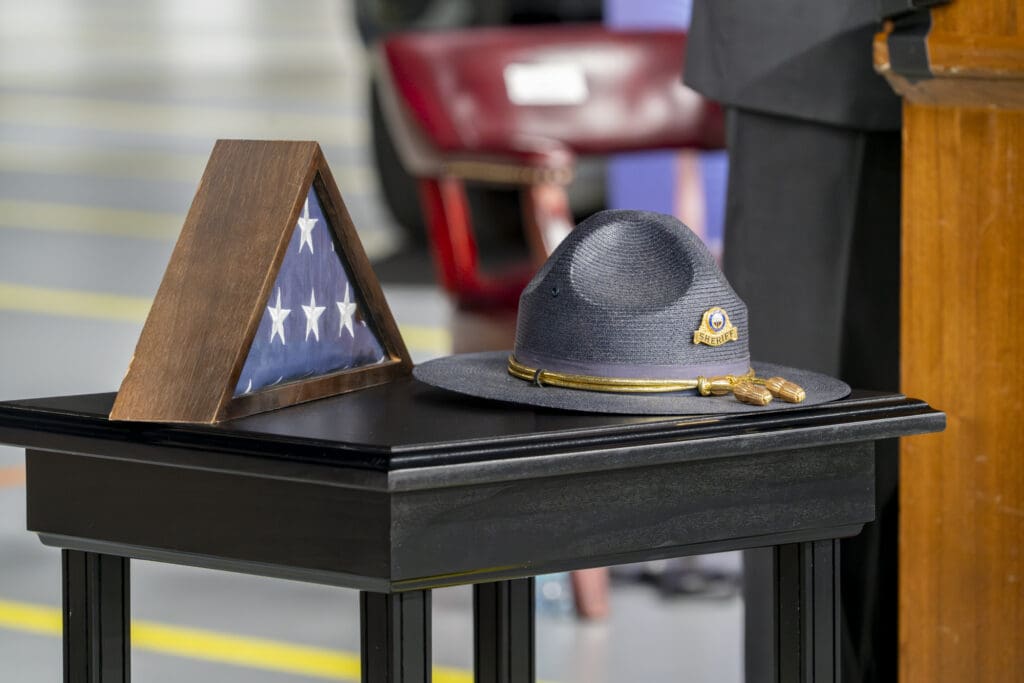
RICHMOND, Ky. – Today, Gov. Andy Beshear was joined by members of the Cash family, the Kentucky law enforcement community and the Department of Criminal Justice Training (DOCJT) to officially open the doors to the new law enforcement training facility named in honor of Jody Cash, who lost his life in the line of duty May 16, 2022, while serving as chief deputy of the Calloway County Sheriff’s Office.
“Today we are here to remember Chief Deputy Jody Cash and honor his legacy by dedicating this new training facility,” Gov. Beshear said. “I’m grateful for our partners who helped make this project happen, and my family and I are praying for the safety of each recruit and officer who passes through these doors.”
The Beshear administration broke ground on the Jody Cash Multipurpose Training Facility in July 2023. The facility is a 42,794-square-foot facility with a 50-yard, 30-lane firing range designed for officers to learn intensive and specialized training that will support training all of Kentucky’s law enforcement agencies.
(Photo provided)
“This state-of-the-art facility will provide recruits and students with the advanced training they need to face the evolving challenges of law enforcement,” said Department of Criminal Justice Training Commissioner Mike Bosse. “By equipping our officers with the skills and experience necessary to protect and serve, we will create a safer Kentucky for generations to come.”
Jody Cash’s father, Wayne Cash, spoke of a life well-lived by Deputy Cash and recognized the recruits who will become tomorrow’s heroes in his son’s honor: “Our hope is that the training received in this new facility will enable everyone who passes through it to do their job safely, efficiently and courteously and return safely to their family at the end of each day.”
Jody Cash graduated from DOCJT Basic Training Class 278 and was valedictorian of Kentucky State Police (KSP) Academy Class 89. He was a 22-year law enforcement veteran, serving with the Caldwell County Sheriff’s Office, Murray State University Police and KSP. Cash retired from KSP with the rank of sergeant before joining the Calloway County Sheriff’s Office. Deputy Cash also worked with DOCJT as a peer mentor through the Kentucky Post-Critical Incident Seminar, supporting officers after traumatic or distressing events.
(Photo provided)
Gov. Beshear has taken several steps to support law enforcement while creating safer communities.
Today’s grand opening was held two months after the Governor opened a law enforcement basic training academy in Western Kentucky. Training is held in a building provided by the Madisonville Police Department, while Team Kentucky constructs a $50 million multipurpose training facility in Madisonville. This is the first time since basic training became mandatory in 1998, Kentucky is offering training in two locations.
MURRAY – On Wednesday, Calloway Circuit Judge Andrea Moore ordered that the Commonwealth’s case against Chyanne Niemeyer on charges of murder and first-degree child abuse brought in connection with the death of her daughter shall proceed after finding her competent to stand trial.
On Oct. 23, 2023, Niemeyer, 26, and her fiancé Nathaniel Gibson, 22, both of Murray, brought Niemeyer’s 17-month-old daughter to the Murray-Calloway County Hospital emergency department after finding her unresponsive, according to the uniform citation. The girl had severe burns covering the majority of her body, which the couple purportedly said were caused by scalding bath water. Deeming the injuries suspicious, ED staff contacted the Murray Police Department. Shortly after the detective arrived, the toddler was pronounced dead.
Niemeyer and Gibson were arrested that night and charged with murder and first-degree criminal abuse, child under 12 years of age. They pleaded not guilty the next day in Calloway District Court, and their bonds were set at $500,000 cash. The grand jury upheld the charges when it indicted the couple in mid-November.
The first suggestion of potential intellectual disabilities came in early November when Niemeyer’s attorney, Directing Attorney for the Department of Public Advocacy Murray Trial Office Cheri Riedl, filed a motion requesting that the grand jury be shown, among other things, a 2011 psychological evaluation that documented “her extremely low intellectual and adaptive functioning.”
Cheri Riedel, directing attorney for the Department of Public Advocacy Murray Trial Office and Niemeyer’s counsel, stands at the podium alone in November 2023 for a hearing on her motion requesting specific evidence be presented to the grand jury, such as a psychological evaluation of Niemeyer from 2011. (JESSICA PAINE/The Murray Sentinel)
Niemeyer and Gibson were arraigned in Calloway Circuit Court on Dec. 4, 2023, but in the interim, Riedel filed a notice questioning Niemeyer’s competency to stand trial, which meant that criminal proceedings against her could not progress until Moore ruled on the issue of competency. While Gibson was arraigned that day, as her co-defendant, his case has also been stalled.
At the time, Commonwealth’s Attorney Dennis Foust told The Sentinel that his office would request its own evaluation be conducted at the Kentucky Correctional Psychiatric Center (KCPC), saying, “If they’re going to raise competency issues, then … we’re gonna have to have an evaluation also.”
The legal standard for determining a defendant’s competency to stand trial, as established in 1960 by the United States Supreme Court in Dusky vs. United States, is to prove by a preponderance of evidence that the defendant has both a factual and rational understanding of courtroom proceedings and is capable of consulting with counsel.
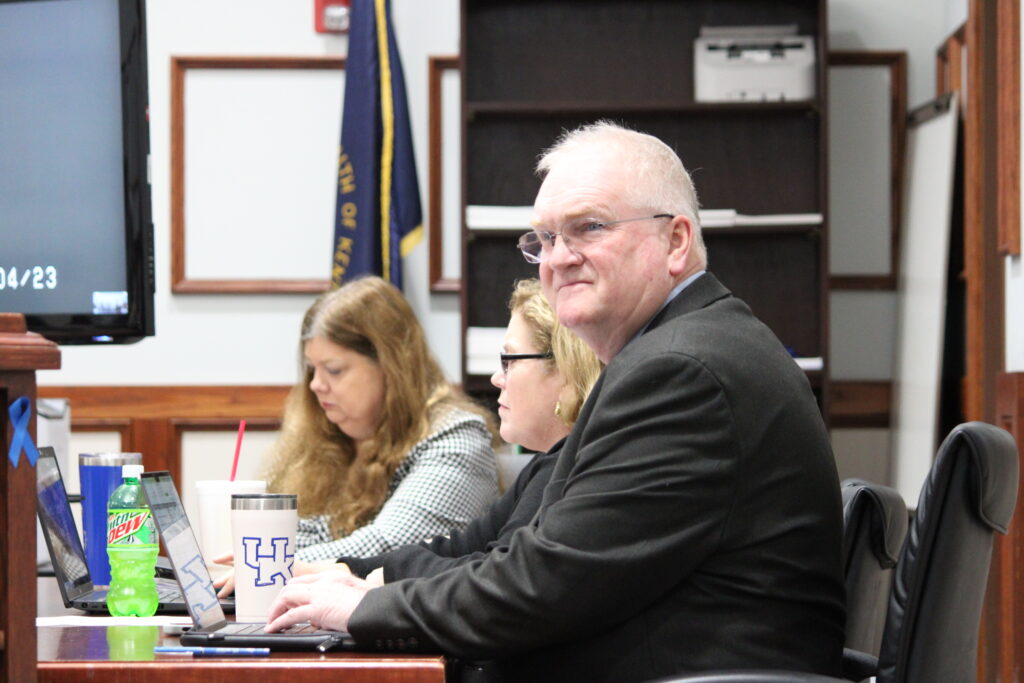
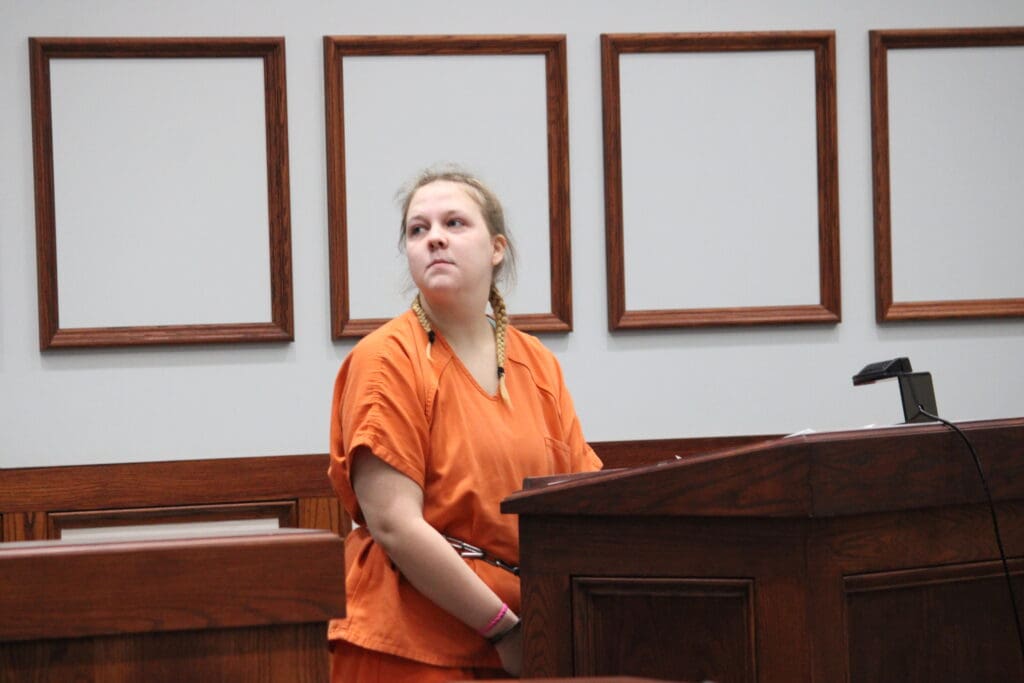
Commonwealth’s Attorney Dennis Foust sits at the prosecutor’s table before Chyanne Niemeyer and Nathaniel Gibson are arraigned in Calloway Circuit Court on Dec. 4, 2023. (JESSICA PAINE/The Murray Sentinel)Chyanne Niemeyer gazes off during her arraignment in Calloway Circuit Court. (JESSICA PAINE/The Murray Sentinel )
Niemeyer was admitted to KCPC for 19 days in April 2024 and, during that time, was evaluated by Dr. Susan Brittain-Seitz (Brittain), a psychologist at KCPC with more than 15 years of experience in forensic psychology.
“She was very friendly, had a very bright, positive emotional expression,” Brittain said of Niemeyer during the competency hearing, which was originally set in December but, due to scheduling conflicts, was postponed and did not take place until March 10.
“I would say that she was very energetic,” she continued, “and at times, she related to me in a more casual-than-would-be-expected manner and was somewhat childlike. That’s how I would characterize her.”
The defense’s expert Dr. Rivka Olley, a licensed psychologist in Maryland and certified school psychologist with 30 years of experience in the field, conducted her evaluation in July 2024. Similar to Brittain, she described Niemeyer as “exuberant” and “childlike.”
Brittain used the Wechsler Adult Intelligence Scale (WAIS), which directly measures intelligence and cognitive ability, and found Niemeyer to have a full-scale IQ of 58. Brittain explained that the test is broken into four indices, and all of Niemeyer’s scores clustered in the extremely low range or at the lower end of the borderline range, which is consistent with an intellectual disability.
Dr. Susan Brittain-Seitz testifies via Zoom during Niemeyer’s competency hearing in March. (Zoom screenshot)
Both experts used the Test of Mental Malingering (TOMM) to determine if any observed impairments were legitimate, and neither found evidence that Niemeyer was feigning a disability. Both also assessed her cognitive abilities, though they took different approaches. Regardless, the results were consistent with Niemeyer falling within the range of someone with a mild intellectual disability.
Olley could not administer WAIS to test Niemeyer’s cognitive ability because Brittain had just used it three months prior, so she chose an academic achievement test known as the Woodcock-Johnson IV Tests of Cognitive Abilities, which Brittain called a “wise choice” because it includes a general intellectual ability index, and the WAIS was contraindicated.
On the Woodcock-Johnson, Niemeyer returned a general intelligence assessment score below 40, which is in the “very low” range. One feature of the assessment is that it associates scores with age equivalents. Niemeyer’s scores placed her on par with a six- or seven-year-old child; she was 25 years old at the time.
“What really affects her the most is … her fluid reasoning,” Olley testified and explained that fluid reasoning is critical for processing information. “Her fluid reasoning was at an age equivalent of six years, six months. So, she is going to pick up some of what you’re saying, but she’s not going to pick up higher vocabulary. She’s not going to pick up the nuances in the information. She’s not going to get a lot of information quickly when it’s presented to her.
“She’s a little stronger in her short-term memory, but it still puts her at a seven-year-old level. … Unless it’s information that’s repeated and repeated and repeated daily and weekly over the years, that information she may have. You give her new information and ask her about it a day later, she may not remember very much of it.”
Dr. Rivka Olley also attended Niemeyer’s competency hearing via Zoom. (Zoom screenshot)
“Can you opine for the court as to how you believe that would affect Ms. Niemeyer in a criminal trial?” Riedel asked.
“Thinking about how a trial goes, there’s a lot that goes on,” Olley replied. “Now, she did say that she watches a lot of ‘Law & Order’ kinds of TV shows, so she has some understanding of how courts work because there’s always that part where the prosecuting attorney and the defending attorney and the judge are there – she understands those basic roles – what is being said may be above her head.”
She further advised that Niemeyer’s ability to understand would depend not only on the words used but also the pace of speech. Olley testified that it would be necessary to stop frequently to ask if she understood and to fill in what she did not.
“Based on all of her testing through all the years, she’s going to have difficulty,” she added, “especially with words that are above her level and nuanced words.”
Riedel asked if Niemeyer’s ability to repeat information is indicative of her understanding of what is being relayed, and Olley replied, “No, it’s just asking, ‘Can she remember this information long enough to give it back to you?’ If I were to go back a day later, she would not. Things that she’s exposed to over and over and over again, like how (to) turn on a stove, those (are the) kinds of tasks she’s going to remember because she’s been exposed to them all of her life.”
Olley’s evaluation included looking at records of formal assessments going back to the first time Niemeyer was administered the Wechsler Intelligence Scale for Children (WISC) in 2009, when she was nine years old, in addition to school records, which indicated Niemeyer was held back “several times” before she entered first grade.
“So, she was struggling from the get-go,” Olley said. She noted that Niemeyer attended classes for students with intellectual disabilities throughout school and, in high school, participated in a “life skills” program, which, Olley explained, is a curriculum designed to teach students with intellectual disabilities and significant learning deficits how to live independently.
All of the assessments Olley reviewed as well as the ones she conducted produced consistent results “across the board,” she said and noted that the results on the Vineland Adaptive Behavior Scales she administered in July to assess Niemeyer’s adaptive functioning abilities were consistent with results obtained by another practitioner in 2011, who used a different instrument to assess adaptive functioning.
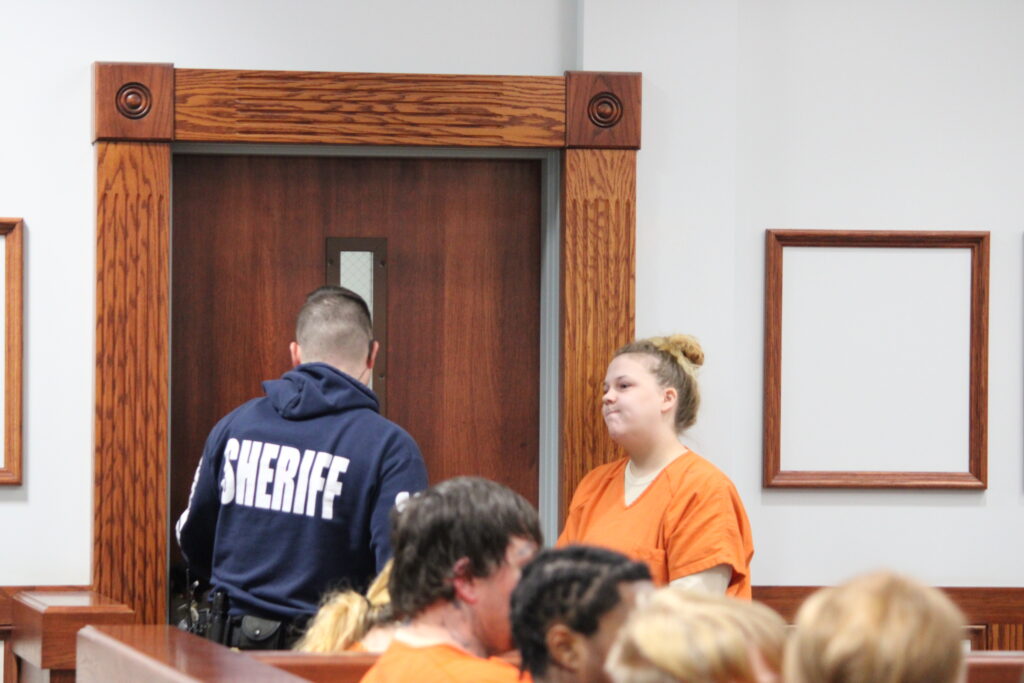
Niemeyer waits for the bailiff to open the door to the holding room after a hearing in January 2024. (JESSICA PAINE/The Murray Sentinel)
Olley also spoke to Niemeyer’s family members, including an extensive conversation with her mother. During the hearing, she explained that seeking insight from family members is critical, particularly for someone with “significant limitations” like Niemeyer, because “it’s the family that knows the person the best. They’ve been with that person most of that person’s life. They see, day-to-day, what kind of help she needs.”
Family members completed assessments for Olley as well. They rated her receptive language abilities on the level of a two- to three-year-old.
“So, you can imagine what’s happening in a court setting,” Olley said. “How much can she actually understand? But again, it’s always important with people with mild intellectual disabilities to understand that sometimes she’s going to understand more than others, even with her limitations. Her expressive language is also low.”
Brittain did not administer any tests that provided an age equivalent; however, she did give Niemeyer a wide-range achievement test that assessed word recognition and reading ability, which put her at an academic grade level equivalent of 6.6, which would be sixth grade.
“It’s important that we focus on, as I mentioned earlier, functional capacities and any functional impairments to those capacities for competency,” Brittain said during Riedel’s cross-examination. “So, in terms of determining competence, I’m not sure that a picture of a grade equivalent or an age equivalent tells the whole story.”
“But you would agree that both you and Dr. Olley found her to be an individual, functioning at far less than approximately 25 years old at the time, correct?” Riedel asked.
“You know, I did not have a lot of direct observation of her,” Brittain replied. “I also know that she was living with a paramour (Gibson), I believe, and so she was living semi-independently. I do have some data that would conflict with that, so I can’t believe that I agree with that characterization or that I can simplify it to ‘she is functioning as less than a 25-year-old’ because I feel like there is a breadth of information that’s being lost if we reduce it to that.”
Brittain did not speak to any of Niemeyer’s family directly, but the evaluating social worker conducted an interview with Niemeyer’s mother. Brittain said that she relied mostly on progress notes from Niemeyer’s psychiatrist at KCPC, Dr. Eric Lesch, as well as the social worker’s notes “because that is where the wealth of information was.”
Niemeyer walks into the courtroom for a hearing in August 2024. (JESSICA PAINE/The Murray Sentinel)
She also reviewed court records along with records from Four Rivers Behavioral Health, several school psychological evaluations, Social Security Administration records and Niemeyer’s individualized education plan (IEP) from the Macon-Piatt Special Education District in Decatur, Illinois.
Brittain’s opinion was heavily influenced by Niemeyer’s scores on the ECST-R (Evaluation of Competency to Stand Trial-Revised) assessment, which was specifically designed to assess a defendant’s competency to stand trial pursuant to the three prongs established in 1960 by the United States Supreme Court in Dusky vs. United States: factual understanding of courtroom proceedings, rational understanding of courtroom proceedings and consult with counsel. Additionally, it includes scales to assess feigning.
On direct examination, Foust wanted to know about Brittain’s conversations with Niemeyer about the legal system, both conceptually and about her case, specifically. He asked if Niemeyer demonstrated a basic understanding of how the legal system works.
“Yes,” Brittain said, “when we were discussing the roles of key courtroom members, she did appear to understand the opposing motivations of the prosecution and defense. She understood the role of the judge. … I asked her what she should do if she does recognize that a witness is telling a lie, and she knew that she should tell her attorney if that were the case.”
Brittain concluded that Niemeyer has a rudimentary understanding of the legal system that “allows her to appreciate the nature of what’s occurring in the courtroom.” When asked if Niemeyer seemed to understand her attorney’s role in the process, Brittain said that Niemeyer “appeared very allied” with Riedel.
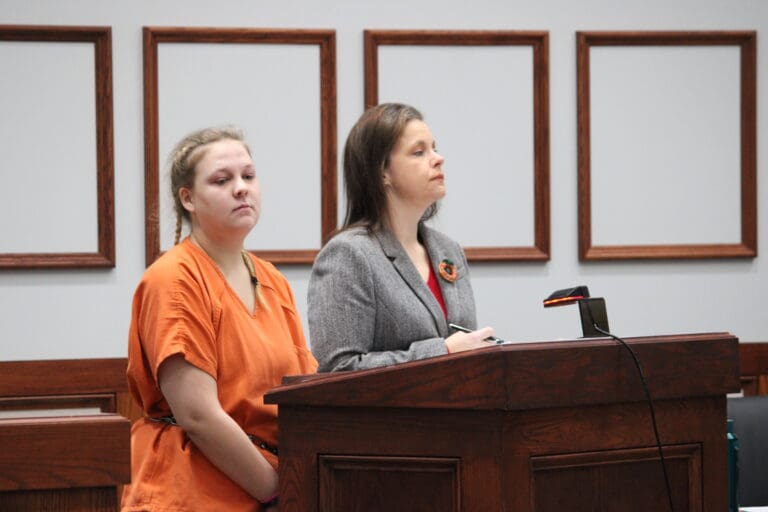
Niemeyer, left, stands at the podium with Riedel during a November 2024 hearing. (JESSICA PAINE/The Murray Sentinel)
“In fact, she told me that, as far as her attorney goes, that, even though other inmates had talked poorly perhaps about her attorney, she thought that her attorney was excellent,” Brittain elaborated. “… I can say that she, despite perhaps the jailhouse talk that she referenced, knew and mentioned that her attorney was good and understood that her attorney was skillful. … The comment that she made, I think, speaks to an ability to recognize her attorney’s expertise.”
Foust also inquired about Brittain’s process in determining whether someone has the functional capacity to understand the nature of the crimes against them and if they can rationally participate in their own defense.
“In Ms. Niemeyer’s case,” Brittain replied, “she does have a mild intellectual disability, but that is not something that can be reflexively translated into incompetence. … So, what you have to do is work with the individual and illicit what their skill level is in terms of their ability to relate to their attorney and consult with counsel, their ability to appreciate the facts of their case and appreciate the charges and potential penalties against them and finally their ability to make rational decisions based on that information and rational, self-interested decisions based in reason. And so, when somebody does that, … it’s my opinion that that individual would meet statutory criteria for competence.”
During cross-examination, Riedel asked Brittain about her assessment of Niemeyer’s memory abilities.
Chyanne Niemeyer, right, is seen during her competency hearing in March. (Zoom screenshot)
“In the forensic interview, certainly, her understanding, as I mentioned, of a plea bargain was very concrete,” Brittain explained, “and I provided some instruction to her during the forensic interview about a plea bargain and how it would be required to enter a guilty plea and the mechanics of it and the purpose of it. And after about a two-hour interval, we had a lunch break, and when she came back, she had (retained) that information; so, there’s just one small piece of data there.”
Brittain added that, while she did not formally assess Niemeyer’s memory, the IQ test she administered included a working memory index, which looks at the subject’s ability to manipulate information and store it in short-term memory. She reported that Niemeyer scored at the uppermost end of the extremely low range on that scale, adding that “she actually performed, I would say, fairly well, given the confines of her intellectual disability in that area of working memory.”
“Your conclusion, then, is that, based on a two-hour ability to recall, that goes into the ‘competency column.’ Is that fair?” Riedel asked.
“It is data that would weigh on the side of competence in my opinion,” Brittain responded, acknowledging Riedel’s point that she did not assess whether Niemeyer retained the information beyond that afternoon. “But she did show some short-term retention and resistance to memory decay of that information with me, which suggests to me that she can learn it, at least, in the here and now, and I do believe that that’s a datapoint that would go toward competence. It certainly wouldn’t support incompetence.”
In addition to the mechanics of a plea deal, Riedel asked Brittain about the education she provided on other topics that were also discussed in her report, including the difference between a bench trial and a jury trial, the role of the judge in a jury trial and the requirement of a unanimous for a guilty verdict.
Foust objects to a line of questioning during Niemeyer’s competency hearing. (Zoom screenshot)
“I’m curious about the administration of the ECST-R,” Riedel said. “Is it commonplace, is it protocol to educate or to try to teach the subject the concept if they appear to not understand it at first? Is that the protocol for the examiner to try to explain it to the person? Why doesn’t it just stop with, I don’t know’?”
“It’s my practice to certainly attempt to teach and to try to gauge retention,” Brittain answered. “That’s how I can get to the issues whether or not an individual can keep up in court and whether or not they can understand and appreciate the charges and retain that information later. So, it’s my practice, if I am going to do a thorough evaluation, I have to probe and also see if they can retain information that they’re given.”
Riedel quoted Brittain’s report, saying that Niemeyer “correctly identified the best possible outcome of her legal situation, which amounted to something like dismissal, but then, when asked about the most likely outcome for her legal situation, she provided perhaps an overly optimistic estimate initially but, with further inquiry, discussed a more plausible outcome.”
“My concern,” Riedel said, “is that she may have changed her answer in that particular conversation, to that kind of questioning to be, I don’t know, more pleasing to the person that she was conversing with because they were leaning that way.”
“Yes,” Brittain responded, “and I would say that there was an element of eagerness to please when it comes to Ms. Niemeyer. So, perhaps she recognized that she had provided an answer that was inaccurate based on my reaction, but the fact was she was able to recognize that.”
After cross-examining Brittain, Riedel called Olley to testify on rebuttal. She asked the doctor if she had any concerns regarding Brittain’s testimony about educating Niemeyer on topics when she indicated a lack of understanding.
“The concern I would have is if you start educating, she’s going to want to please you,” Olley said. “… That’s one of the key factors in mild intellectual disability. They know that they have a disability. They know they are not like some of the other people – whether it’s in school or when they’re adults – and they don’t like looking different or being different or being seen differently.”
“Based on what you just heard in testimony and your review of Dr. Brittain’s report,” Riedel asked, “… did you feel like that had anything to do with the results Dr. Brittain testified about, specifically as to the ECST-R?”
“Yes,” Olley replied. “What she did was to kind of regroup herself and think, ‘OK, this is what this person wants, so let me go with that.’ … Because that cloak of competence – that she knows that she is not doing as well as others academically; she’s not had a job that she can go out and get and keep; and all of the other things that she’s not capable of doing; she’s very aware of that – she wants you to think she can do more. So, if you give her a piece of information, she may regurgitate it to you but have more difficulty applying it herself in the future.”
Calloway Circuit Court Judge Andrea Moore speaks to Riedel during the competency hearing. (Zoom screenshot)
With counsel having no further questions for the experts, closing arguments began, starting with the defense. Riedel first reiterated that both experts found no evidence of malingering and that they were in agreement as to Niemeyer’s mild intellectual disability.
“Where Dr. Olley went further and gave a more holistic picture and opinion to the Court,” Riedel said, “was she focused on adaptive functioning in that, to the extent that Chyanne can do some adaptive functioning, like taking care of personal hygiene, doing chores around the house, being able to make herself something to eat, to the extent that that plays into competency is, I think, where these two experts differ.”
About Brittain’s findings on the ECST-R, Riedel said, “My concern that I want to highlight for the court here is that education had to be administered to Ms. Niemeyer on some pretty key points … which, to the doctor, she appeared to understand. I don’t know that ‘appearing’ to understand is really a good evaluation to the court when it’s followed up by the fact that – and she mentioned to both evaluators that – she has had a pretty wide exposure to courtroom dramas on television.
“To the extent that she knows anything, I think it is because she has watched television; and so, she knows the basic principles of a judge and jury and defense counsel and prosecution, and she can identify that they’re adversarial – the defense and prosecution – but I do think that nuance and more specific detail and more abstract thinking really needs to be considered when you’re talking about whether or not someone is competent to stand trial. Because you’re not only talking about whether someone is competent to stand trial, you’re talking about whether they’re competent to make a decision about what to do in their case.”
Riedel was clear that she was not expressing an opinion about the outcome of Niemeyer’s case before saying, “when we’re talking about competency to stand trial, we’re also talking about competency about whether or not to go to trial, and I do think that Ms. Niemeyer, despite her best efforts in wanting to appear to be competent – and I don’t mean competent to stand trial but to be of similar intelligence to her peers – I don’t know that she really has the capacity to appreciate the nuances.”
“I have to respectfully disagree with Dr. Brittain; I don’t believe that Ms. Niemeyer has the capacity to do this,” Riedel continued. “Does she have the capacity to repeat something she was told two hours ago? Well, sure, but if we had her talk to you today, would she be able to explain to you what a plea bargain is about. … I think there are things that will happen that she won’t be able to appreciate (if they helped or hurt her case). She is very easily influenced. I think she very much wants to please the person that she is speaking to. She very much wants to believe what she was told last, especially if she thinks it is favorable to herself. I think that can cloud her judgment.
Chyanne Niemeyer, right, is seen wiping her eyes while her attorney, Directing Attorney for the Department of Public Advocacy Murray Trial Office Cheri Riedel, delivers her closing argument during Niemeyer’s competency hearing. (Zoom screenshot)
“I think she is a very short-term thinker. … I don’t know that beyond what happens by Friday of this week is something that she can really understand, and I think that’s where the adaptive behavioral analysis that Dr. Olley did is very demonstrative for the court to say that, if she can do these things, it’s only because of repetition.
“… I think she has the right under the law and due process to understand what’s happening in the trial. I think that’s what it means to rationally participate in one’s own defense – they have the right to understand. … Being able to repeat a word in two hours does not indicate understanding; and I think that is what the law requires, Judge.”
“I’m going to be very brief,” Foust said to begin his closing argument. “Everything Ms. Riedel said, I’m not sure that I would be competent to stand trial if that’s the standard. That’s not the law, Judge; that’s not the law.”
He mocked the relevance of Niemeyer’s interest in Law & Order and other court dramas, noting the exposure likely has given her “pretty good” understanding of the criminal justice system.
“Yes, we all agree she has a mild intellectual disability; that’s it,” Foust said, adding that if Niemeyer needed accommodations, that would be decided at the time of the trial. “She’s competent. Nothing that you’ve heard here today leads to her incompetence; and I just ask that you find her competent, and then we’ll go from there.”
Moore praised counsel on both sides for doing well during the hearing before advising that she needed time to review the testimony and the experts’ respective reports before she could enter a ruling.
On Monday, Niemeyer and Gibson were back on the circuit court docket for status hearings. While Gibson was in court for his status hearing, Niemeyer requested to not be present. When Gibson’s case was called, Moore advised that she was still working on the competency order in Niemeyer’s case, but for scheduling purposes, she informed the parties that she found Niemeyer competent to stand trial.
Nathaniel Gibson appears in Calloway Circuit Court on Monday with his attorney Zanda Myers. (JESSICA PAINE/The Murray Sentinel)
The order on competency was entered Wednesday. In it, Moore gave considerable weight to Brittain’s findings, and although the order did not mention the ECST-R by name, it did reference several conclusions Brittain drew from that assessment.
“It is undeniable that the Defendant does suffer from mild intellectual disability as both Dr. Olley and Dr. Brittain-Seitz concluded,” Moore wrote. “The tests that Dr. Olley administered give an age range performance and it seems Defendant’s scores weigh heavily in Dr. Olley’s opinion regarding competence to stand trial. However, on the other hand we have Dr. Brittain-Seitz who administered four tests and concludes on the total body of findings that despite Defendant’s mental condition, she does have the capacity to appreciate the nature of the proceedings against her and to also rationally participate in her defense.”
Citing Brittain’s report, Moore noted the fact that Niemeyer was able to demonstrate a basic understanding of legal concepts as well as the roles of key courtroom members, that she could identify that she has been charged with murder, that she was able to demonstrate understanding the “adversarial nature of the judicial process” and that she voiced holding a “high opinion of her legal counsel” were compelling.
“What is most compelling is that during the time Dr. Brittain-Seitz spent with the Defendant she appeared to her to have adequate reasoning skills to relate to her attorney during the case and to communicate effectively. What is also very compelling is that the Defendant has exhibited appropriate Courtroom behavior when appearing before this Court in the past.”
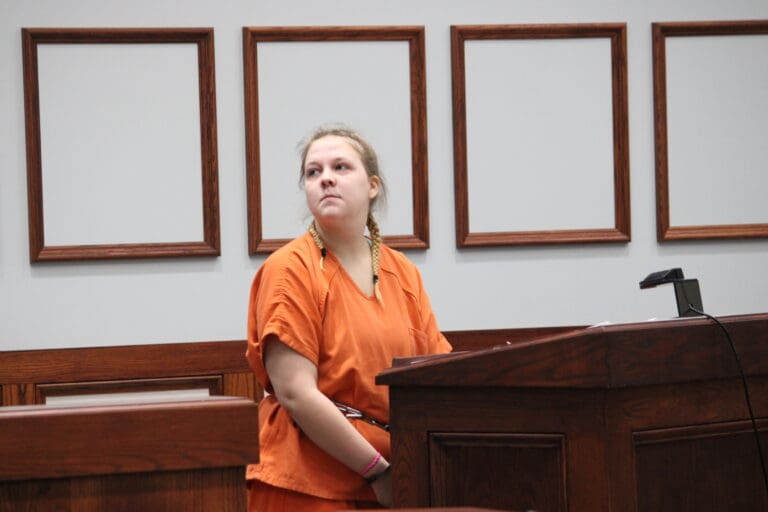
Chyanne Niemeyer looks at the camera during a hearing in January. (JESSICA PAINE/The Murray Sentinel)
Notably, had the ruling gone the other way and Niemeyer had been deemed incompetent, Foust would have been statutorily required to initiate involuntary commintment proceedings against her, under KRS 202C.
Niemeyer and Gibson’s next scheduled court appearances are on Monday, June 9, at 8:30 a.m.
Individuals charged with crimes are presumed innocent until proven guilty in a court of law.
MURRAY – The Kentucky Transportation Cabinet (KYTC) plans to close a section of KY 464 at the Clarks River Bridge in Calloway County, starting Thursday, Apr. 24.
Daytime closures will be in place along KY 464 at mile point 13.2, near the community of Almo. This is between First Street and Elm Grove Road.
A crew will be using a long-reach excavator to remove debris lodged against the bridge.
Work is expected to take approximately two days. The closure will be from 8 a.m. to 2:30 p.m., each day.
There will be no marked detour.
This work was postponed during recent flooding events.
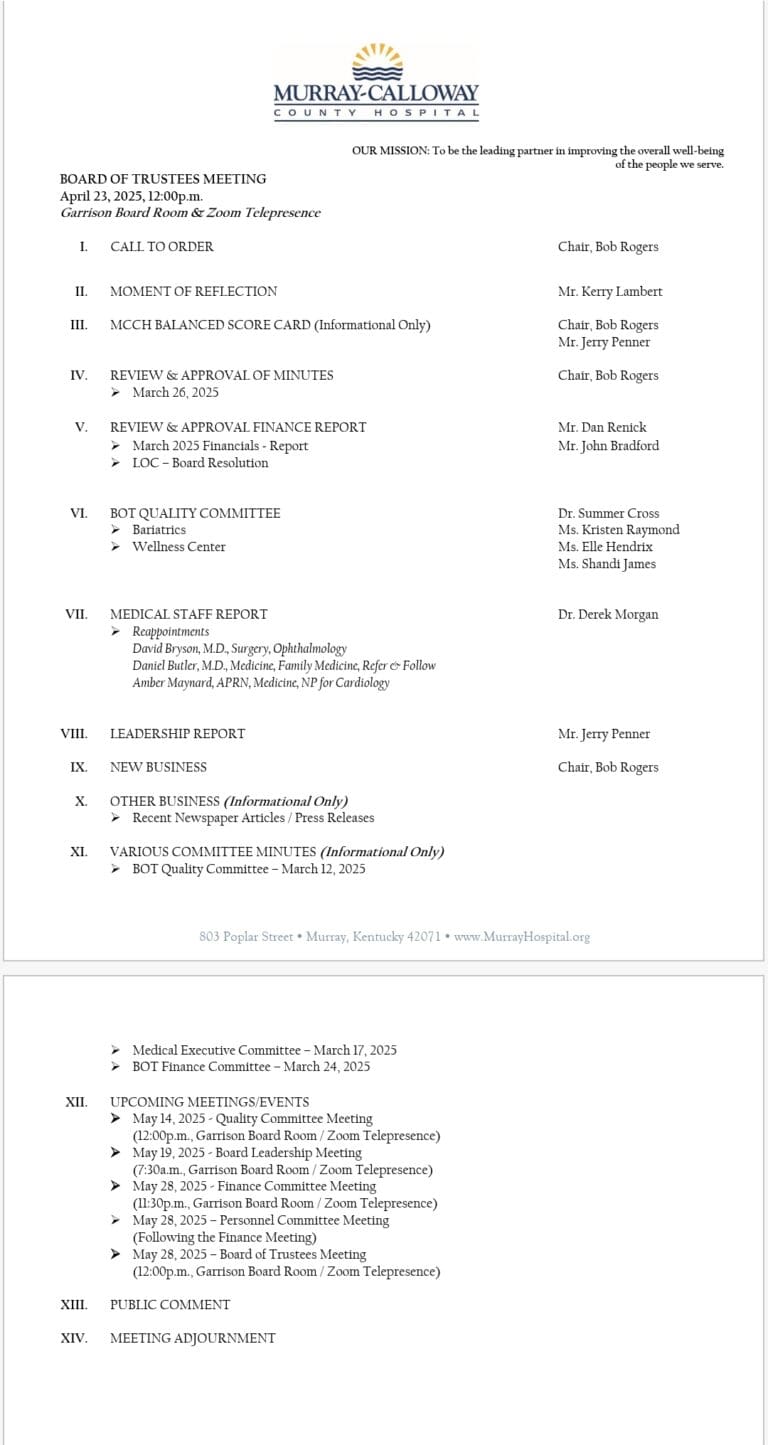
The Murray-Calloway County Hospital Board of Trustees will meet at noon in the hospital’s Garrison Board Room and via Zoom (call 270-762-1102 for Zoom connection details).
MURRAY – Composting is a great way to enrich the soil in our gardens and give our plants the nutrients they need to grow. It is also a great way to reduce waste and practice sustainability in our homes and communities. All of these are reasons why the Calloway County Extension Service’s Master Gardener program is currently committed to a composting project.
“My daughter challenged me to start a community composting facility.” Donna Bethel, a Master Gardener in Calloway County, said, “My daughter (Barbara) is a real activist and wants to keep the earth clean and viable. She lives in Fairfax, Virginia, which is a very progressive city that recycles and composts.”
Donna took the idea of the challenge to Matt Chadwick, the extension agent of agriculture and natural resources in Calloway County.
“I spoke to Matt about it,” Donna said, “and while he agreed he said it would only be a pilot project on a small scale, since we don’t have the property or paid manpower to sustain it.”
“It was for logistics,” Chadwick explained, “we needed enough scale to make the process work but not too large that the volunteers would get overwhelmed.”
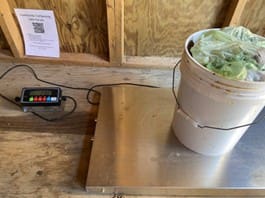
Kitchen scraps, also known as “greens,” must be weighed before they are added to the compost pile. (KACIE LAWRENCE/For The Sentinel)
To get the project funded another member of the Master Gardener program, Brenda Hines, a realtor, applied for the National Association of Realtors Sustainability Grant. Getting the grant, which is a part of the Realtor sustainability program to raise awareness and promote sustainable practices as well as corporate social responsibility, wasn’t a sure thing.
“It was very competitive,” said Hines, “less than one percent of grant applicants were awarded funding, but we were rewarded the full $5,000.”
The plan from there is for Master Gardeners to collect all the data from the project over three years and demonstrate community interest by tracking its contributors. At the end of the three years, Chadwick will present the data to the City of Murray, Calloway County and Murray State University to see if they would be interested in starting a program for the community.
The compost is sorted into three sections: “browns,” or leaves and mulch, in the first, mixed greens and browns in the second and finished compost in the third. (KACIE LAWRENCE/For The Sentinel)
“We want to demonstrate the viability of the process,” Chadwick said, “this is a viable part of sustainability that can turn literal tons of waste, destined for a landfill, into a usable and saleable product.”
Compost is indeed a saleable product. The nearby city of Paducah engages in the process of composting and sells buckets of premium compost for $20 each (wood chip compost for $5 a bucket). According to the city’s website, their efforts in composting and recycling has reduced the waste stream by more than 23% and saved the city nearly $1.2 million in disposal fees.
For now, the compost project is not open to the public, however for those interested in learning more about composting at home Master Gardeners will host two Thursday Night Talks open to the public on the subject: “Composting 101” on May 15 and “Composting for the Backyard Gardener” on June 19. Both classes are free of charge and begin at 6:30 p.m. and take place at the Calloway County Extension Office Meeting Hall, located at 93 Extension Way, Murray, KY 42071.
For more information about Master Gardeners, Thursday Night Talks or composting, the Master Gardeners will be set up at the upcoming Earth Day celebration at the Doran Arboretum on Saturday, April 26, from 10 a.m. – 2 p.m., or email questions to calloway.ext@uk.edu.
MURRAY – In court this morning, Calloway Circuit Judge Andrea Moore announced her finding that Chyanne Niemeyer is competent to stand trial. Moore said that she has a couple of additions to make to the order but further advised that she would enter it by Tuesday afternoon.
Niemeyer and Nathaniel Gibson were arrested in October 2023 and charged with first-degree murder and first-degree criminal abuse of a child under the age of 12 following the death of Niemeyer’s 17-month-old daughter.
Allegedly, both told Murray Police Department Detective Justin Swope that the burns resulted from “scalding” hot bathwater. Both claimed they attempted to get the toddler out of the water but could not because of the temperature, but Swope noted in his report that neither Niemeyer nor Gibson had any redness on their hands or arms.
When it became evident to Niemeyer that her daughter’s skin was being profoundly damaged, she removed the girl from the tub and treated her wounds by applying BENGAY, which is an ointment designed to provide relief for muscle and joint pain, backaches and minor arthritis pain that, according to package instructions, should not be applied to damaged skin. Swope’s report also noted “strong medicine odor” coming from the child.
Prior to her circuit court arraignment in December 2023, Niemeyer’s attorney Cheri Riedel, directing attorney for the Kentucky Department of Public Advocacy Murray Trial Office, filed a notice with the court questioning her client’s competency to stand trial. Riedel cited her interactions with Niemeyer and “other information obtained” as the basis for her belief that the defendant suffers from an intellectual disability and “lacks the capacity to appreciate the nature and consequences of the proceedings against her and to participate rationally in her own defense.”
Chyanne Niemeyer, right, sits at the defense table during her competency hearing in March. (Zoom screenshot)
The Kentucky Correctional Psychiatric Center evaluated Niemeyer in April 2024 at the request of the Commonwealth Attorney’s Office. The defense expert’s evaluation was conducted in July 2024. Niemeyer’s competency hearing was originally set in December but was postponed to March 10 due to scheduling conflicts.
At the March hearing, both experts agreed that Niemeyer suffers from a mild cognitive disability; however, they came to different conclusions regarding her competency to stand trial. After listening to hours of testimony and arguments from counsel, Moore advised that she needed additional time to review the evidence before ruling.
Editor’s note: This is a breaking story. Please check back for The Sentinel’s full write-up.
PADUCAH – The former Murray State University student who made headlines in September 2022 after attempting to throw a Molotov cocktail into a crowd of sorority members was sentenced in United States District Court last week for possession of an unregistered firearm. With his federal case resolved, now he must face additional charges related to the incident in state court.
Jack Epperson, 22, of Murray, pleaded guilty to the federal charge in July. In the agreement, he acknowledged that he knowingly possessed an unregistered firearm, the Molotov cocktail, that Saturday morning and attempted to throw it towards the students in retaliation for “being denied the opportunity to speak to a former girlfriend.” Fortunately, it fell short of the crowd and burned out in the grass. He was 19 years old at the time.
The recently adjudicated federal case only concerned the unregistered firearm, which, by definition, includes improvised explosives. Notably, other potential crimes committed that day are being addressed in Calloway Circuit Court, where Epperson was charged with two counts of first-degree assault, one count of second-degree wanton endangerment and one count of possession of a destructive/booby trap device.
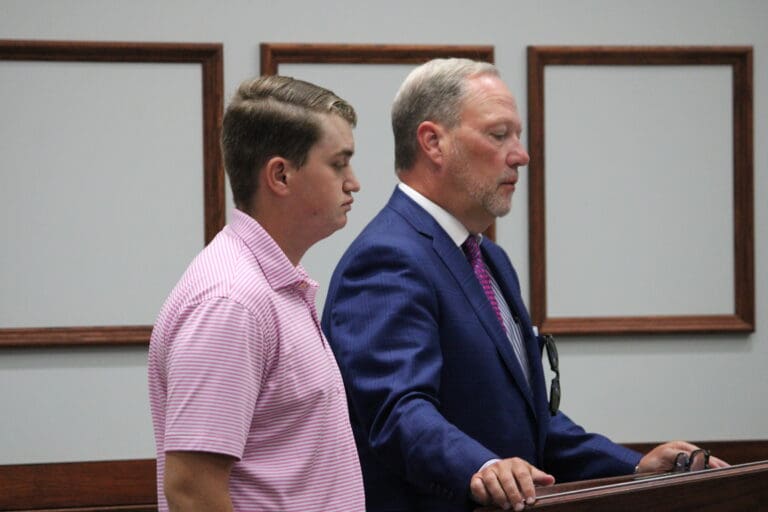
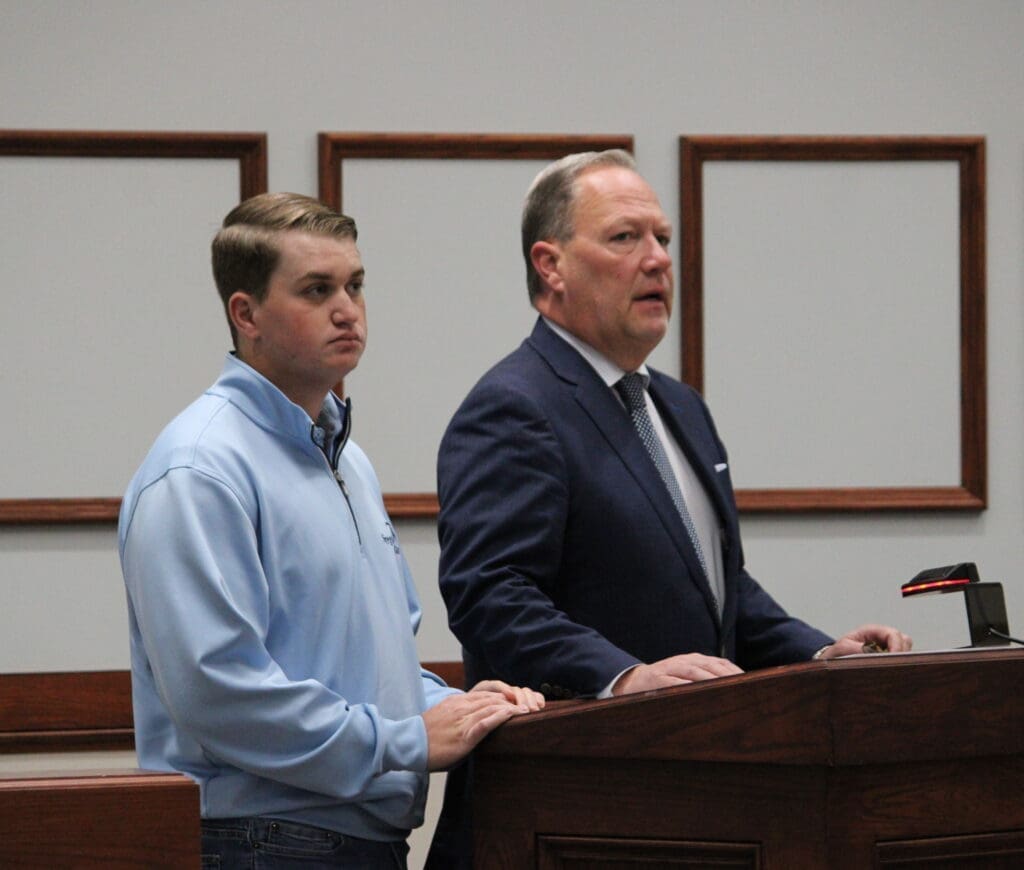
Jack Epperson, left, stands at the podium with attorney Jason Holland in Calloway Circuit Court for a hearing in November 2023. (JESSICA PAINE/The Murray Sentinel)
In the federal case, sentencing memoranda were filed by both sides in December. Pursuant to the plea agreement, U.S. Attorney Michael Bennett requested a sentence at the lowest end of the penalty range, 37 months, but he argued that Epperson should be imprisoned for the duration and subject to supervised release for the following year.
“This case involves more than the simple possession of an unregistered firearm,” Bennett wrote. “Here, the defendant both constructed and used the ‘Molotov cocktail’ in what, thankfully, was an unsuccessful attempt to throw the cocktail at a group of students outside a campus building. The defendant’s attempt failed only due to his incompetence at the task, good fortune, or some combination of the two. The defendant’s conduct is much more than the ‘run of the mill’ unregistered firearm case.”
Bennett further noted that “the defendant’s criminal act was not a spur of the moment [sic] decision; instead, his preparation suggests it was a planned response to punish those who prevented his attempts at conversation.”
Finally, Bennett argued that imprisonment was not only necessary to deter Epperson himself from committing further crimes but also to deter others from committing similar crimes. Despite the fact that no one was harmed, Epperson’s actions that day “understandably created terror amongst those present, (and) given the dangers presented by such criminal activity, others, contemplating similar crimes, must be deterred.”
But Jason Holland, the Hopkinsville-based attorney representing Epperson, argued that imprisonment would actually be detrimental to his client, suggesting that a probated sentence of 37 months would be more appropriate given the extraordinary circumstances and underlying issues at hand and still sufficiently reflected the serious nature of the crime and promoted respect for the law.
His memorandum provided a detailed accounting of Epperson’s development, going back to his time in utero, when complications during pregnancy and birth resulted in hearing impairments and mild cognitive damage along with other risk factors that predisposed him to, among other things, impulsive behaviors and attention deficit hyperactivity disorder (ADHD).
In childhood, Epperson was diagnosed with autism spectrum disorder (ASD), but early intervention successfully reduced his symptoms to the point where he no longer met diagnostic criteria for the disorder. Regardless, his rate of development was consistently behind that of his peers. Because of those factors, Holland argued, Epperson was disproportionately impacted by the disruptions experienced at the beginning of the COVID-19 pandemic.
The routines he developed to successfully manage his developmental challenges and mental health issues “were wiped away virtually overnight,” and he lacked the capacity to cope with the sudden change “at the speed of his peers or community.” Epperson’s grades suffered, and he was expelled from his fraternity.
“He became severely depressed, stopped eating, interacting, or speaking as often, and asked for more help,” Holland wrote, adding that in March 2021, Epperson began speaking to his mother about having “bad thoughts,” although he did not specify what they were.
That summer, Epperson took an internship in Texas, and his mental state started to improve; but he had difficulty getting all of his medications because they were prescribed by his psychiatrist in Murray, which proved to be destabilizing.
“It was against that backdrop,” Holland noted, “that he and his girlfriend ended their relationship.”
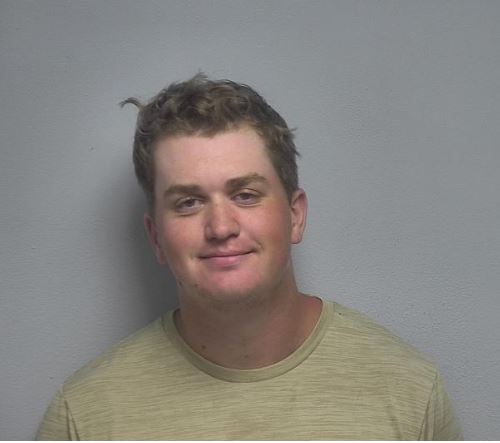
Jack Epperson’s mugshot following his indictment on federal charges in August 2023.
After his arrest, Epperson was committed to Western State Hospital in Hopkinsville, and while there, he underwent a competency evaluation. The report stated that Epperson’s depression and ADHD symptoms, while “not sufficient to obviate competence completely,” contributed to a perception of being “stranded in what felt like an unbearable and hopeless situation to him, and he had neither the emotional/developmental skill to explain how he felt, nor develop supports outside his parents to help with his emotional pain.”
Western State examiners concluded, according to the memorandum, that Epperson’s impulsive crime was “consistent with both his known diagnoses and level of distress.” They also noted that his “biologically shifting response to treatment with amphetamines [for ADHD], moving from effective in childhood to further agitating him in his young adult years” was a complicating factor.
“His mental health issues, while not fully exculpatory, are also not minor, negligible, or inconsequential, and should be considered as mitigating factors,” Holland argued.
Since his initial arrest, Epperson has maintained full-time employment, committed no new offenses, cooperated with authorities and complied with all court orders, both state and federal, Holland wrote. He regularly attends Westside Baptist Church and has developed a strong support system among the young men in his “small group” there.
Epperson regularly sees a counselor and has “learned very effective stress management techniques.” He also sees a psychiatrist for medication management and is stable on his current medication regimen, which consists of five medications. Holland notes, however, that at least three of the medications would not be available to him in a correctional facility.
“Due to his developmental issues, features of autism spectrum disorder, and significant mental health issues/need for five specialty medications, Jack would be subject to harsher penalties than others due to confinement,” Holland concluded. “… This would essentially be recreating the damage that has been improved and/or healed as opposed to serving any cautionary or rehabilitative purpose.
“Jack’s developmental issues and naivete would further increase an already unfair penalty to him, as he would be in protective custody and isolation during any incarceration, further miss key developmental opportunities and likely have compounding trauma due to exploitation and direct harm from others.”
In the end, U.S. District Judge Benjamin Beaton adopted neither parties’ request. On April 9, Beaton sentenced Epperson to four months imprisonment and two years of supervised release.
Epperson’s case in Calloway Circuit Court has remained active on the docket bur has largely been stalled, pending the outcome of the federal case. He is scheduled to appear for a status hearing on Monday at 8:30 a.m.
Individuals charged with crimes are presumed innocent until proven guilty in a court of law.
MURRAY – The Murray Police Department (MPD) confirmed this afternoon that four individuals were arrested yesterday in connection with an alleged burglary that took place at an apartment on Coldwater Road around 3 p.m.
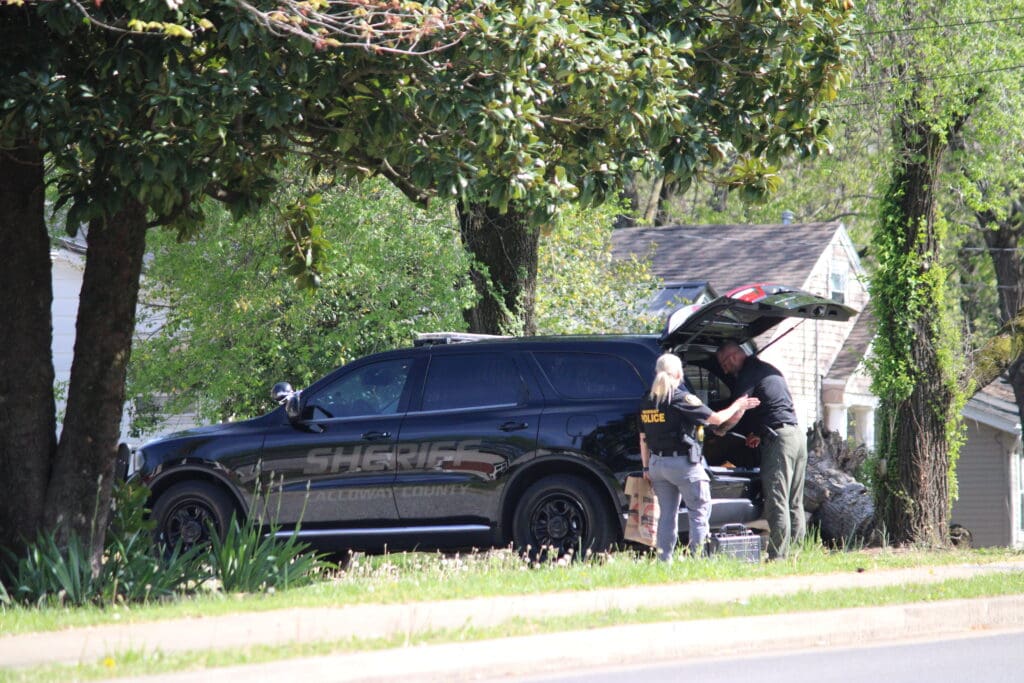
The Murray State University (MSU) Police and Calloway County Sheriff’s Office also responded to the call. In its press release, MPD praised the coordinated efforts of officers and deputies that allowed the suspects to be “quickly apprehended within a few minutes of committing the burglary.”
A Calloway County Sheriff’s Office deputy stands in the doorway of an apartment on Coldwater Road after multiple suspects were arrested for burglary Wednesday afternoon. (JESSICA PAINE/The Murray Sentinel)
MPD arrested Marissa Asbridge, 18, of Madisonville, Ky.; Channon Catlett, 19, of Murray; Kered James Miles, 18, of Carbondale, Il.; and Cameron Malone, 25, of Princeton, Ky., and charged them all with first-degree burglary.
All but Asbridge received additional charges. MPD also charged Miles with second-degree fleeing or evading (on foot), and Catlett was charged with failure to appear in an unrelated misdemeanor case.
MSU Police charged Malone with first-degree fleeing or evading police (on foot), resisting arrest, tampering with physical evidence and possession of a handgun by a convicted felon. Those charges are the basis of a second felony case against Malone.
According to the MSU Police citation, an off-duty MPD officer reported a burglary in progress. He further advised that the suspects left the scene in a white sedan observed heading north on Coldwater Road.
The 2014 Chrysler 200 was almost immediately spotted by an MSU Police officer who had just turned on the road from North 16th Street, but before the officer could catch up to the sedan, the uniform citation states, an MPD unit, traveling south, turned around and initiated a traffic stop. The driver pulled over in the parking lot of Quality Plus Auto Care, which is located at the intersection of Coldwater Road and KY 121 North.
At 3:50 p.m. Wednesday, there was still a heavy law enforcement presence at the intersection of Coldwater Road, N 18th Street and KY 121 N. (JESSICA PAINE/The Murray Sentinel)
According to MPD, Miles, who was a passenger in the back seat of the vehicle, fled on foot during the traffic stop and was located “just north of the area” by an MPD officer. Asbridge and Catlett did not flee, but Malone did. He was apprehended by MSU Police.
Malone exited the vehicle and ran south, crossing Coldwater Road. The MSU Police officer pursued him, noting that he “never lost sight of him.” After running through the backyards of three homes on North 18th Street, Malone stumbled and fell. As he was falling, the officer reported, he removed a black handgun from his waistband and threw it over a fence. The gun, identified by MPD as a Taurus GX4XL 9mm piston, was found on the back porch of the neighboring house.
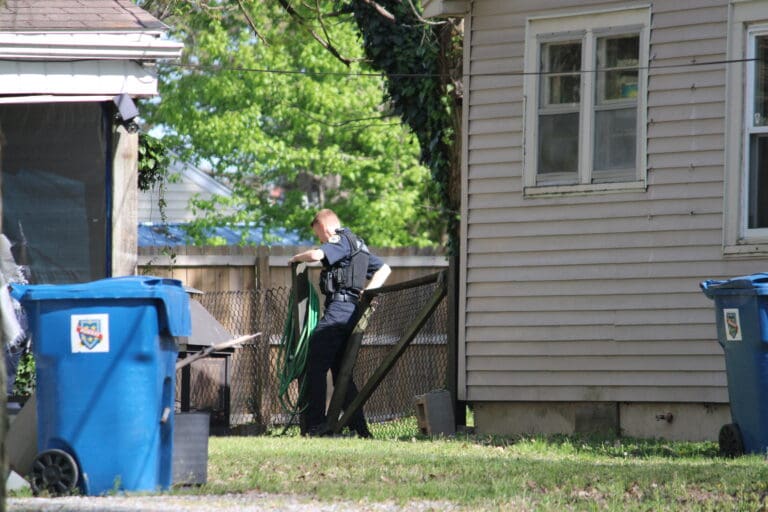
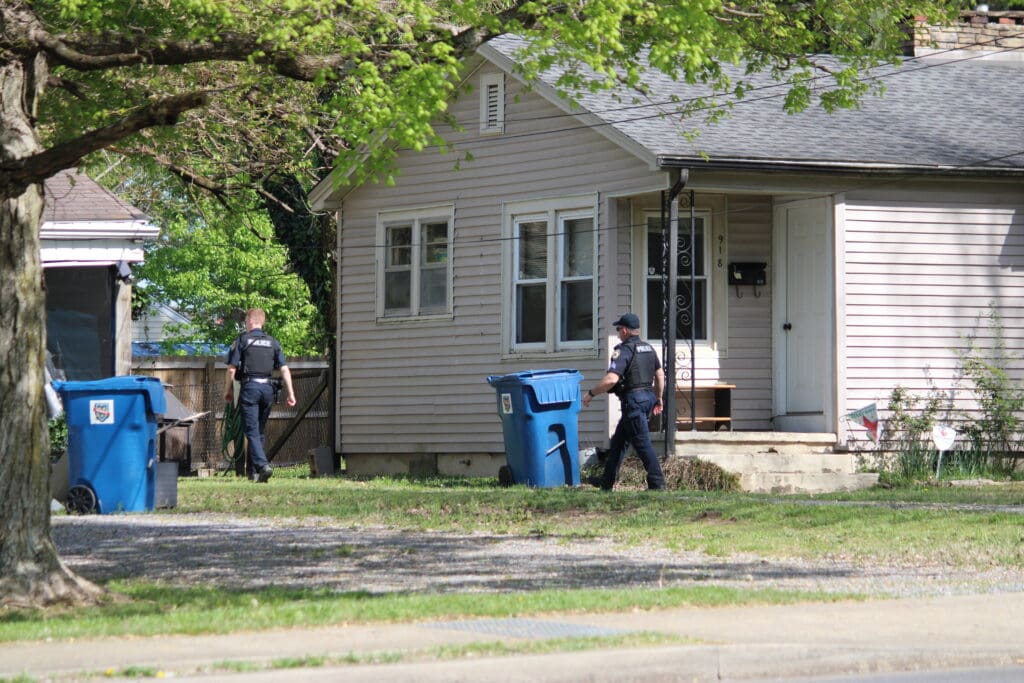
Officers from multiple agencies are seen Wednesday afternoon outside of a home on North 18th Street. (JESSICA PAINE/The Murray Sentinel)
Calloway District Court Judge Randall Hutchens set bond in each of the four burglary cases at $20,000 cash. Hutchens set a $10,000 cash bond in Malone’s second case, and Catlett has a $309 cash bond in his unrelated case.
Asbridge, Catlett, Malone and Miles will be arraigned in Calloway District Court at 9 a.m. on Tuesday, April 22.
Individuals charged with crimes are presumed innocent until proven guilty in a court of law.