

MURRAY – Three weeks before he was arrested on theft charges, former HOPE Calloway executive director Nathan Carter spoke optimistically about the nonprofit’s future during a local radio interview, discussing his decision to step down and his belief that his successor would bring greater financial stability to the organization.
“There’s a season and a time for everything,” Carter said during a Jan. 13 appearance on Mornings in Murray on WNBS. With Amber Sugg taking the reins as executive director, Carter said HOPE Calloway was entering “a season of phenomenal growth.”
But investigative documents filed in Calloway District Court show that, behind the scenes, a review of the nonprofit’s finances was already underway – one that would soon lead to a criminal investigation.
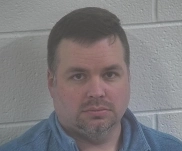
Carter, 40, of Kirksey, was arrested Feb. 4 and charged with 19 counts of theft by deception ($1,000–$10,000) and one count of theft by unlawful taking ($10,000–$1,000,000). Two days later, he posted the $100,000 cash bond set by Calloway District Judge Randall Hutchens and was released.
In Calloway District Court Wednesday, he waived his right to a preliminary hearing and grand jury proceedings, allowing the case to proceed directly to Calloway Circuit Court by information.
Carter is scheduled to make his first appearance before Calloway Circuit Judge Andrea Moore on Monday, April 20, at 8:30 a.m. for arraignment.
The charges stem from a financial review conducted during a leadership transition at HOPE Calloway, a local nonprofit that provides services for Calloway County’s homeless population.
Financial Review Begins
Concerns surfaced among board members late last year, after Carter told the board in November of his plans to resign as executive director, according to an affidavit filed with the criminal complaint. The next month, he informed the board that the organization was running out of money, and they would need to organize another fundraiser.
Board President Jeremy McKeel told investigators that fundraising had always been necessary for the organization, but Carter’s comments raised a red flag.
As the board began preparing for a leadership transition, members asked Jennifer Riley, a former HOPE Calloway board president, to help review the nonprofit’s finances and assist with the transition to a new executive director.
During that review, Riley raised a question that would ultimately lead to the investigation: How was this organization running out of money?
Inside HOPE Calloway’s Finances
The most recent publicly available IRS filings show HOPE Calloway, which operates under the umbrella organization The Gentry House, Inc., reported about $797,000 in revenue and $167,000 in expenses in 2020. McKeel clarified the revenue total includes a donation of land valued at approximately $600,000,* which is evident in the filings by the increase in total assets to roughly $785,000 in 2020 from $154,000 the previous year.
In 2021, filings show a net loss, with expenses ($217,000) exceeding revenue ($209,000) by more than $8,000, but assets held around $777,000.
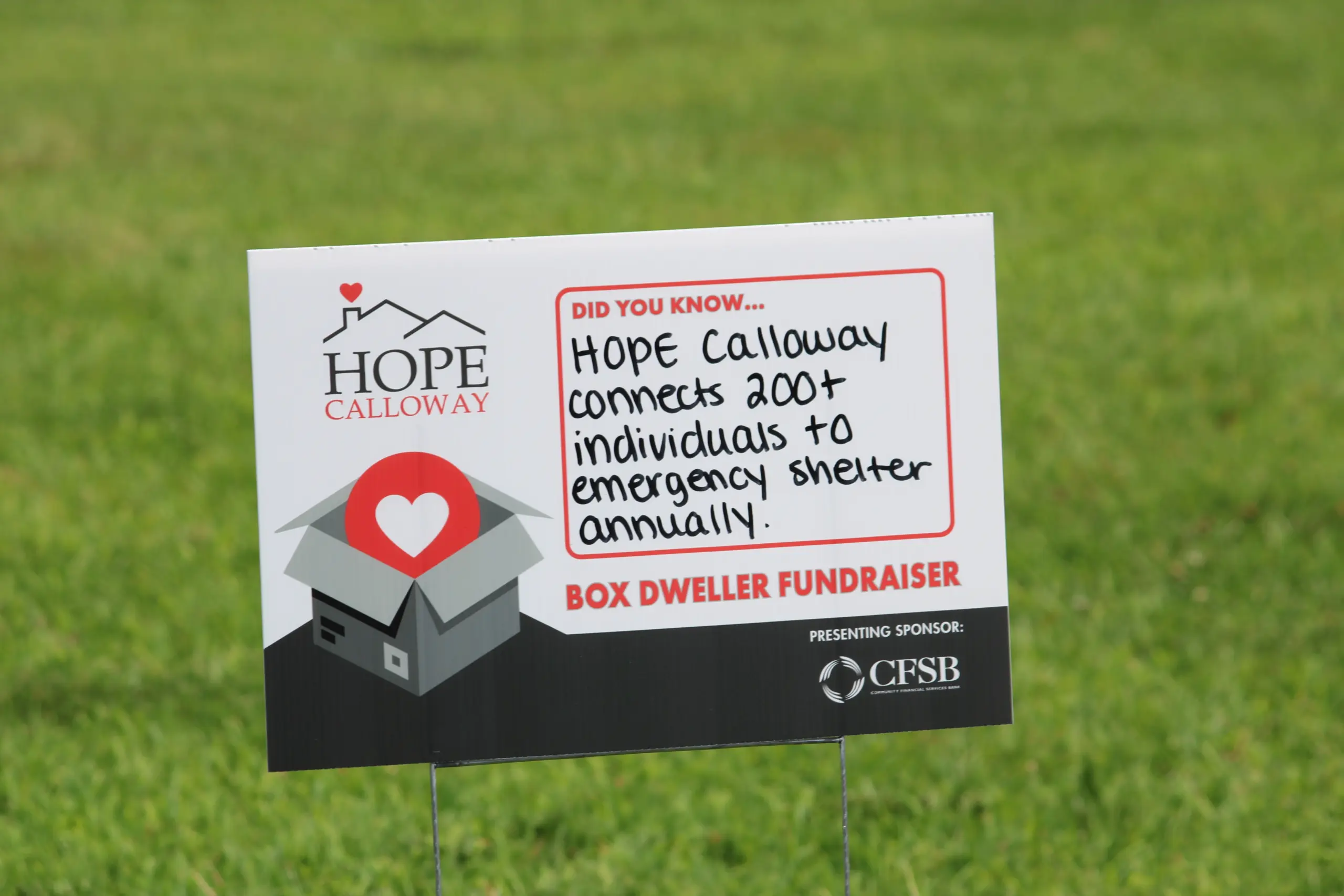
The nonprofit relies heavily on community fundraising events, such as the annual Box Dwellers fundraiser, formerly called A Night on the Town. The event brought in around $47,000 in 2023 and $43,800 in 2024, according to HOPE Calloway’s social media, and raised $32,500 in 2025.
Over the past three years, HOPE Calloway has held the Vision of Hope Banquet in conjunction with the Weaver Challenge, a fundraising competition among local nonprofits organized by the Murray Calloway County Community Foundation. The organization reported fundraising totals exceeding $5,500 in 2023, $9,600 in 2024 and $13,000 in 2025 through the challenge.
Payroll Discrepancies
With permission from the board, Riley enlisted her finance-savvy husband, Roy, to help examine the organization’s bank statements and other financial records. Roy Riley told investigators he gathered several years of bank statements and organized the transactions to determine where the nonprofit’s money was going. The primary concern soon became payroll.
As executive director, Carter was responsible for processing payroll. HOPE Calloway employees were paid through direct deposit biweekly, translating to 26 pay periods each year, but Roy Riley reported to investigators that Carter actually received 36 paychecks in 2024 and 35 in 2025.
According to the affidavit, Carter’s regular payroll deposits totaled:
• $36,898 in 2023
• $37,524 in 2024
• $33,299 in 2025
However, investigators allege additional paper checks written to Carter – which did not require two signatures – increased his total compensation by $38,210 over the three-year period.
Salary Variances
The Sentinel reached out to McKeel regarding the drop in Carter’s salary from 2024 to 2025. He said that, in the years he has been on the board, there were two occasions when Carter’s salary did not increase year to year, and both were at Carter’s request.
The first time, by McKeel’s account, Carter asked to forego a raise in exchange for greater flexibility in his schedule so that he could focus on his leadership coaching business. The second time, he asked the board to lower his salary.
McKeel said he opposed the reduction, but Carter assured board members that he could supplement his income through his leadership business.
“And the HOPE budget wasn’t doing great,” he added.
McKeel declined to provide additional comment.
A Meeting with Carter
According to the affidavit, McKeel and Roy Riley met with Carter on Jan. 23 to discuss the discrepancies.
Investigators wrote that, during the meeting, Carter acknowledged writing additional checks to himself, describing them as “payroll advances” he had intended to repay.
The affidavit also states Carter admitted using HOPE Calloway funds to make payments on his personal credit card. Records reviewed during the investigation showed $6,638 in payments from nonprofit funds toward the credit card, according to the affidavit.
Conference Expenses
Investigators also identified charges related to a Maxwell Leadership conference Carter attended in connection with his leadership coaching business.
According to the affidavit, those charges totaled $7,478. The expenses included the initial $5,000 conference registration, additional conference-related charges and other purchases, including a haircut.

McKeel told investigators Carter had asked the board for permission to attend the conference but said the board had not approved using nonprofit funds to pay for the expenses.
In total, investigators allege Carter took $52,227 from HOPE Calloway through payroll discrepancies, credit card payments and conference expenses.
Carter’s Public Comments
During his January radio interview, Carter praised Sugg, HOPE Calloway’s new executive director, and told listeners that he could see a higher plan in play.
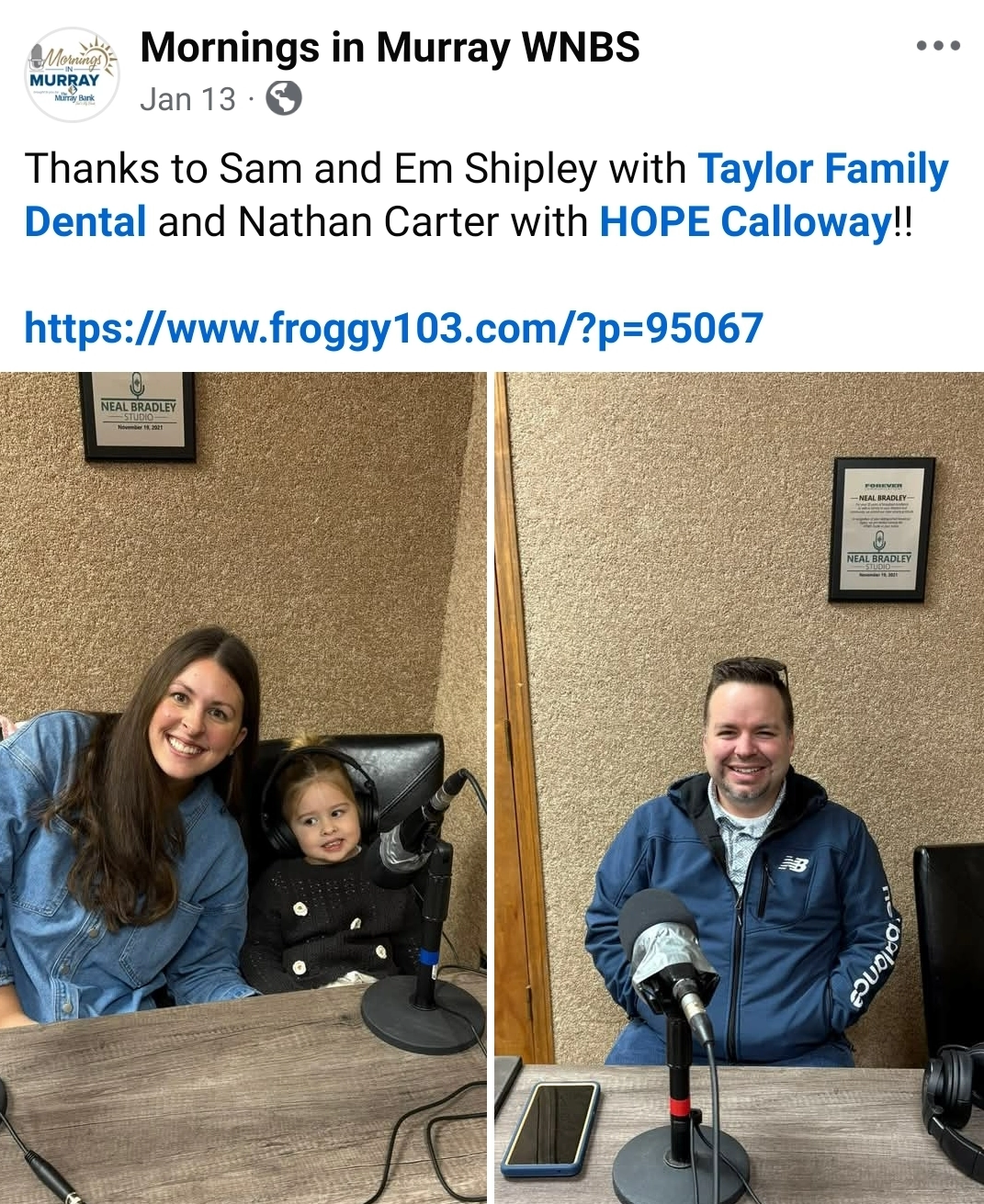
“As I have gotten to begin working alongside Amber over the last week or so,” he explained, “there’s been just a lot of confirmation for me to go, ‘Okay, God, I kind of see what you’re doing here. This is the season HOPE Calloway needed.’
“HOPE Calloway has a wonderful team and partnerships that, I think, are going to last for a very long time and just continue to grow and to strengthen. So, the season that HOPE Calloway is in, moving forward, is one of phenomenal growth, which I think we’ve been building for a long time.”
Carter also said that Sugg will strengthen HOPE Calloway’s financial future.
“She has such a great track record and insight into financial stability and long-term planning and financial forecasting and stuff that honestly is not my strength,” Carter acknowledged. “You know, I want to go in, and I want to help build teams, and I want to build people and programming, and we’ve done that for the last seven years. So, now, for her to be able to come in and take it to the next level, I think is going to be great.”
Individuals charged with crimes are presumed innocent until proven guilty in a court of law.
Editor’s note: This article has been updated with new information clarifying HOPE Calloway’s revenue sources in 2020.